Search
Review of Description Cards: Storyteller's Deck
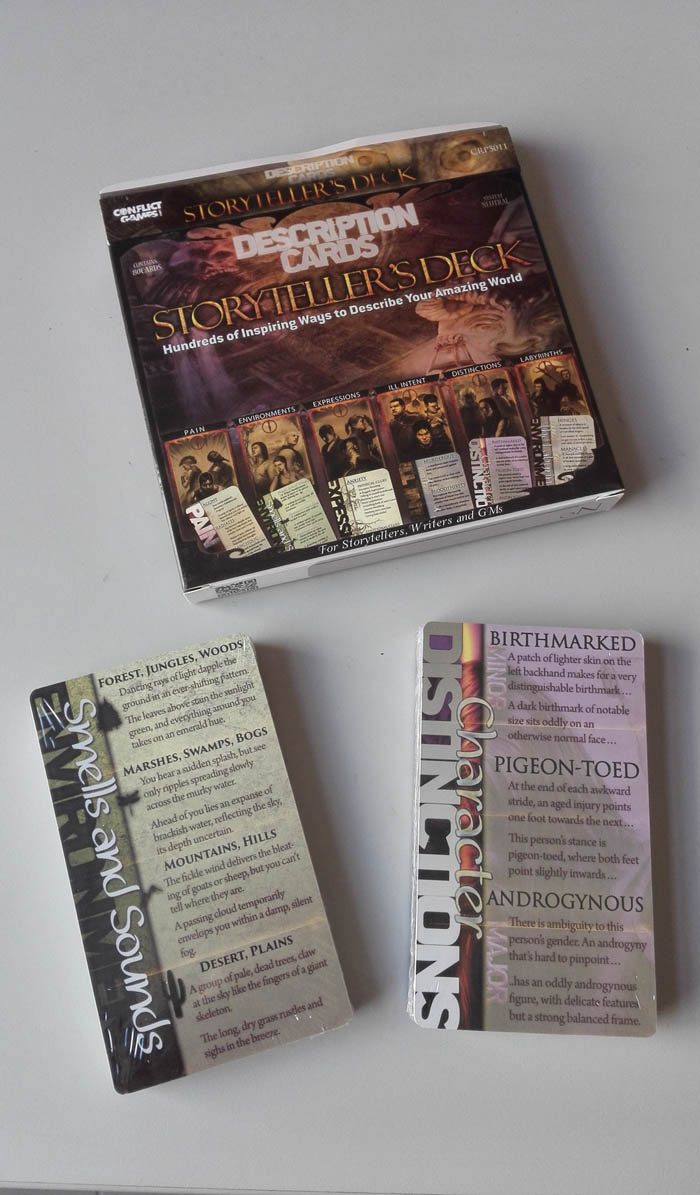
The Storyteller Cards add details and descriptions to your RPGs, storytelling games, and even adventure boardgames. The tarot-sized cards are visually clear, and you can often just draw a random card of a particular set, then find a description you want. The sets are: Character Distinctions, Expressions, Ill-Intent, Pain, Environment: The Labryinth, and Environment: Smells and Sounds. The Storyteller Card deck has eighty cards, and each set is about 12 cards. While the cards are a better fit for generic fantasy roleplaying, they're also suitable for other genres, such as the Cthulhu Mythos, westerns, noir, and so on.
Character Distinctions: The Character Distinctions cards have three different physical distinctions each, such as Gangly, Deep-Set Eyes, and Shuffles. Each distinction has a negative connotation and a positive one, each one sentence long. Fantasy gamers can also use them for non-human encounters, while Cthulhu Keepers will use negative descriptions for those unsettling villagers.
Expressions: The Expressions cards include Bias, Confidence, Fear, Love, etc. Each card is divided into about single-word ten Physical Clues, and ten Emotional Clues. For example, the Arrogant/Snob card has Sneering as a Physical Clue and Demeans others as an Emotional clue. While shorter in description than the other cards, the cards have more suggestions per card. They should also be useful to gamemasters who have important NPCs with their own plots and subplots (eg. two characters who are in love, or a servant fearful of his master).
Ill-Intent: The Ill-Intent cards have three different descriptions each for villains and enemies. One of the card's descriptions, for example, are Selfish, Wicked, and Slaughterhouse. The descriptions on each card cover intelligent opponents and savage ones. Each description is divided into a non-combat description and a combat one, a sentence each. They're a bit on the "telling instead of showing" side (eg. "You sense that this person is motivated by their own selfish desires"), but should be convenient for random hostile encounters with throwaway enemies that don't need much detail.
Pain: Each of the twelve Pain cards has three traits, such as Vice-Like, Convulsive, and Ache. Each trait has two descriptions, one localized, and the other more general. Use the Pain cards for critical injuries, death throes, Mythos deaths, or other climactic drama.
Environment: The Labyrinth: Besides indoor dungeons, these cards are quite useful for haunted houses and other unsettling places. Each card has a Sounds, Sight, and Smells section, such as Scurry, Blood, and Smoke. Obviously, if you randomly draw a card you can't use, just draw another. And, if you play Call of Cthulhu, why not have a temporarily insane character hear something that might not -- or might -- be there?
Environment: Smells and Sounds: These environment cards are for the outdoors. Each card has four terrains: Forest, Jungles, Woods; Marshes, Swamps, Bogs; Mountain, Hills; and Desert, Plains. Each of these terrains has two descriptions, anything from something visual, to a sudden noise. While vivid, the descriptions often have connotations that might not fit the current situation: "Bird calls and lazy leaves float down from the rich canopy above" may not be suited for a dark forbidden forest setting. Personally, I would have found more useful outdoor environmental cards which had a "quiet" description and an "unexpected noise (or movement)" one.
Art: The deck has six different card backs, each with three characters, mostly generic fantasy human males. Use them as important NPCs in your campaigns!
Blank cards: The Storytelling deck comes with a blank card for each category.
GM Screen and PDFs: I should mention that, besides the card decks, Conflict Games has released a deluxe four-panel high-quality Writer's and GM Screen. Each panel is just over 9" x 12.5". The screen art and text are taken from the cards, however. I would have preferred to see new text, at least. Still, if you want to see more possibilities at once, or don't want to buy both card decks, this is an option. Additionally, less expensive PDF versions of the cards and game master screens are available, and an app will be made of these decks. Online game masters should find the PDF files quite useful. Just copy and drop a description into your game!
I really appreciate these cards. You can't prep for everything, the cards help improv play, and they easily add flavor to an adventure. Enjoy your game!