

 Search
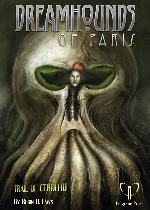
Review of Dreamhounds of Paris
 Goto [ Index ] |
And, this is where I might have some difficulties – playing historical personages – might be wrought with peril of the contradiction with reality. As if Cthulhu, and roleplaying in general is not a contradiction within reality… Nevertheless, Pelgrane comes to the rescue of the hapless Keeper in coming with truly brilliant suggestions of how to reconcile this conundrum. I feel a little better. And, mainly it is a strong dose of commonsense with a dollop of practicality suited the campaign. Out of playing historical personages comes a brilliant set of rules specifically geared toward the Surrealist lifestyle in which it mimics the deprived, brilliant, sexually charged, alcoholic lives with appropriate rewards in Sanity and Stability – as well as Drives – new General Abilities being distributed as rewards and penalties for virtuous and sound roleplaying. Each of the players possibly entering the different periods providing a Raison d'être for their art and emergent themes. As their dreams come into fruition in the strangeness and overall oddness of the Dreamlands. And, players are asked to reveal how much they know about a particular personage – and thus play up to that point – for beyond will be subject of the campaign weaving the narrative of the Mythos together with the movement within art.
From there we are requested to roam the Streets of Paris. In which the real life haunts (although, in the Cthulhu context perhaps not the best of words) of the impressionists are. So, we are given a short snapshot of life of Paris of the 1930s – and how manifestly different it is from 21st century Paris. Perhaps, some of the same outlines, but also how the very streets now tell a different tale, partially, due to the Impressionists and others who sought to create an alternative space. Typical NPCs round out the chapter before we embark to the Streets of Paris dreaming.
Well, Ok, not quite…yet the dreams but the netherworld in-between. In which Paris of the Occult is superbly written and wonderfully laid out in terms of Occult Societies and Cults (New and Old). My only contention with this segment is that seems like some of the descriptions have been incorrectly mashed together. For instance, Brotherhood of the Yellow Sign is associated with Mi-Go, when I associated them with Hastur. I may not be up on my Mythos. However, it is also possible that this mixture of different influences will keep players and the jaded Keeper on edge.
Rue de reve (or Street of Dream) does do an update to the Dreamlands featuring how the old Dreamlands portrayed a particular locale or “monster” and how the Surrealists have begun to modify the Dreamlands in their own image. Thus, the Dreamlands still retain their dark fantasy overhang but are slowly being subjected to the forces of modernism. And, that is where I have a tiny beef with the Campaign. Surely, if the Impressionists are such powerful dreamers they would be able to remake the world in their own image. And, that is when it occurred to me – which the Dreamlands are a constant due to not the dreams of humans but of the Great Old Ones. And, why they would choose a Dunsanyian fantasy trope is beyond me. For me the Dreamlands should be an ever changing and fluctuating milieu where Chaos or Nyarlathotep reigns supreme but is the harvester of dreams. Of course, that is one interpretation that the Dreamlands are our collective subconscious. And, from that it would be space/time specific – clearly seen with the Aboriginal cultures of Australia or the First Nations of North America – their Dreamtime or Dreamscapes would be different from a European of the 1920s or 1930s. So, I do find a way that I can make this work with the supplement – but it results in a very different vision than what is portrayed here.
And, even as dreams end to this sourcebook with a menagerie of different rules mainly how to run a campaign in this updated version of the Dreamlands, and how to prevent it from descending to a joke. Very sold rules and very good suggestions – its placement – is odd from the first reading of the book but then afterwards – one realizes that they had to understand – the brilliant minds of the impressionists, Paris of the 1930s and the new Dreamlands before launching into particulars like this. It also introduces a number of rules to facilitate regular play. And, critical acclaim to Pelgrane for thinking about both Keepers and Players here.
And, lastly, there is an adventure…and in keeping with my policy of: “No Spoilers”. No details will be offered. Suffice to say, because of the subject matter – it was somewhat difficult to read and cannot simply be run out of the box. It is a good introductory adventure but cannot be transported to any other rule system or really understanding of the Dreamlands. So, in a sense a mixed bag. Thrill-seekers might find it too cerebral, deep thinkers might find it too action oriented. Adventures, in the format that was outlined in Mythos Expeditions are more my cup of tea. The Appendices follow with solid add-ons – including, a Main Cast Reference, Selected Bibliography, General Index (which could be improved upon but really quite good) and a Character Sheet.
Furthermore, this is not your standard run of the mill, Dreamlands campaign – it is one that has been changed by powerful dreamers – the Surrealists. And, that is where I have had to get buy-in by players. Seasoned Call of Cthulhu players know that the Dreamlands are the fantastical extension of our world existing co-determined alongside our own. Players, often, do not understand the bizarre and weird nature of the Dreamlands motif. Maybe, because, I have viewed the Dreamlands a manifestation of our dreams – but – this book poses the question – maybe it is not our dreams which are creating it. All-in-all a magnificent addition to the Trail of Cthulhu pantheon of books. I just wonder what the fascination that Pelgrane has with the canine species – because, first, we have Bookhounds and now, Dreamhounds. If your players are not yet ready to delve into imaginative and unreality realms of dreams – this book still provides an excellent guide to the Occult world and Real World of 1930s Paris. It is certainly worth every penny.

