

 Search
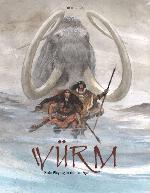
Review of Würm: Role Playing in the Ice Age
 Goto [ Index ] |
Blurb from the publisher: 'Welcome to the Ice Age...
Würm... the name of the last great ice age to sweep across Europe. It is also a role-playing game set in the prehistory of humanity, deep in the ice age, thirty-five thousand years ago. In the these long-forgotten times, powerful beasts roamed a territory covered in steppes and taiga, from the snow-covered mountains to the roaring sea: mammoths, aurochs, bison, giant deer and cave lions. Two species of humans lived among these giant creatures, in small hunter-gatherer communities: Neanderthal and Cro-Magnon.
When you play Würm, you will play the part of these prehistoric men and women. As your characters experience adventures mixing legendary quests and battles for their survival, they will gain strength, wisdom, and prestige by exploring unknown territories, venturing into dark and mysterious caves, winning over the spirits of their ancestors and fighting creatures of ice, fire or darkness.
Everything in a single book!
All the rules you need to play Würm are included in the core rulebook, detailed over nine chapters. These rules were designed to be simple and clear. For the most part, they only require a few 6-sided dice. Most of all, they were designed to be well adapted to the atmosphere of the Stone Age. For example, to develop the characters, you won't need skills and stats, but a number of Strengths and Weaknesses that are connected to specific totems. Additionally, Talents and Secret Techniques represent the abilities that a character may learn, such as painting, shamanism or certain combat techniques.
The game rules have been developed to be as close as possible to established archaeological sources, carefully relaying what we know of the technical knowledge, the environment and part of the culture of our ancestors. However, the world of Würm also leaves room for a touch of fantasy and adventure: you will therefore find rules that allow you to play with the real powers of totem spirits, as well as a whole range of fantastical creatures living along side the mammoths and the cave bears, such as fire spirits, witches and glacier giants.
So you may dive right into the prehistoric adventure of the world of Würm. The core rulebook ends with four introduction scenarios, each one offering a specific atmosphere, including adventure, investigation, melancholy, or humor. One scenario is designed to introduce younger players to the game.'
What you get: Your USD 39,99 or equivalent will by you the hard copy along with the pdf of Würm: Role Playing in the Ice Age, a 176-page hardcover fantasy ice age RPG that begins the eponymous game line.
The 178-page pdf edition alone costs USD 14,99 or less than half the price of the bundle that includes both the hardcover and the pdf.
The game was first published in French. The present English edition was funded by a successful kickstarter in 2015, amassing twice the required amount. During the last few months the game started being distributed by the mighty Chaosium.
Contents: Würm allegedly takes place in the paleolithic age, and more particularly between the Middle and the Upper Paleolithic, some 35.000 years ago. The historical and scientific context is explained by numerous dispersed paragraphs throughout the book. Idem for the range of options that players have as to how to structure a paleolithic game, as well as the supernatural fantasy elements that the designer has inserted. Thematically speaking the game deals with survival, human contact, relations between individuals and tribes, and if the group keeps the supernatural elements, with spirits, curses, beasts straight out of D&D, and more.
The system is roll-over above a fixed threshold. Opposed roles can also be used where needed. The player always rolls 2d6. To that he can also stack stack a relevant Strength (or two), or even use his Experience. In that case he rolls 3d6, 4d6, or even 5d6. The final tally is compared against a difficulty threshold ranging from very easy (3) to impossible (15). Double 1s cause catastrophes, while double 6s are critical successes. For an even wider range of results, any result that is higher than the threshold by at least 6 points without it being a critical success is a brilliant success.
Characters can be either Neanderthal (Bear Men) or Homo Sapiens Sapiens (Long Men, our current human species), with a starting age between 11 and 20. A slightly different character generation system caters towards creating children characters between the ages of 7 and 11. Gameplay is based on Strengths, of which the game provides 28. Each character starts the game with three, the first of which is defined by the clan he belongs to. Examples include Speed of the Horse, Fury of the Lion and Nose of the Wolf. A Strength grants a character a d6 bonus when he performs an action associated with that Strength. Broadly speaking strengths cannot be combined, even though the GM may allow them to accumulate. If a player wants an additional Strength at the beginning, his character can also take one Weakness out of the 14 available. Idem for when a Character masters a Talent or a Secret Skill. Weaknesses include clumsy, disfigured and simple-minded. All Weaknesses penalize the character by a fixed -3 when he tries a particular type of test.
Characters also have access to Talents (think of craftmanship and art) and Secret Skills (combat, shamanism, enchantment and sorcery). Both require initiation, even though every starting character knows the basic crafts of his tribe and can choose to be afflicted by a weakness for another Talent or Secret Skill.
During his adventures a character will gather Experience. The name is partially misleading, since it is a tool of narrative manipulation from the part of the player (like Luck or Fate in other games), and not a tool of player advancement per se. The character can spend one point of experience in order to gain an extra d6 on a test, increase certain Strengths for a round, or permanently increase his Stamina (hit points by any other name). A character starts each session with at least his starting Experience (namely 3 points). If he accumulated more points during the last session but did not spent them, they carry over.
A character's success is measured by his prestige, which is divided in Bravery and Generosity. When vanquishing humans and beasts, characters are rewarded by Bravery points. When they help others, or when they offer gifts to others, they receive Generosity Points. The sum of both is a character's Prestige. The more prestigious a character is, the more perks he will enjoy, including the help of the supernatural. Poor behaviour on the other hand might lead the players to lose Bravery or Generosity, and thus lose face in the eyes of others.
Combat is initiative-based and uses the same system as the rest of the game. Humans have fixed Dodge scores to avoid being hit, even though a certain Strength can significantly increase it. There are many rules relating to retreating from combat, cautious and reckless combat, total dodging (without attacking), and more. Every attack that causes more than ten Stamina points of damage is a serious wound; if a character doesn't pass a pain resistance test, he will be stunned for a few rounds. Reach 0 Stamina and you will fall unconscious. At -10 you will need to create a new character. The book also provides a robust weapons table with stone, wooden, ivory and even metal weapons.
Numerous pages are devoted to the game's fantasy element, namely the magic and the spirits behind the ice age. Each clan has its guardian spirit, which, as expected, needs appeasement while offering a manna pool of dice (e.g. two dice per participating character). These dice can be used by any character at any point, as another means of increasing their chances of success. Yet, the GM has a say as to whether the spirit approves of this usage, and can penalize groups who waste them thoughtlessly. If the pool runs out of dice, the players must make an offering of 13 (!) dice in order to bring it back to 1. To avoid this from happening, characters are advised to regularly perform rituals against low difficulty thresholds when they have the opportunity. Additional supernatural elements include favors, curses, etc.
Peoples of the Ice Age is a 24-page chapter dealing with the real Ice Age. Expect discussions on population density, the difference between the two types of humans that roamed the land, the community structures they created, the role of women, traveling and camps, commerce, leadership, a fictional vocabulary for further immersion, and many, many more.
The Prehistoric Animals Guide devotes its 17 pages to both the fauna as well as the fantastical creatures of the Ice age. Amongst others, there are entries for wolves, bisons, and lynxes, as well as dragons, creatures of darkness and fire spirits.
Würm includes four adventures or adventure hooks, ranging in size between 2 and 21 pages. One of them ('Initiation') explicitly addresses itself to younger players even though it can be also enjoyed by anybody playing a very young character.
The strong points: A lot of love and research has been put into Würm and it shows. The designer is also the main artist as well as the publication's project manager; the game clearly came to be because of his fascination with the era. In some ways it feels as an RPG that will gently steer its players towards finding out more about prehistory. Taking into account the rather sparse information we have about the men, women and civilizations of the time, the game can accommodate different styles of play, all of which can be considered historically accurate. This includes games that could be considered sexist or having bullying undertones by modern standards, we are however talking about the real life ice age. The game breaks free from the grunting Neanderthaler stereotype, and educates the reader about the cognitive and emotional capabilities of the people of that time. The heroes can express complex feelings and concepts, and can easily hold intellectual conversations and find themselves in tribulations that require more than brute force to resolve. Nice!
The system is easy overall, at least if you ignore the (numerous and misplaced) details. That makes it a good choice as a game for kids, and especially if you take the time to remove the poorly conceived fantasy elements that it includes. Some can be stricken out without worrying too much about unbalancing anythingt; others need a good understanding of what you are doing. If you bother to do that, apart from the enjoyable adventures that younger audiences will enjoy, Würm can act as an educational tool. In the ace age progress game about slowly, and there was plenty of space for the tribes and clans to share. On the other hand, the scarcity of resources and the overbearing natural environment leads to friction. That concept is a treasure trove waiting to be plundered for adventure ideas.
The artwork is very well done. With the exception of the images relating to playing kids, all the other images are spot on, with a drawing style that suits the theme. There is one cheesy image of a naked woman holding her breasts in a suggestive way (rather expectedly, the image ties to the game's supernatural aspect), this is however the one exception that confirms the rule. It is also of interest that the book uses three alternating background images to beautify its margins. I have never seen that before!
The line is already well-supported, with a screen, additional adventures, and even an art book. We might see all of this together shortly.
The weak points: With the exception of Land of Og, an RPG parodying both prehistoric times and AD&D, I am not aware of other RPGs set in the Ice Age. Being the first to tackle a subject matter is an enormous advantage... yet Würm squanders it.
Take the title as an example. The impression it gives is that the game is set in real prehistory. Yet, from the very first pages it becomes obvious that Würm is to a large extent a fantasy RPG. The designer went through all the trouble of collecting scores of factual information on prehistory, illustrate nuances and provide a wealth of options... and then unceremoniously dumped on it through the ill-conceived and utterly counterproductive way he haphazardly ingrained the fantasy elements in the game.
If you name your game after a real glacial period, you'd better first offer the rules for a real prehistorical game. Then, for those who find a real-life Ice Age game too dry or boring, provide all the fantasy elements you like, in a modular way that makes sense. Don't mix the two, and even more so, not in such a convoluted way. After all the 'real ice age' bruhaha, the GMs get 'Playing Würm with Little or No Magic', a 2-page sub-chapter on how to play the game in a way that actually befits its name. If it sounds like a telegraphed afterthought, that's because it is. It even manages to insult the GM's intelligence with soundbites like this: 'It is up to each Game Master to decide whether or not each manifestation of magic, whether sought after or imposed upon the characters, can actually have any effect, rather than merely being due to their imagination.' So you thoughtlessly emptied the salt shaker in the pot, and now you seriously expect from the GMs to remove the salt in order to play the game that you advertised. Oh, man.
Overall, this is one of the most unfocused RPG books I have used. It tries to play on three different tables: archaeological research and factual information, the rules and feeling of the real prehistorical game, and the fantasy elements. Unfortunately, everything is all over the place. You are reading on character creation, and bang: you get a one-page treatise on whether your character should be hairy or hairless. I am not kidding. Continue for a few paragraphs, and you have to jump from chapter two to chapter seven (!) in order to see the differences in status between men and women in order to decide what character to play. A few lines later you will stumble on this: 'If this is the first time you're playing Würm, you may be wondering whether it is more relevant, simple, or fun to play a Long Man or a Bear-man. This is good question and we'll try to answer it.' I abhor this style of writing. Say what you want to say already; don't circle around the subject, don't waste space, and don't patronize me. This doesn't happen once, it happens throughout the book. The placement of information does not follow a particular logic, nor do the divisions of the chapters...
...nor do the rules themselves, in many cases. Game design appears to be stuck in the 1980s. Even though children character generation is similar to that of standard characters, it wastes quite the space by pointlessly repeating the same things. Humans can roll brilliant successes, but animals cannot; is this really something I need to remember when running my game? There are tons of rules and exception for tactical combat, including the dreaded AoO under another name. Is that needed in a prehistoric RPG? The dice curves are cringe-worthy if the GM allows you to combine Strengths, Experience and what have you. It is fairly obvious that the game was not adequately playtested and the jury was not out when it comes to system balance. What to do, what to do, let's dump the problem on the GM: 'Cumulating the Might of the Bison and Strength of the Bear Strengths will require the utmost attention. This situation is a potential problem because it's frequently used, in combats especially, and it could seem to turn the character into some kind of raging hulk. It will be necessary to think this over, in order to moderate these cumulative effects. On one hand, it's possible to grant the character the Might of the Bison and Strength of the Bear Strengths only if one of these two Strengths is balanced out by a Weakness. On the other hand, for some Game Masters, a 2d6 bonus for the strength Test and for Damage may seem a bit high.' In other words, you don't know what you are doing, and the GM has to ponder over the half-baked rules. Do you like liver, by the way? You should; characters gain the Strength related to the animal whose liver they just ate for a day. I kid not. That's a rule.
The Ice Age is a time of small, secluded communities, vast spaces waiting to be explored. I expected to see some of the brilliance of Mutant: Year Zero, new bright ideas implemented through new systems and rules. There is nothing here, as in literally nothing. The community aspect of the game is extremely dry, and the rules don't particularly help towards reinforcing the tribal, survivalist feeling that the game aims for. There are no rules for generational play, something that is totally normal to expect from a game with a (thematically appropriate) glacial pace of technological and cultural advancement. The game doesn't describe a particular area or starting point and I don't mind that. On the other hand however it doesn't include either a structured way of creating tribes and fleshing out the world or a conceptual starting point. How many people are in a clan (and no, 'one or more families' does not cut it as information)? What is their age distribution? How many deaths and births should I expect in a year? What other events should I expect in a year? Before that first session, you are out on your own, without guidance.
The adventures are further proof that Würm is a fantasy RPG that only pays lip service to the Ice Age. Laoki's Agony, the longest one, is so inextricably lined to the supernatural that it is impossible to play it straight. Idem for Initiation, the adventure addressed to children; the main character they interact with is revealed at the end of the adventure to have been dead for several weeks. Idem for The Odyssey of the Bearmen; again, the supernatural is all over the place. The rulebook of an allegedly realistic ice age RPG is incapable of including a single adventure without supernatural visions, foresight, ghosts, and spirits. Birdcave is a blueprint at best, and amongst others includes a berdache, a homosexual crossdresser. It'd be extremely intriguing to thoughtfully explore that cultural aspect of the age in a well-designed ice age adventure. The allegedly more primitive native American and native Australian populations handled homosexuality in a fascinating, very different way compared to the continents' technologically superior colonizing settlers. Yet, the inclusion of a berdache in this book is made for laughs. The scenario is advertised as 'humorous', and isn't all that jolly and funny: the guy that a tribal woman was supposed to marry is gay, you catch him in the act with the man that was supposed to exorcize his homosexuality (you read that right), and now you must find a new groom for her. Haa haaa, humor. This is totally tone deaf today, and I feel it was equally tone deaf back in 2015.
Würm sets new records when it comes to pointless margins and wasted space. I am talking about almost 5,5 cm on the side and another 5 cm on top. Literally, the same poorly organized content could have been presented in 100 pages instead of 176, and let me not start by how much space it could have occupied if the content was logically organized.
The pdf is also mediocre. Images are extractable (good!), yet there is only one level of bookmarks, namely the chapters. Those who edited the pdf didn't even bother to include the sub-chapters, or create live links in the table of contents. In case it wasn't obvious up to now, neither the pdf nor the physical version include an index.
Conclusion: If Würm had come out in the 1980s, it would have been met more positively. It uses an easy system, boasts of a theme that almost no other RPG has touched, and it is based on research that demonstrates the designer's commitment. At the same time however it is flagrantly unfocused, ignores the evolution of game design, and omits numerous aspects that would have readily enhanced the gaming experience. It misadvertises itself, shoots itself in the foot by incoherently mixing fantasy and reality, it is incapable of providing a single non supernatural adventure, while it obsesses over outdated old-school game design tropes. Unnecessary rules details, minute exceptions, a pointless fixation on combat, and a lack of rules for handling the community and exploration aspect of the game are some of its shortcomings. The poor interior organization and the enormous margins are just the icing on the cake. I am disappointed, and even more so because there is no other contending ice age RPG.
For more info on Würm: Role Playing in the Ice Age, visit Nocturnal Media at https://www.nocturnal-media.com or Chaosium at https://www.chaosium.com.
Shameless plug: for more gaming news and content (including, for example, pictures of Würm: Role Playing in the Ice Age that I am unfortunately not able to upload on RPG.net for the time being) and to better keep track of my reviews, subscribe to my Antonios S facebook and twitter page.

