

 Search
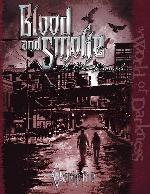
Review of Blood and Smoke: The Strix Chronicle
 Goto [ Index ] |
I should explain...
When the New World of Darkness launched in 2004, I was a bit wary. Not due to a desire to cling to the Old World, mind, but rather because of it. The millennialist angst that weighed heavily on the Classic lines had fallen flat only a few years prior, leaving only an uncertain future. Without the feeling that the sky was falling, what would a new version of the setting be about? As it turned out, far too often it was about nothing. While hooks and theories abound in the New line, solid meta-plot was conspicuously absent. This wasn't a big deal for some of the short-term lines – both Changeling: The Lost and Promethean: The Created, for example, are arguably at their best as a tales of personal struggle without overt focus on the greater world and its threats. The main three lines – Vampire: The Requiem, Werewolf: The Forsaken, and Mage: The Awakening – on the other hand... Well, there was enough to keep a Werewolf pack together long enough for a chronicle, in the form of protecting a territory against spiritual incursion, but Mage offered extremely little to keep a cabal together, and Vampire indeed seemed exceedingly hostile to the idea of group cohesion. Yes, Masquerade was a highly factionalized game of back-stabbing even with the threat of Gehenna looming over everything, but Kindred had to at least pretend to be working together because the major sects offered at least a chance of survival.
The covenants of Requiem actually get in the way of cooperation at any level past what would become known as Tier 1, the street-level game. There, the overwhelming political and religious differences between the covenants has to take a back seat to basic survival against the everyday threats and challenges faced by the undead. Move beyond that level, though, and you have a problem. The Carthians are a direct response to the abuses of the Invictus, putting the two immediately at odds, the Lancea Sanctum and the Circle of the Crone continue to dance the “Church of Rome versus pagan blasphemers” battle of the early Middle Ages, and the Ordo Dracul (my favorite) almost don't fit in at all. It's difficult to imagine what kind of society could offer something to the members of these inherently antagonistic factions, save perhaps for the promise of domination. A society based on that promise seems like it would quickly degenerate into a state of near-war, which might be a solid commentary on the modern politics of the United States but can prove rather limiting to storytelling. The only other alternative would seem to be street gang-like balkanization, with factions withdrawing to areas of a city they can control and effectively closing their borders, meaning a Prince would have to either possess the ability to physically dominate the factions or risk becoming irrelevant, and this is the view presented in the line's excellent supplement Damnation City. Unfortunately, neither one makes for good game play. One seems simply too chaotic to hang a chronicle on, while the other is limiting to both the player characters it can accommodate and the stories it can tell.
So why have I likely either bored you all to death with this commentary on the failings of Requiem? Simply because Blood and Smoke goes a long way toward completely wiping them out. Sure, the Carthians and the Invictus, for example, are still ideological foes at each others' throats (quite literally, in some cases), but introduced into the new core are a host of reasons they might want to keep their opposite numbers around. An Invictus Prince, for example, might now wish to be seen as being in line with the will of the People in order to benefit from the power of Carthian Law, while a Carthian Prince would do well to avail himself of the network of vassals offered by his Invictus adviser (so long as he remains mindful of the price). Hell, the Carthians have a new merit available to them that might allow certain of them to be members of the Invictus (or any of the other covenants) in good standing – the aristocratic revolutionary, which is not entirely an uncommon concept throughout human history. The upshot is that it feels like there's more room for Kindred to work together now to form a lasting and relevant society. Everyone can have a stake in it and reap its benefits even when they're not in charge. There's still the feeling of the whole thing being balanced on the tightrope of stability over the yawning chasm of chaos, though, so conflict isn't completely out. It's just more likely to occur, as the book puts it, “behind the velvet curtain”, as opposed to open warfare.
I notice I haven't spoken of the clans yet, and I'm not sure I can blame myself. Aside from access to certain Disciplines, I never really understood what they were supposed to do in Requiem. Perhaps it is a subconscious preference for political conflict rather than more troubling racial conflict on my part, but it always struck me that the covenants were far and away more important to Kindred society. Perhaps among the Carthians (especially the uncomfortably skin-headed Deucalions from their supplement) and the Circle there might be some who “keep to their own kind”, as it were, but I can't see such a concept having much weight in the more thoroughly and ruthlessly organized covenants, in which merit (as determined by the covenant) is far more important than origin. Perhaps such a thing can allow for commentary on “casual” racism as it can exist even in the most “civilized” societies, but I just don't get it. Mechanically, there's not much of a change from that status quo here – clans grant access to the same three Disciplines they did before, although the clan Banes have been altered somewhat, and don't even apply until the monster begins to overtake the man (see the discussion on Humanity below). Bloodlines get a mention in the book, but only to adjust the Blood Potency requirements. Personally, I'd strongly suggest just ditching them. The two major things they offer, Disciplines and an additional clan Bane, have been retooled, and as such I'm not sure what, if any, balance issues might arise. I'm fairly certain, though, that many of the bloodline-specific Disciplines will have a hard time measuring up to the newer, more powerful basic Disciplines, and that's probably reason enough to discard them, at least for the moment.
So where do the Strix come in, since this revision is named after them? Are they the new threat, the monsters that drive even egotistical vampires into each others' eternal company? Are they the enemy at the gates, ready to swoop in on shadowed wings to claim a city whose Prince proves too weak to defend it? Maybe, but unfortunately Blood and Smoke doesn't really make it clear what role they're actually supposed to play, aside from the cliched “hunters of hunters” bit. There's little mention of them prior to the fifth chapter, save for brief suggestions in the descriptions of some of the Lost Clans and Broken Covenants, as well as a damning suggestion in the description of VII. There's virtually nothing on how they might be shaping Kindred society today, and it is frequently stated in the book that not everyone knows or believes in them. They can certainly be used to force cohesion in a domain, but as a threat they lack the pervasive nature of the God-Machine, and as a result the book reads more like “Requiem.5” rather than as a chronicle guide, and that's a little disappointing. I will own up to the fact, though, that my reading may be in part colored by the fact that I don't really like the Strix, and never really have. From their first appearance in Requiem for Rome (unless I missed a reference somewhere prior), I saw them as an unfortunate side effect of a rather culturally-insensitive fetishization of Rome as “golden age”. I can't deny that Roman influence is felt on large portions of the western world – I live in the southern United States, and have seen too many plantation houses built in the “classical” style to do so – there are equally large, if not larger, portions of the world that the hand of Rome has touched but lightly and relatively recently. This is rather eased in Blood and Smoke by brief descriptions of eight cities, all of which depart, in some cases radically, from the five covenant norm, and all heavily influenced by local culture and history.
Argh, now I'm back on the covenants again. Can we tell that they were my least favorite part of Requiem prior to this? Anyway, the Strix – yeah, they don't offer as much as I was really hoping for. They're good enough antagonists, I guess, giving nightmares to the things that usually cause nightmares, but they're not embedded as much in the setting as I would have liked. Mechanically, they're not just spirits like they used to be, although there are some heavy similarities, with Dread Powers and Embodiments taking the place of Numina and Manifestations, and Vitae taking the place of Essence, creating another bond between them and Kindred beyond “favored possessees”.
We've gotten through the thematic changes to the setting, so how about the mechanical changes? Oh, there are plenty of those... Those who lurk RPG.net, the Onyx Path forums, and other such sources of spoilers will know of a few, but I'll go ahead and detail them here for those who missed them. Vampires got a major power boost with Blood and Smoke, and a much-needed one at that. I've gone on record a few times as stating that neonates were previously actually somewhat less powerful than the humans they had to hunt, with vampiric weaknesses taking a heavy toll that the skimpy benefits of early-dot Disciplines were simply unable to balance. First and foremost, all vampires are much tougher than they once were, with few things aside from Banes able to cause even Lethal damage to them, let alone Aggravated, leading to combat looking a lot more like a scene from The Crow (which I am surprised didn't get a mention in the Inspirational Media section). No matter what you throw at them, even a neonate on his first night is going to be able to shrug it off, meaning that killing a vampire is going to take planning, effort, and luck, even for another vampire. Secondly, many of the iconic powers in the core Disciplines come rather earlier, so players won't have to tough out dozens of sessions with minimal power before getting a chance to do the “cool stuff” (assuming they or the chronicle even lived that long). The physical Disciplines – Celerity, Resilience, and Vigor – get necessary readjustments as well, with all three giving persistent benefits in addition to the variety of super-powers we've all come to respect from them, which carry a per-action price. This makes Celerity no longer horrible, as it previously carried a much heavier cost than the other two with more mediocre benefits, so I have to approve. Devotions and the Blood Sorcery Disciplines remain almost untouched, although the lack of five-dot rites and miracles is a little odd. The biggest change by far comes in the Mysteries of the Dragon, which replace the Ordo Dracul's Coils. Now separate and full five-dot Disciplines in their own right, they call upon members of the Ordo to determine what their transcendence is going to look like, generally, from moment one. This comes as a relief after suffering through the annoyingly dip-happy Coils, advancement through which seemed rather too haphazard for a covenant of devoted scholars. It's still possible to go back and forth between them, but for out-of-clan prices, although this is still likely preferable to the out of control prices Coils would eventually reach. I will admit, though, having a hard time reading through the Beast-focused Mystery of the Wyrm, only because the name brings to mind Robert Bloch's Lovecraftian tome, De Vermis Mysteriis. Additionally, vampiric Merits get an overhaul, with an overall simplification of some (Haven is now a single merit at last, rather than three or more) coupled with a quite welcome increase in starting Merit dots, which I gather was a common house rule prior to this book. While vampires are still very Merit-driven, due to necessities like the aforementioned Haven and Kindred Status, at first glance it looks like players might actually have enough to provide some definition to their characters outside of their place in Kindred society. The Carthians and Invictus make out like bandits here – though the flat-rate advancement used by these revisions kills their merit discounts, they get as compensation Carthian Law and Invictus Oaths, respectively. The former turns the will of the People into an undeniable, almost physical force while the latter enforces fealty and other arrangements with blood. Both of these were introduced in the appropriate covenant supplements, but making them a core part of the setting, I think, gives them some much-needed distinctiveness while removing the fast-track to mortal influence they once had, which could in some circumstances become highly disruptive.
Now, the big changes. Virtue and Vice are out the door, replaced with Mask and Dirge, and if those sound like the Masquerades and Requiems from The Danse Macabre to you, you're right, although they're now sources of Willpower rather than profession-like Merits. Vampires also develop Touchstones, which serve as reminders of the life they once had. This is the first part of the most significant change to Vampire found in the revision. Humanity, while serving a similar role in limiting the vampire's ability to relate to humans, is now not just another name for Morality, but is now a measure of how much of his human identity the vampire manages to hold on to. Borrowing from Werewolf's Harmony, there's now a social aspect to it, as failing to go out among humans and act human makes you, unsurprisingly, less human. Likewise, events that damage a vampire's sense of identity, including witnessing the changes that can occur over the endless years, can hurt Humanity as much as such shocking experiences can hurt a Changeling's Clarity. I absolutely approve of this since, as Darren MacLennan would be glad to tell you, I've often engaged in lengthy rants about how poorly defined the primary internal conflict in Requiem was. While flavor text might have described Man versus Beast as the basic conflict, the whole thing was rooted in Victorian concepts of morality and mental health that had virtually nothing at all to do with that conflict, not to mention were deeply offensive to those suffering from real mental health issues. Blood and Smoke follows along with the departure from that model that began in The God-Machine Chronicle, and is better for it. Instead of derangements building as a vampire loses Humanity, they Detach, gaining Conditions that reflect their inhumanity and potentially losing contact with Touchstones, which make them more susceptible to further detachment. They can hold off this downward spiral to an extent by taking on additional Banes, which immunize a character against certain breaking points, although weakening them against all others. These additional Banes take on the form of traditional vampire weaknesses – they might be harmed by the sound of bells or be repelled by garlic and holy symbols. This is, I think a nice touch, as it gives us a reason why these myths may have arisen, rather than merely dismissing them. Humanity also determines how affected a vampire is to that most feared of Banes, sunlight. Higher-Humanity, lower-Blood Potency vampires (like most starting characters) have a descent shot at surviving a sprint through an open area during the day, although they certainly won't like it, while more powerful and monstrous elders might go up in smoke only moments after a ray of sunshine touches them.
The last major change I'll discuss are the demi-vampires, the familiar ghouls and the newer revenants. Ghoul fans will get a lot of joy out of Blood and Smoke, since the prohibitive costs they once paid for Disciplines are gone. They're still stuck at Blood Potency 0, have problems facing up to full vampires when using Disciplines, and are utterly dependent on Kindred to provide the Vitae needed for survival, let alone to fuel their powers. They're not subject to Banes, though, and have a host of Merits that will allow them to share in some of their regnant's power. I'm not sure I would suggest tossing a ghoul PC in with a group of vampires, but if a clash comes it could easily go either way. As for revenants, it's been mentioned that the zombies that oversaturate modern culture are actually closer in description to vampires than to the reanimated dead servitors of voudoun. They're freely-awakened undead, they hunger for flesh and blood, and their bite transmits their curse. Revenants aren't necessarily as mindless or animalistic as the Hollywood zombie, although, as they lose all their Vitae upon awakening, there may not initially seem to be much difference as they immediately enter hunger frenzy. Otherwise, they're rather like the thin-blooded from the end of the Masquerade line – too weak to claim a clan or higher powers of the Blood. They can, given a source of Vitae (willing or unwilling, as Amaranth counts for this, too) be uplifted and become full vampires, and it's suggested that even some great vampires may have started off this way, including, of course, the ever-sireless Dracula. These...probably aren't the best choice for player characters, but they're a good thing to throw at a PC who feeds and kills indiscriminately or who abandons the man for the monster with glee (since that makes a revenant a more likely outcome of a feeding), especially as creating a revenant is a breaking point for most characters.
All in all, I'm most pleased with Blood and Smoke, and it's the first thing in several years that has made me consider running a Vampire game. The creatures the book is named for are perhaps a bit of a weaker influence than they should be, but the overall supreme improvements to both setting and mechanics largely make up for it. So far, Onyx Path's new group of writers and developers are two for two, and my hopes for the future are high. It should be noted that there is unlikely to be a free rules update available for this as there was for The God-Machine Chronicle, simply because there is nothing to trim. There is not the in-depth campaign plotting here that can be so easily removed, and most of the book is dedicated to, effectively, rewriting Requiem almost from its foundations. It does, however, contain all of the applicable updated rules, so anyone who decided to give God-Machine and its free update a skip (but why would you?), you won't find yourself missing out on anything. It's ready to go as soon as you crack open the book, and I really do suggest you take it for a spin.
Style: 4. While the general color scheme (It's red. It's all red.) gets a touch monotonous, it still feels appropriate. The artwork is spectacular, as I've come to expect from the New World of Darkness. There are a handful of editing errors, including an example of the much-beloved “p. XX”, but less than I've seen in other recent works.
Substance: 5. Yep. It's that good. It took a game I'd abandoned as thematically and mechanically unworkable and turned it into a world I can understand and want to play in. You can't ask for more than that.

