

 Search
Review Editing
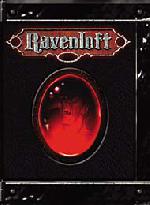
Review of Ravenloft
 Goto [ Index ] |
As a book, it reads like any other White Wolf book, with an emphasis on setting over characters. This is good to me because I have always thought that this setting was a White Wolf game in D&D drag. There was something about TSR's writing that did not mesh in my mind. Now it was made better by a group of people that know how to write in the Gothic mind set.
Now for the chapter by chapter overview.
Chapter 1, pgs. 3-25 is the world of Ravenloft. This is a little treatise about the origins of Gothic style writing. It even goes into the various substyles of Gothic fiction. It can be summed up with one word: Atmosphere. without it, there can be no gothic. The first Chapter also gives the timeline of events in Ravenloft. This keeps the older fans like me around because it keeps a connection with the past. there is also a little section on the Geography of the Core, the main continent, and default setting, and the cultural ratings. These are perfect for anybody who wants to make an island of terror.
Chapter 2, pgs. 26-61, is the sections of Player Characters. In the new Ravenloft, there are specific rule changes for the Domain of Dread. To add to the roleplaying focus, there is something called an Outcast Rating, to signify Culture Shock. Another thing that adds to the roleplaying focus is the new feats. The best one in my opinion is the Cold One feat, which makes undead ignore the character. The section on the Dread companions is just evil. This section also has a little blurb on the Religions of Ravenloft, something that the other book did not have
Chapter 3, pgs. 62-106, is about the specific rules in the Ravenloft setting. It introduces the specific rules like Horror, Madness, Fear, and the Power's Save. There is also a section on making Curses, which are more powerful. What I loved most is the section on the altered magic Items, which did not change that much from the other rules set. It was another thing that kept continuity from the previous editions.
Chapter 4, pgs. 107-173, has a specific, but general setting on each of the Domains. In the AD&D rules, the Black Box rule set had one paragraph blurbs on any setting that was not Darkon, Barovia, or Sithicus. Now, this setting gives a history, the major settlements, the main religion, languages, suggested PC's, if the place needs them. Now, each of the Domains were given a cultural rating, from 0-9.
Chapter 5, pgs 174-208, is the specific changes on the Monster Classes. These are not all of them, just the ones discussed in the Van Richten's Guides, Lycanthropes, Vampires, Liches, the Created, the Ancient Dead, Ghosts, Hags, and Fiends. With the new rules, the PC's have a chance to kill them, while being scared shitless.
Chapter 6, pgs 209-216, is recommendations on how to run a Gothic Style setting. This gives a lot of practical advice on the ways of running a horror campaign. This is the best advice that anybody can give on how to run this type of campaign: It is more horrific to mention dripping blood than it is to see mangled flesh covering the ground.
While there is a lot of great and necessary improvements to the system, I wanted to have a little more. For example, I wanted to have more feats, and ones that fufill a certain role, like ones designed to hunt Vampires or ones that allow direct access to Deities. I would have like to see priestige class and the Stats on certain Domain Lords. But these are little gripes and they do not affect my overall opinion of this book. This book is well worth the price.

