

 Search
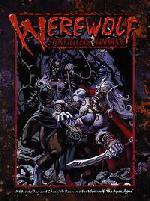
Review of Werewolf Storytellers Handbook
 Goto [ Index ] |
The book starts off with a heavy focus on how to help the players role play their characters in crucial points. For example, the first change. The tips on focusing on the differences between the normal form and the new form help set the mood and stage for the chronicles to come. Reading these sections brings to mind not only the savage aspects of the characters, but also their long standing traditions and cultures. Their pack mentality works on many levels and achieving goals are very important to gain rank and move up from the lower levels of society.
Now this is the first and biggest chapter. It provides the whole Litany and why it’s the way it is. It provides numerous herbs and their magical equivalents. It provides ideas on how to role play spirits. It gives suggestions on how and when to use cannon and when to throw it out the window. Want to know about getting up to rank six? It’s in there. Ant to know how to gain higher level Gifts without having the proper rank? It’s in here.
More advice, this time geared towards the environment is in chapter two. The ideas on how to best describe the city, and when not to use description, are important elements to keep in mind. Don’t’ get me wrong, I’m a big fan of show don’t tell, but when you’re crunched for time and the players are all familiar with the atmosphere in the city, some key words will help their imagination fill the grim details while you focus on the adventure. Setting the initial stage is one of the important elements highlighted here.
Of equal importance, especially to a city boy like me, is the information on running Wilderness Encounters and adventures. The importance of very simple tools is hammered home again and again. While Werewolf characters have many benefits over their human counterparts, they are still not immune to the most restless dangers of nature, nor can they use all of the advantages while retaining the human ones. For example, while being in wolf form may make it easier to move around due to being low to the ground, you can’t carry as much as you could in human form.
In terms of adding villainy to your campaign, the book goes into details not only about some of the standard foes, like the Black Spiral Dancers and Pentex, but also goes into the best ways to use the Wyrm and the Weaver. When to use them, when not to use them, how they can be added in ways that don’t always follow the standard. How about pure Wyrm spirits that are actually good? How about Wyld spirits that work against the players?
One group that I’d never seen before DNA, came off as a rival to Pentex in many ways, but one that still works against the Garou. Seems that this organization wants to cure them of their “lycanthropic disease”. This adds a whole another layers of problems for players who have kinfolk or who are looking to bring in garou who haven’t undergone the change yet, as this organization has developed ways to test and find such individuals. Heck, they could be used when a player first goes through his change and provide the campaign a twist right off the bat. Is the character suffering from the disease of lycanthropy? Can he be cured?
Perhaps the most way out material that’ll see little use though, isn’t the ideas on how to best run a werewolf campaign, but what type of campaign to run. Chapter Five, Breaking the Mold, gives the GM lots of ideas, that while not fully flushed out, spark some great ideas. We’ve seen Dark Ages Werewolves, but how about werewolves in the 70s? How about during the War or Rage? The Impergium? The GM can take these ideas and run with a truly different campaign.
The timelines aren’t limited to the past either. Ideas are tossed up about playing Post Apocalypse. This is really interesting is you’ve run a campaign up to the Apocalypse and had the players survive it. Now they’ve got to live in the world. It asks questions to help the GM determine what caused the Apocalypse and asks how the players survived. This assumes that the players are playing new characters in the Post-Apocalypse age.
Some of the other ideas are really far out. How about a Dark Future setting where werewolves have cybernetic implants? How about Wolfweres where everyone is lupus or metis? Another off the wall idea is Servants of the Dragon, where the characters are Knights of the Wyrm, but the Wyrm itself is good (for the most part) and only those who are weak willed become corrupted b ythe Dragon’s Power.
The information on crossovers with other WoD books provides some minimal nods to each of the game lines and I was a little disappointed not to see even a mention of Exalted. GMs who want solid campaigns that utilize things from both settings will still need to own both systems, but the information here provides some equals and counters of what does what in Werewolf terms. Art is top notch in the book. Text density is very tight without being difficult on the eyes. The pages boast gray symbols in the middle of the page as a design element to help different chapters and organizations stand out from others. This is done behind the text and looks good without detracting from the text itself.
My only complaint would be the pages of advertising. I mean four pages? Still, the book has such a low cost for such a quality, and in hardcover, that it’s difficult to complain.
If you’re new to Werewolf or just need to have your Gming batteries charged, The Storyteller’s Handbook will if nothing else, make you think about your game and how you play it.

