

 Search
Review Editing
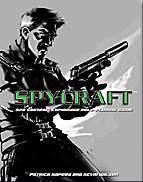
Review of Spycraft
 Goto [ Index ] |
0-Introduction: While this section as stated before is free of sections like how to roleplay and is the only section that makes the assumption you have played D20 before, it does a decently passable job of explaining a few of the basics of espionage games and explaining that there is more to it than a basic modern dungeon crawl. My primary complaint in this chapter is the use of new game terms for things that were unnecessary. I can understand calling the Dungeon Master (or GM, or Referee or what have you) to Game Control. But the changing an adventure a serial, a campaign a season and such is just extraneous.
1-Character Creation: Again this is very straightforward. Including a nice character sheet layout section complete with references to the pages rules can be found on. All in all it is well thought out with the classes that are structured a bit more similarly. The wild change in hit dice found in D&D is much tighter (simulating that agents have more in common than adventurers in D&D) the only really silly thing in my opinion is the use of the home office. The home office, which is their replacement for player races (being that everyone should be human in a real world spy campaign. Being nothing but unnecessary statistic modifiers, and a few other bonuses, it is a key example of trying to be too much like every other D20 game instead of just forgetting this, they felt a need to make up rules to give you the same modifiers as D&D and yet playing a soldier from the Computer espionage department seems a lot more silly than playing a Warrior who is a halfling.
2-Skills: Besides establishing the basics of how skills work in game mechanics (as well as how to make skill checks) this chapter is a list of skills most of each of which is well suited to an espionage campaign. Very much a standard chapter in the book.
3-Feats: The feats are broken down in to several categories Combat feats, Chase Feats, Covert Feats, Gear Feats, Skill Feats, and Style Feats. With the exception of the Gear Feats (which tie into another problem I have with the system) the feats in this game are both well balanced and appropriate to the genre.
4- Finishing touches: This chapter explains some of the new and “Unique rules to this genre” Including the employment of “Action Dice” which are essentially D4s that you may add to tasks in tough situations (similar to F&F points from Top Secret SI Edge in Mechwarrior or, Willpower from the Storyteller system) Also included is the background system allowing you to get extra experience for giving your GM a plot hook. Of course you only get these extra points when the plot becomes part of the current session.
5-Gear: What would a spy game be without the obligatory gear section. Well there are a few things that were a bit lame about this system. Firstly the expanse of extremely unrealistic spy gear. Now I realize that it is a very popular part of the genre (just look at the bulk of the 007 Series) but things like the translator glasses that allow you to read any scrip as your own are so inherently complex, I would doubt that they would even be feasible in cyberpunk under their current description, and that is just one of many goofy pieces of equipment that is made available through the agency. The equipment available to an agent changes the nature of the game so very much, and most of what is available to the characters of Spycraft tends to lean toward high tech macguffin devices that make the nature of espionage irrelevant, turning it into more about action than problem solving. Also the notion of gadget points included in the game is meant to allow agents to get their hands on all the nifty “magic items” they need for their missions again the problem is that for those planning a more realistic game, will be stuck making huge lists of what is and isn’t available to the agents no matter the Gadget point costs.
6- Combat: Using the Star Wars modifications to the D20 system we have both Vitality (Based on hit Dice ala Hit points) and Wounds (based on Constitution) Allowing characters to have a much more realistic sense of their mortality. If you roll within a weapon’s Threat Range, you will take damage directly from the wounds (making combat decidedly more deadly even at higher levels) Defenses also take the place of Armor class, presenting a more nebulous way of explaining how you avoid getting hurt at higher levels. All in all this system does produce a more realistic model of modern combat than the traditional D&D3e model. Combat is not as realistic as other modern combat systems (Such as Phoenix Command, or Kevin Dockery’s edge of the sword) but then again it does the job.
7-Chases: This is a unique chapter that goes into a lot of great detail about one of the biggest points of espionage gaming, the chase sequence. I presumed from the advertisement of this section that it would be something akin to the chase flow chart from Top Secret SI. It actually is a more drama based collection of hints and rules designed to make your chases much more dramatic. I still have a soft spot for the old chase flow chart, but they did a good job of turning the chase into a lively part of gaming.
8- Tradecraft: The main saving grace of this book it is a rather good write up on the basics of the spy game. From information about investigation not to mention ideals on how to run a good spy campaign. As well as explaining the rights and powers of the average agent in the field, generic enough for most systems, but effective tools for any GM or player. Also included is a detailed collection of travel information and information on border crossing and time zones (useful but very standard info for games of this nature)
9-Control: The much-vaunted section for the GM, (or Game Control) more or less is very basic adding information such as GM action dice, As well as an experience system that is much better than the one included in the D20 Star Wars system. It is based upon accomplishments per module, as opposed to time playing, and threat level. Also Included was the much vaunted “mastermind generation system” which is simply a template for adding more to an NPC and making him subsequently worth more XP. Also included is a collection of stock masterminds, as well as encounters. The chapter also includes a Bibliography most of which seemed very nifty (but how in god’s green earth do they figure that TORG would make a good source for modern day espionage?)
Now a quick note on style. This game is very slick and has a artistic style that is much more MTV than CIA. The whole game looks like MI2, very beautiful but lacking in substance. I personally could have done without the silver ink, and high gloss art, in exchange more real world facts and real world information. A chapter on Intelligence and covert organizations operating in the world today would have proved a lot more useful than the collections of nifty gadgets and laser beam wrist watches! While the game tries too hard to be slick, it is not without it’s merit, It is not the best Spy rpg, or the best that could be done with D20, but again it is a decent book and if you want an espionage game and insist on the D20,system this book is well worth a look, as for everyone else, it’s alright not the greatest Spy game, but it is not the worst either

