

 Search
Review Editing
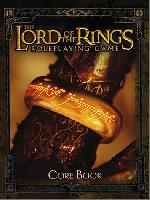
Review of The Lord of the Rings Roleplaying Game Core Book
 Goto [ Index ] |
MERP Interlude
I played MERP in high school a few times. Unfortunately, I can't say that it was very successful. One session in particular stands out. I had made an elven warrior with a talent for Stargazing. We ran into some orcs guarding a cave. For some reason, we had to get into the cave. Unfortunately, combat was so deadly that three of us were shot down before reaching the cave mouth, and one of them was me. I was shot in the leg and promptly bled to death. My overall experiences with MERP were negative, but I don't feel the same way about this game.
Contents
The book is divided into four sections of very different length, plus an Introduction. The first section gives information about Middle Earth, the second part discusses character creation, the third part gives the Coda system rules, and the final section is for Narrators (GMs) and gives a lot of information on running a chronicle.
The Introduction has the usual stuff about what is roleplaying, but it also nicely lays out the structure of the book and the different sections. I appreciated this. Unfortunately, they also put the glossary on pages 8 and 9. I always find this annoying, because it is always easier to find things in the back, and I'd prefer for all the straight reference material (glossary, index, tables, etc.) to be in the same place.
The Middle Earth section is Chapter 1, entitled "There and Back Again". It lists the various regions, and seems to do a decent job of describing their condition at the End of the Third Age and adds information on happenings at the dawn of the Fourth Age. Regions are covered first, followed by specific locations (cities, fortresses, etc.). A good example is Eriador covers Lindon, The Halls of the Dwarves, The Grey Havens, The White Towers, Arnor, etc. It mostly focuses on the West, and discussion of Harad is very slight. One annoying thing about this is that I spent a long time wishing there was a nice map to look at while I read entries and spent a lot of time looking at the front inside cover, only to discover later that there is a beautiful map at the end of this section. It sure would have been nice to know about this while reading the section to start with. Another problem with the descriptions is that frequently they contain no real placement information. That is, if you don't already know exactly where to look for them on the map, you have to hunt around looking for them. The map at the end of this Chapter is very pretty with beautiful brown tones. There's only one flaw with it and that is they didn't leave any space off the crease, so you can't read anything in the precise middle of the map. Luckily the map on the front and back covers is offset differently, so you can find everything. Still, this should have been done differently.
The Character Creation section covers Chapters 2 through 8. One nice thing I enjoyed was that they gave six sample fully created characters right at the beginning of this section for you to look at. Two of those characters are created step by step through in sidebars, so you have both the detailed description and the finished character to refer to as you read. I very much liked this setup and felt it aided in comprehending character creation.
Chapter 2 is "Might and Majesty" and covers the characters Attributes. Attributes are what Stats are in d20 and have many analogs to those in d20. They range from 2 to 12 in most characters but can increase without limit. (The game is based around rolls of 2d6 instead of d20, so the ranges are correspondingly smaller than in d20.) The Primary Attributes are the main ones you set and are as follows: Bearing (Brg), Nimbleness (Nim), Perception (Per), Strength (Str), Vitality (Vit), and Wits (Wit). Your score sets your modifier, so that 3 is -1, 4-7 are 0, 8-9 are 1, 10-11 are 2, etc. Secondary Attributes are generated from the Primary by taking the better modifier of two ability scores. Stamina depends on Str or Vit, Swiftness on Nim or Per, Willpower on Brg or Wit, and Wisdom on Brg or Per. In addition there are additional characteristics for combat. Defence is 10 Nim modifier. Health is Vit Str modifier. Every character has 5 wound levels, except for hobbits who only have four. In addition, every character has six weariness levels. There are three other attributes: courage, renown, and size. Courage is like karma or force points. Characters spend it to help actions, and if they do it in dramatic ways that enhance the plot, they get them back at the end of the scene. Renown has two effects. Characters use it to see if they have heard of someone, and it affects social interaction rolls. Finally, Size is just how big you are and it has an effect on combat primarily. I went through this laundry list because I want to stress how clear and ordered the presentation is. This chapter is extremely clear and well-organized. It's the best presentation of character attributes I think I've ever seen. One other unique aspect is that this chapter also contains notes on characteristics that heroes should have that have no numerical value. These are just things for people to keep in mind. I liked this very much. Examples were things like Generosity, Honesty and Fairness, Self-sacrifice, Valor, etc. I especially liked how they used names for their attributes that are deliberately non-modern. Instead of a word like Intelligence, they used Wits. Instead of Charisma, they used Bearing. I much prefer terms like this to give the proper feel to the setting. In addition, these terms are looser and more colloquial, meaning that they can cover more concepts, as attributes should in a role-playing game. Finally, it's interesting to note that the authors use British spellings for these terms. Honour is spelled with a u, etc. I'm not really sure why they went this route, but it's relatively harmless in my mind.
Chapter 3 is "The Free Peoples" and delineates the various races of Middle-Earth available as player characters. It is what you expect: Dwarf, Elf, Hobbit, or Man. (Ents aren't included as a PC race as the designer rightly felt that they aren't really suitable for that.) Each race has some cultural information, along with favored orders, adjustments, skills, edges, flaws, etc. Each race also gets a few bonuses. Dwarves are hardy and strong and get along badly with animals. Elves get many bonuses and are pretty clearly not balanced equally with the other races. They are divided into the Noldor, Sindar, and Sylvan elves. Hobbits have a few quirks and are divided into Fallohides, Harfoots, and Stouts. Men are divided into the Dunedain, Middlemen, Easterlings and Southron, and Wild Men. They get a few bonuses. After this is a short section on Aging, where it lists the effects of aging on attributes. (Of course, elves don't age, so they aren't on the table!) At the end of the chapter is a character creation example. This chapter is functional, and I appreciated all the extra information on each race to aid in role-playing. It is also well-organized and seemed very clear.
Chapter 4 is "Warriors, Wizards, and Kings" and discusses the orders that characters can belong to. Orders are very similar to character classes, having a skill list and special powers. The orders are Barbarian, Craftsman, Loremaster, Magician, Mariner, Minstrel, Noble, Rogue, and Warrior. In general I like the idea of orders. They are much looser than standard D&D classes, and the combination of class skills and race skills allow more customization than with standard classes. (In a rare lapse of organization, it is mentioned here that starting skills should not exceed six ranks, as opposed to where skills are first discussed or in the skills chapter.) I was a little surprised at the different orders chosen. The orders don't seem to fit that well together in many instances. For example, mariner, minstrel, and craftsman are occupations, while noble is a birthright. The concept of noble, warrior, and barbarian overlap somewhat. You are always going to have these problems in a class-like system, but at least these orders are very customizable and do not have ridiculous class restrictions or an excessive number of abilities limited to only one class. In addition, multiclassing is easy, and they even have the idea of introducing a novice character with no order. There are also elite orders (think prestige classes in D&D) that require some prerequisites before they can be taken. These are archer, captain, knight, ranger, spy, and wizard. They are pretty much as expected, though wizard may annoy some people who believe that there are only five wizards, all non-men. If you are in that number, I suggest you just disallow this elite order. I liked this list, because there was a fairly good cross-section of things for characters to take.
Chapter 5 is "Ringing Anvils and Rhymes of Lore" and discusses skills in detail. The skill system presented here is very sophisticated and well thought out. Most skills chosen by a character have specialties, so that when a character has Stonecraft 4 (Building) that means he gets a 6 bonus when he uses his specialty Building ( 2 for the specialty). If instead he wants to mine, he gets only a 4, since Mining is a different specialty. Specialties are listed for skills and you can make up more if necessary easily. Some skills don't have specialties, like Climb or Run, though you could also easily add them. This specialty system is very elegant, and I liked it very much. In addition, Skill Affinity is also covered, though it is up to the GM to decide the modifier. Skills are used by having the character roll 2d6 his modifiers situational modifiers to meet some Target Number (TN). This is called a Test, and the skills are divided into three types: Academic, Physical, and Social tests. (A list of generic modifiers are located in Chapter Nine for some reason.) There are also degrees of success, so that succeeding by a large amount above the TN gives benefits. One aspect of the organization is a little awkward. Information on many aspects of skills in given in the general rules chapter 9, and this sometimes leads to a fair amount of flipping back and forth to understand the skill system. I believe they did this to streamline the skill chapter for creating characters, but I think this is in general unsuccessful, because many modifiers are listed in the individual skills descriptions, so one has to flip back and forth while running the game. The descriptions of the individual skills are clear and the listing of skills seems fairly comprehensive.
Chapter 6 is "Stern Men and Resolute" and covers the edges (advantages) and flaws (disadvantages). Once again the game uses much less technical words (and usually Germanic origin words) for its game concepts, and I like that this aspect was continued throughout the book. It certainly creates a unique feel for the game. The nature of edges is much more fluid than in most other games. Not as much effort has gone into balancing them against each other. Instead the game wants to create a wide range of different powers that can be used in many different dramatic situations. Many of the edges are not combat-related. The flaws are similar and are also not balanced against one another. I discuss this issue in more depth below.
Chapter 7 is "Words of Power and Runes of Might and covers magic, including spells, magical items, and the rings of power. There are considered to be two types of magic: wizardry and sorcery. Wizardry is the default method to cast spells and has dozens of them. The spells are frequently low-powered compared to other role-playing games and this deliberately reflects the setting, where wizards do not use spells often and usually only in the sorest need. Sorcery is a dark form of magic, practiced by Sauron and his servants. Those who practice it gain points in Corruption. The spells are divided into specialties: Air and Storm; Beasts and Birds; Fire, Smoke, and Light; Secret Fire; Sorcery; and Water. Some spells are in more than one specialty. In addition, there are three types of spellcasting method: Runes, Songs of Power, and the normal method. I especially like how these divisions and embellishments add flavor and interest to the spellcasting system. There is also a section on the feel of magic in Middle Earth. Magic is supposed to subtle but an integral part of the setting. Examples are given of how magic accentuates the rightness and truth of things, so that it does not rain on a king's coronation day and the very earth itself is warped by Sauron's presence. It discusses how animals can think and talk in many cases, and how the valiant are helped by magic. Even speaking the name of the Valar aloud when appropriate can give subtle aid to the character. This section also goes into the magical effects of oaths and curses, fate, prophecy, and the practitioners of magic. This was an excellent part of the book and showed the real effort the designers put into making sure the magic section was a real reflection of the setting. Casting spells forces a check to gain a weariness level, and as a magician tries to do more and more, it gets harder and harder for him to cast spells successfully. The system seems clean and very usable. The point of the system is to discourage frequent casting of spells and encourage the characters to resist casting spells too often. There are also sections on combining different spells together, counter spells, and how to obtain magic abilities at will without the need to cast spells. There are a number of spells, but most of them are not designed for directly attacking enemies, and all seem to be based on some use of magic in the books. The most powerful one I saw for direct damage did only 5d6 5 points of damage and ignored armor, called Blast of Sorcery (sorcery) or Flame of Anor (wizardry). That's a far cry from other games and is as it should be. This section also discussed enchanted items, like elven rope, dwarf, toys, etc. It discusses magical weapons, though these are much less impressive than in other fantasy games and much rarer. And of course, there is the One Ring and its servant rings.
Chapter Eight is "Axe and Sword" and describes equipment for the characters. The money system is based on silver, but it discusses other denominations. Weapons are discussed, and they don't vary a lot in damage. The main advantage of swords is that they give a parry bonus, but axes do the most damage. Armor is also discussed, and there isn't the wide variety of armors in other games. Chainmail with plate is as good as it gets. There are also tables listing various adventuring gear with prices, and even a price conversion chart depending on where you are in Middle Earth. This chapter is very short, but it has everything necessary as far as I can tell.
Overall, I felt like the character creation examples presented everything that was needed, but the organization of it was not as clear. The game needs a one or two page summary of character creation, where at each step, it goes through the steps that are needed to get the characteristics in that group, how many picks it takes, etc. As it is, you need a pretty comprehensive understanding of the character creation chapters before you can create a character. I was able to create a character reasonably quickly, but that was only after I had read all of the chapters. You can't expect someone to create a character in thirty minutes after being handed the book. In some sense, since characters are supposed to last a fairly long time and combat is deemphasized, this isn't a crippling flaw. But anything that makes it harder to start a game is a disadvantage, and LotR seems to have this.
Chapter 9 "Good Words and True" is the Coda Rules section and lays out the rules in general. The organization is a little idiosyncratic. The first thing listed is time, which describes the free-form breakup of time into five intervals: action round, scene, chapter, chronicle, and interlude. It's a little strange to put this first and this strange organization of this chapter continues. For example, the rules on injury are pretty far from the rules on combat, so it can take a little while to understand what happens to people when they take damage in combat. The rules themselves in this section are clear, however. There is a clear delineation of what you can do in an action round. Tests are described in detail, and modifiers for tests are also explained. Variants of tests are discussed like Opposed tests, Extended tests, and Combined Tests. The section on tests is very clear and contains a wealth of useful information. Combat is discussed in detail, and various maneuvers in unarmed and armed combat are covered. Initiative is rolled every round, and a character has two actions per round (though he can have more with edges, etc). In general attacks cost one action, though some exotic ones cost two. Dodge seems a little strange, since you cna elect to do it even if you have run out of actions, though at a penalty. This allows people to dodge with impunity, and I would disallow that in general. Overall, the system seems functional and fairly clean. All of a sudden after this, statistics for horses appear out of the middle of nowhere, along with rules associated with them. Finally, there is even a unit combat section which discusses fighting with units in large battles. There is a flaw in this system in that smaller forces can't affect larger forces because damage is based on size. There have already been several fixes for this discussed. After this is a long discussion of weariness and injury. It's interesting that the health system uses a combination of levels and damage. If you take enough damage, you drop a health level and then you start accruing penalties to actions.
The last three chapters make up the Gamemastering section and provide advice and information for Gamemasters. Chapter Ten is "Saga and Grandeur" and provides information for the GM on running a chronicle in Middle Earth. A number of topics are considered, and this section is very good at conveying what should and should not be in a Middle Earth chronicle. If anything, it is a little too complete, and might be a little bit unnerving for a novice GM. I particularly liked the discussion of heroism, conservatism, and tragedy in this kind of fantasy game. These were all insightful comments on running a fantasy game. This section is primarily a discussion of themes and things to keep in mind.
Chapter 11 is "Storied Heights and Firelit Halls" and discussing the nuts and bolts of making a chronicle. Again the advice here is detailed and quite good. It discusses how to create scenes and pacing in constructing adventures. It talks about combat and stresses that it should be minimized. It does this both for practical reasons (not much healing in the setting) and to fit the source material. I liked this part and how it stressed the difference between LotR and more combat-oriented games. The chapter also discusses what time to set chronicles, before the War of the Ring, during it, and in the Fourth Age. Adventure hooks are given for each time period. This chapter also covers experience and advancement. It is a little less grainy than levels, because every 1000 XP, the character get five picks to spend on various things, listed on a table. The chapter ends with a discussion of renown.
The last chapter is "The Fear and the Shadow", and it discusses the creatures of shadow and evil. Sauron is first, and no stats are provided, which I think is the right approach. After all, the characters can't fight him and win, so they shouldn't even try. The Nazgul are presented with stats and so is Saruman. Gollum and Grima Wormtongue make an appearance, as do the Dunlendings a race of man bitter at the other men. This was a strange decision in my book, labeling an entire race of men as irredeemably evil. Orcs appear in three varieties, and trolls in two. Monsters are also present, like the Balrog, Barrow-wights, the Brood of Ungoliant (giant spiders), hell-hawks, elephants, wolves, wargs, and werewolves. And that's it. It's clear that the designers did not want to emphasize monster hunting in the main book, and that's the right decision in my mind.
Balance and Decline
Because this is a roleplaying game rulebook, it is natural to ask about balance. LotR is not balanced. The character races are not balanced, the orders do not have equal utility in combat, and the edges and flaws are not balanced against one another. For example, elves get a heap of benefits, far more than other races. In addition, what kind of elf you are has a bearing on your attributes and qualities. This was the right decision, because fundamentally, Middle Earth is not balanced. It is quite clear in the fiction that elves are superior to men and hobbits and possess many qualities that set them apart. If this aspect of the setting bothers you, you are probably better off playing in some other game system like 3e and just using Middle Earth flavor. I think this is a fundamental part of the setting and Tolkien put it in on purpose. A common theme in the game is decline, and the younger races are meant to be weaker than the older races. In addition, the game is not centered on combat (and large amounts of combat are explicitly counseled against in the game), so the different orders are not all effective in combat. This also is by design. Finally, the edges and flaws are not balanced with each other. It is not expected necessarily that each character will have access to each edge, and the GM is expected to police this. Balancing the edges and flaws isn't the point. The game goes more for flavor than balance, and so it includes flaws and edges that are not balanced against each other so that the GM can make use of these if he or she wishes.
Lack of balance is a fact of life in Middle Earth, and if you are bothered by this, you are probably bothered by other things in it as well. One thing that is a corollary of this has bothered me. Not only is there a hierarchy of races, where some races are just better than others, but there is a hierarchy within men as well. Yes, this means that black and Asian people in LotR are dumber than white people. It really is as blunt as that. If you want to play a Southerner or Easterling, your adjustments to Attributes are a total of 1, and one of those adjustments is a -1 to Wits. The other races of Men get a total of 2, except strangely for the Wild Men who get an overall bonus of 3. Much as I dislike this, it is supported by the source material. Tolkien is always clear to talk about the Dunedain mingling and polluting their blood with other men, and this makes them less great. It was a common belief in his time and it appears starkly in his fiction, but that doesn't make it less wrong. I can understand why the authors took this tack, but it is somewhat distressing to see this. I think it is a personal decision to decide how important faithfulness to source material is, but if you are making a named RPG, it must rank up there as an important concern.
Overall, I agree with the design decision of making things unbalanced in an effort to better coincide with the source material, though I think they may have gone too far with the radical differences between men. Frankly, if balance is the most important thing to you, you shouldn't be playing in Middle Earth, because the setting isn't designed for it and you will find yourself struggling with these rules and the world to make the kind of adventures you are looking for.
Style and Appearance
In general the layout and type were easy to read and understand. One nice touch were the frequent quotes from the books that supplied an example or justification for a specific rule or element. I liked these, though I wouldn't like to be the person to pick out these things out of the book. It must have taken a lot of work.
The book is full-color, and I liked that, but in some sense there are too many pictures from the movie in the book. I experienced sensory overload looking at this book a few times. There are pictures on almost every page, many of them taking up a significant amount of space. They are always well-chosen and provided nice flavor (essentially all from the first movie), but in some sense there were too many of them. This is a minor problem to have, but I far prefer it to having too few pictures.
Conclusion
This game is well-put together and matches its source material extremely well. This might turn people off for various reasons, but I thought they made the right decision in this respect and it is a better game because of it. This game is an excellent representation of Middle Earth in a role-playing game, and you should get it for that reason even if you don't like the Coda system, if only to steal material from. In my mind, the game goes even farther. It should be an excellent fit for any fantasy setting that does not have superheroes who can slay ten score without sweating or wizards who can destroy thousands with a glance. Any low-magic or more gritty setting would benefit from using these rules, even if it differed from Middle Earth in other ways. This is a solid well-thought-out roleplaying game, and anyone at all interested in Middle Earth or low-magic fantasy roleplaying should pick it up.

