

 Search
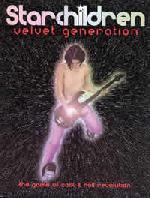
Review of Starchildren: Velvet Generation
 Goto [ Index ] |
And so our genres get tighter and tighter and weirder and weirder (I hear D20 Blaxploitation is in the pipeline). In such an environment, finding something fresh which is also highly playable, and has depth and legs to boot is definitely worthy of attention - and Starchildren qualifies on all counts. Fifteen yeas ago, it would have just been kooky. Now, it could well be the most refreshing thing the industry has seen in years.
Because Starchildren is the roleplaying game of glam rock, and roleplaying and rock go together like Plant and Page. They both involve middle-class terminal adolescents pretending to be bad-asses who are fighting to save the world. More to the point, the superhero team-rock band match has been a staple of Saturday morning cartoons since the Archies - they're both about individuals with their own unique skills and talents (and personalities) who are stronger working together than apart. Hell, I can't have been the only one who worked out who would play what, when my TMNT characters were taking a break from saving the world.[1]
Can I?
Anyway. Lest you start having flashbacks to the Senzar novel or (dear God) RavenStar, let me assure that Starchildren is not about playing superheroes who also think they are bad-ass metal-heads, nor is it some adolescent's wet-dream about all the clubs the writer isn't old enough to get into yet. Starchildren is mostly just about being a rock star. And this makes a staggeringly brilliant concept for an RPG because most of us, deep down, still think rock stars are really, really cool, and want to be one. Anyone who's ever been to a rock concert knows how to play Starchildren, and will want to play Starchildren.
But as a concept, it does beg a lot of questions. Can something so adolescent be played for serious drama? Where are the cool powers? What do you do besides playing rock and re-enacting yet another remake of Almost Famous? The first answer is yes: just as superheroes are given to parody, so are rockers, but a serious game is here if you're willing to work on maintaining the tone. The second and third answer come from the setting, which takes rock and roll and adds super-powered aliens for you to play, and a glorious revolution for you to lead.
In 1972, a freak accident caused certain radio and television broadcasts to be thrown far across space. These reached the eyes and ears (or equivalent organs) of an alien civilisation who were immediately enchanted with what they saw and heard. They loved all things human, but most of all they loved rock and roll. Soon enough, they had changed their bodies and their culture to be like us, and had elevated the glam and stadium rock stars of the seventies to something like gods, and their music into religion. Finally, they decided they had to come and meet us in person.
It took them a hundred years and three of their generations to make the journey, during which time they were raised to act and think as human as possible, and forget everything about what they once were and where they came from. They concentrated instead on becoming the epitome of everything that was 1970's rock and roll youth culture. Unfortunately, when they arrived, they found that the world had moved on - and had become a very ugly place indeed for lovers of music.
In the 2040's, after a world war (everything in the future happens after a world war), a massive crackdown began against any media that could be seen as "emotionally manipulative". Music, still associated with sex and drugs and violence and general moral decay more than any other influence, was the first one under the boot heel, and - thanks to a few high-profile deaths at protest rallies - the poster child for why the crackdown was necessary. Rock became the enemy of all that was decent, and wholesome and good for America. The war on drugs became the war on rock.
Naturally, this just drove it underground. Although the Ministry of Music (quickly dubbed Mad Mother by them disrespectin' young-uns) has its goons patrolling every street and has the strictest control on all instruments, discs and players, rock is still popular. The mob now handle record contracts, and soundproofed speakeasy clubs exist where gigs happen every single night. By the early 2070s, the underground scene had formed into a proper resistance movement, called Velvet. Seeing the rising power of this group, in 2073 Mad Mother brought in "the Big Stomp", coming down with all its force against music. In the aftermath of this, Velvet has only grown more popular…but Mad Mother has realised it needs to be sneakier, and has begun to bring in undercover operatives and McCarthyism scare-tactics. Rock and roll may have taken root, but Mad Mother will do everything it can to stop it from sprouting any further.
And in 2071, the Starchildren walked right into the middle of it all. Now it's two years later and they've joined the side of rock and roll and got their bands started. Players take the role of Starchildren or humans, and their task is nothing less than to defeat the Ministry and all other enemies of rock, and bring rock music back to the kids once again.
Cleverly, it all mirrors real rock history. Out of the ashes of a war comes a fight against a repressive society; it was recently all about protest, and the riot police were called out. Now, the sixties are over and a new breed have entered the scene - tall, gaunt alien types who look all the world like David Bowie. The Starchildren are the future of the revolution in 2073, just as glam became the future of rock in 1973. The only difference is that this time, David Bowie really is The Man Who Fell to Earth, and there really is a Starman waiting in the sky.
These parallels are very clever, and is indicative of how rich Starchildren is with sharp, subtle ideas and intelligent writing. Calling the underground group Velvet is another good example - a bit of clever wordplay, that warmed my pun-loving heart no end. There are countless more funny sentences throughout the book, and the whole thing is written in a wonderfully witty, literate style; tongue always slightly in cheek but never to the point of condescension, nor of undercutting the material. More than once I have read out direct quotes to my gamer buddies so they could get the true effect of the game. Some examples of the phrasing include "like any group of mad xenophobic vivisectionists, they're quite passionate about their work…" and "While Starchildren were all 'classically trained' in glam rock from birth…".
The same can be said of the art - witty, intelligent, slightly tongue in cheek and yet never too silly. It too, gets passed around to the gamer buddies, particularly the parody of the Shadowrun cover, with glam-rock fashion substituting for the cyberpunk style. Joking aside, both the art and the writing are also highly evocative of the setting, from the superb unheilig cover through to the begging-to-be-played blurb on the back. This is a stylish game, from start to finish.
Stylish, indeed - but does it also have substance? Well…yes and no.
First off, the book is slim. I mean really slim. Supplement slim. It clocks in at only 128 pages. However, you'll find no padding or unused space inside; it packs in everything it can fit in there - but at 128 pages, it can only fit so much. Personally, I am not a fan of massive RPG tomes, as I never read them all, and much prefer settings which can be played without so much reading: settings which are so immediately recognisable or close enough to our everyday world as not to need so much reading. Starchildren has this in spades. Which is part of the problem.
Some of you might think that the world of 2070 would be vastly different from our own - flying cars, moon colonies, Japanese schoolgirls in fifty-foot mechs ruling the world, that kind of thing. Not so, according to Starchildren. Indeed, apart from a few cool evil-science doohickeys like killer robots and invisibility suits that Mad Mother agents get to use, and mini-discs now being the standard size for most music media, the world doesn't seem to have changed a bit. People dress the same, drive cars, use paper money, play the same instruments and use computers the same way.
Unrealistic, certainly. Does it matter? That depends. If your disbelief suspenders get hung up on setting details, as indeed many gamers' do, then you may never get past it. For those of us who don't really care, though, it doesn't actually matter, and because it doesn't matter, it just isn't covered. Indeed, this attitude seems to be at the heart of the design philosophy of Starchildren: everything you need to know about sex, drugs and rock and roll is included; everything else doesn't matter, so it is left out.
And lots of stuff doesn't matter. Where did the Starchildren come from, and what's their home planet like? No info, and this lack is actually explained by the setting itself. How did they hide their spaceships when they landed? They just stuck them in some bushes, like all aliens do. How does Velvet work? Like all cell-based underground groups do. How, specifically, does Mad Mother operate? Like any oppressive regime does. What's going on in the rest of the world? Covered in about a hundred words in a sidebar. Computers and chips and stuff? Use your imagination.
And yet it doesn't feel sparse; rather you get the feeling that the writers just aren't insulting your intelligence. You know how these settings work, and they know you know how they work, so they don't waste time spelling it out, when you can fill in the blanks yourself, and pick up on their subtle hints. The section on how the music industry works is written as if taken from the files of a Ministry of Music undercover operative - so from reading it, you now know that the Ministry has undercover operatives, and how they work. It doesn't say that in the Ministry section, because it doesn't need to. Nor will you ever find another mention to the Pyramid Lake Rock Festival where the agent's cover was blown (noted in the closing official notes), and yet that simple short reference gives the event all the mystery and power of far-more-frequently-featured RPG mysteries like the Galatea explosion in Aberrant, or the prophecy of Joshua in Tribe 8.
Again, as someone who's never given a damn about detailed backgrounds and extensive histories (just tell me what my players need to know and I'm happy), I found this absolutely marvellous and incredibly refreshing. However, I can imagine large sections of the gaming public are even now screaming and pulling their hair out about computers not changing by 2070, or a lack of any information on the Starchildren home world. If you are one of those people, Starchildren probably has very little to offer you. Go, then, and buy something else, and never look back!
For those of you wavering in between, lets have a look at what IS included, then:
Chapter One is a two page spread summing up the setting, the book and how to roleplay, and so need not concern us further. Chapter Two: As the World Falls Down is a seven-page discussion of the state of music in 2073, and how it got there. It's the history chapter, explaining just how the International Culture Correction and Control panel came into being, and spawned the different Ministries to regulate all aspects of entertainment (yes, the game points out that roleplaying is now illegal too. So you can easily identify with your character - not to mention playing a spin-off game about roleplayers fighting to make roleplaying legal again, but that might be a little too self-referential…) . This chapter also covers things like money, what people do in their spare time, and the situation in the rest of the world. Japan is still free and so a lot of rockers export their stuff there - allowing you to be, as is only appropriate, Big In Japan. Another masterful bit of wordplay, made all the better by the fact that, like the Velvet pun, they don't make the joke itself, they leave you to discover it.
It covers all that in seven pages - and so, as you can imagine, it doesn't go into much more depth than I just have. The history, however, is logical and well-thought out, and all the basics are covered - there is nothing missing here. It just doesn't read like the complete time-line of the world, and there's no reason why it should.
Chapter Three: Revolution Rock is written as if it is transcripts of conversations with a roadie, conducted by an undercover Mother agent. Occasionally this style becomes annoying, with too many pointless interruptions to explain the breaks in the tape, and so on, and too many attempts by the writer to make his voice sufficiently "conversational". But it does allow us to see into the mind of a rocker, which is helpful. The content of the chapter deals with the two key things players will be doing in the game: being rock-stars, and fighting for the revolution. It explains how to get instruments and gigs, where to play, how to record and sell your stuff, and how to get played and get signed, and how to avoid John Law while you do it all. After the introduction to the recording industry, we learn all about Velvet - how its structure, its operation, what it actually does for bands (it is a label as well as a revolutionary movement) and what bands and other members can do for it. Finally, it looks briefly at Starchildren (from the point of view of human rockers and Velvet) and The Blue Army, a splinter group which takes a much more violent approach to the revolution than Velvet does.
This is all good stuff, and is fully stacked with details, making it easily the heaviest chapter in the book. And for once, this heaviness and detail is devoted exactly where it should be: at what the players will be doing, at what is the basis of the day-to-day adventuring lives of the PCs, of what will form the core of the scenes, stories and campaigns they will play through. Very few games cover this, mostly because it's assumed to be obvious - which is precisely why so many games all feel the same when played. At the end I still had a few niggling questions about how it all worked, but I knew enough about the context to answer them for myself.
Chapter Four: 2000 Light Years From Home finally stops telling us about the prosaic world and gets to the wacky supernatural additions. This time, much of the chapter is written as a magazine interview with a Starchild, allowing us to see how THEY think. Did I mention this game is cleverly written? Again, sometimes it is too forced in trying to be conversational, however this is well and truly compensated by the entertainingly natural moments, and the insight it provides. And even in this style, it still manages to tell you the important things: how Starchildren got here, where they came from (in brief), how they eat, wash, sleep, shit, and most importantly, have sex and get pregnant. Starchildren don't get pregnant from sex, and do it to relax. Having also no concept of gender before they arrived on Earth, they tend to have lots of sex with partners of either stripe - just like your average rocker. And best of all, they get pregnant by expelling spores which look like glitter. I love it.
Like the chapter on the history, it too is written from the perspective of 2079 - ie in the future from where the game is set. This allows both chapters to offer hindsight and perspective to the events, while still talking about how they felt then, and more importantly, allows them to drop heaps of very sexy hints about things to come. Combined with the countless unasked questions about the past the interview provides (for example, the Starchild mentions in passing that someone stole his pics just after he arrived - hello, magic object!), this chapter bristles with plot hooks. And without ever needing a box, sidebar or chapter called "Plot Hooks".
The powers the Starchildren possess are discussed briefly, but most of that information is reserved for the rules section. Which is what we come to now. Before we leave the setting chapters however, I also want to note that each chapter begins with an outstanding work of art that not only begs to be played, but also sums up the chapter very well. Chapter Two shows us the typical musician of 2073, hidden under her hat, hunted at all sides, but the instrument across her back (in a cello case, which musicians use as a cover, because of course classical music is still legal) telling the world she has not given up. Chapter Three shows two pre-teens buying illegal tunes from a crazy old guy in a dirty back-alley, and the allusion to drug culture couldn't be sweeter. Chapter Four shows a Starchild looking down at Earth from behind a window, with a plaintive mixture of hope and confusion in his or her eyes. Marvellous.
So we've got groove, we've got beat, we've got feeling. Does the game deliver the system elements to back all that up, or is it just a big sound with no fury?
The answer is the former - Starchildren definitely walks the walk. How elegantly it walks it, however, is not so clear-cut.
Characters are rated in eight attributes, four mental, four physical, and paired across suits. So we have Presence (mental) and Appearance (physical), both on diamonds. Wit and Speed are hearts, spades are for Perception and Agility and clubs represent Will and Body. All very neat, very balanced, very nicely done. Under each stat on the character sheet is a list of skills (and blank spaces for more to be added). Each skill under a stat has its own suit, different to the one for its governing stat, but the same colour. So skills under Presence or Appearance - the diamond attributes - have hearts in front of them. For the game, hearts is considered to be the other "trump" suit for diamonds, and vice versa.
Each stat and skill also has a card ranking, with card order being Ace to ten, then Jack, King, Queen - presumably because the King of rock and roll has nothing to do with glam rock, whereas Queens are very much at the heart of the movement. A clever affectation, but probably too clever - I foresee (and have already found) that this is such a small change that it is constantly being forgotten. However, it is easy to ignore.
Players also have a hand of five cards. When it is time to make a test, all that matters is the SUIT of those cards.
Say a PC is trying to not have a bad drug experience, and is thus rolling on the Iron Stomach skill (spades), which is governed by the Body attribute (clubs), which for this example we will assume are 9 and 7 respectively. If they play a spade, then the number they "roll" for the test is their level in the skill, 9. If they play a club, they roll their Body level - 7. The GM then turns over the top card of the deck, and if this card is equal or less to the players roll (note, not to the level of the card played, but the level of the stat the suit matches), the player succeeds. If the test is harder than average, the GM might draw two, three, four or even five cards, and take the highest. For opposed tests, the GM plays a suit card like a player, but with a hand of seven for all his NPCs.
Dig? Good, cos now comes the hard part:
If you have no clubs or spades, you can instead play the "null" suits that oppose the trumps - hearts or diamonds. The null for clubs is diamonds, the null for spades is hearts. These produce a roll equal to the level of the stat, minus three. So, our hero taking his bad acid can play the following for the following totals:
Spade - 9 Club - 7 Heart - 6 Diamond - 4
If he doesn't have the skill Iron Stomach, of course, he can only test with his Body (producing only the 7 or the 4).
If our hero has only a handful of diamonds, he does have another recourse though - he can BURN a card. Suddenly, the roll comes from the value of the card played, so this is best to do with court cards. The bad thing about this is that once burnt, the card cannot be replaced. A normal test allows an immediate draw, filling your hand back to five. Burning takes a card out of your hand until the end of the session. You can also burn AFTER you see the GM's card, so this has a lot of power.
This sounds complex, but I've found it quickly becomes intuitive and quick. It helps if the players are familiar with card games (and thus already know that hearts and diamonds are trumps of each other, and spades oppose hearts), but this is shown in a diagram on the character sheet should they need a reminder. The beauty of it is that it really plays up the great strength of any card system - that the player is allowed a lot of choice in the roll she finally gets. In most games, increased choice is given with more cards; here with more ways to play cards. This makes the decision a bit tougher, because resources are more scarce, and I've found it can add a lot of drama to even the simplest test - a lot more than a die roll, anyway - and without requiring more work for the GM.
The cost is, of course, that each test requires remembering all the possibilities, and weighing them all up, which at first can be a little slowing for those who want things super-speedy. However, it is much faster than rolling a ten-dice dice pool. The real problem isn't about speed, it's that although this choice makes for an interesting and involving "roll", the actions don't connect to anything in game.
For example, playing a heart instead of a spade doesn't mean that you suddenly used your Speed to save your Body from harm. More importantly, the nature of skills and attributes is very counter-intuitive. Yes, having a skill increases your chance of rolling well when testing that skill. But consider someone with a skill of 5 (in guitar, say) and a Speed attribute of 10. If he didn't have the skill, then sometimes his natural abilities would allow him to play phenomenally (the 10), and sometimes not at all (0). If he has the skill of five, he now swings from phenomenal (10) to mediocre (5). So you hope to hell your natural ability will carry you through. Skills don't add to stats, or work on a different axis to stats, as in most games; in Starchildren skills are like a back-up for when you don't have the cards to play your stat. Unless your skill is higher, in which case stats are your backup for skills. Either way, a high skill alone means nothing because it only gives you that high result when you have the cards ie 25% of the time - you need a high attribute as well or you don't have the odds. A higher skill gives you not so much more chance to succeed as more chance of having the option to succeed.
I'll wait a bit while you re-read that last sentence over a few times, okay?
You CAN rationalise this out in your head to have a simulation meaning, but as I said, it's counter-intuitive. In my first game, it took me five seconds to learn the rules for playing cards, but it was only right near the end of the game I sat back and went "oh, NOW I get what my skills mean". It works, but it's confusing, and rather inelegant.
It would perhaps make more sense if stats were always lower than skills (and thus were ALWAYS the back up, never the fore-runner) but the points available for your attributes are 5, 6, 7, 7, 7, 8, 10 and Jack. As there's no way to shift points around, some may find this lack of choice a bit stifling when they come to make their characters. Another point is that a starting character can fairly easily get a Jack in Guitar and a Jack in Speed, meaning he is just four points off being the ultimate bad-ass ever on guitar. However, this will take a long time to complete (as going up a level requires you to "roll" over your current ability score), and because every point in both skills and attributes does count in this game, this will feel different from the guy with a skill of 9. Every point counts because every three points you beat the difficulty by is a Boost, which is a very good thing, while failing by three or more points is a Crash, which is very bad indeed. Facing a two-card-difficulty test with only null suits in your hand and the cost of Crashing potentially being your own messy death, you soon learn to appreciate every point you can get.
So although PCs start out pretty capable in terms of the stats they do have, they will still fail often, because of lack of the right cards and because of the skills they DON'T have. So much so they can play Twists (poker chips, or the rules suggest guitar picks; the official Starchildren ones are damn sexy, but are not yet available on the website) to get a 3 to their roll, or to draw better cards, or to replace Burnt cards. Again, this sounds like it makes things too easy but if the GM is keeping the rules checks coming (like in combat), players will be running through Twists thick and fast as well.
Of course, if the GM wants to make it easier, he can subtract 3 or 6 from the card he flips. I can't think of another way to do it, but I found it clumsy that the "making it easier" mechanic was different to the making it harder one. I would have preferred the game to be better calibrated so the GM was typically only moving the difficulty up.
And this is the heart of the problem with the core system of Starchildren: it seems to be full of "fixes". The null suits fix the problem with not having the specific right card. Burning fixes the problem of not having any of the right cards. Twists fix the problem of burning too many cards. If none of this works, you can add 3, or get the GM to subtract 3. And how do we handle giving players an advantage? With Advantage Cards, yet another mechanic, another "fix" which works differently to everything else.
The end result is that the system appears clumsy, seems opaque and lacks elegance. No doubt you have very little sense of how it works from the big convoluted explanation I just gave, and likewise it's hard to get a grip on how your stats work just by looking at them. The book, however, does explain it well, and it does fall into place pretty quickly. In practice, in fact, it works, and it works very smoothly indeed. People succeed and fail about the right amount, sometimes they kick ass and sometimes they fumble, it's mostly easy to GM, and it's all pretty entertaining. Yes, it lacks the clear, crisp elegance of Cthulhu or Synergy, but it's a lot less messy than Deadlands or Jadeclaw, and more importantly, despite what it looks like, it runs like a charm.
I'm going to say that it again: it may look clumsy, but it runs like a charm.
Chargen is similar: it certainly produces interesting characters, but it suffers from some clumsy and inelegant rules that make it not always clear what stats you're going to end up with.
Players begin by choosing their Descent - Human or Starchild. Humans get an extra Background (read: skill package) and unmodified stats; Starchildren get access to hooky powers and 2 to Appearance and Presence, -2 to Body and Will. It balances nicely. Fifteen Backgrounds are available to choose from, each providing five skills - you take one at level 9, two at 7 and two at 5. Backgrounds provide a wide range of skills, and have cool names like Bad-Ass, Face and Snoop, not forgetting the all-important titles of Guitarist, Keyboardist and Drummer. Roadie unfortunately is not on the list (Tech being the equivalent). Although you can mix and match, fifteen is not a large list when choosing three or four, and I fear that - much like the static attribute points list - this is going to burn out after a few dozen characters.
Equally limiting is the 9, 7, 5 structure. You don't have to take all the skills, giving you free points to spend on Edges - but not on other skills. If you want to get ANY skill, you have to take the Freelancer career, or take Flaws. It is limiting, and a pain to use, particularly when you have skills occurring in more than one Background. If you put two ranks of the same level into a skill, you go up one point. So two 7's gets you an 8, three 7's gets you a 9. But you could just put a 9 in there to begin with, so you have to back-track through your expenditure to make sure you got the best deal. And there's no option whatsoever for adding a 5 to a 7, or a 9 to a 5. There has got to be a less convoluted and less limiting way to divvy up the skills. 30 points to spend on each Background, for example, would work fine.
Attributes come next, filling in the list as discussed above. This is useful as you can start simply by picking your Backgrounds, then specify what skills that will turn into, and then choose Attributes that fit - no need to back-track to Attributes should your priorities change half-way through the skills.
Edges and Flaws to finish. It's a short list (which is always better) and apart from a bit of duplication, a very useful one. The main focus is on key game concepts, like rock or gang contacts, relationships with the police, and access to cash, illegal material or permits for the same. What isn't immediately obvious from the rules is that players will need to spend their points on Edges like Contraband, Cash and Permits or they will not even own instruments to play with - and even if they do spend the points and their cash, they'll still most likely be stuck with pretty crappy machines. Although characters start off well equipped in terms of skills, they're in the gutter when it comes to being geared up to rock and roll. The flow of the archetypal campaign will thus of course be about getting these things, just as the band also gets fame and fortune.
As for weapons, there's good news for all GMs. The setting makes it clear that guns are now very illegal and extremely hard to find, and for once this game doesn't suffer from Unicorn Syndrome[2]. No matter what Edges you take, it is impossible for a PC to start with anything more deadly than a switchblade. And Mad Mother's guns are all designed so that they only work for those with the right chips in their heads. Like I said, good news for GMs.
Combat, therefore, will be mostly fought with fisticuffs, which is a good thing too - the average gunshot will quite likely put a hole the size of Texas in your favourite PC. For fisticuffs, there is a strange system of being "on guard", much like D&D's flat-footed-ness, which seems out of place, but after that it's simply comparing card values of punches versus dodges. Attacks which do less damage (eg a simple punch) get Advantage Cards (extra cards usable for that attack only) so they are more likely to succeed. Do enough damage in an attack to exceed your opponent's trauma rating and they'll be stunned; beat their Blackout level and they fall over. These two stunning mechanics allow for the much-less-deadly-than-guns weapons, like fists and boots, to still be very effective in a fight.
It's got nothing very strategic in it, nor any way cool kung-fu moves, and it's nothing terribly exciting (apart from the thrill of danger) - but that's as it should be. Combats in Starchildren tend to be a lot of scary dodges, followed by a few cripling blows, and ending with a lot of lying on the ground while a boot dances on your face (yes, there are rules for putting the boot in). This mimics perfectly the kind of short, scary and steel-booted combat you would expect from the realistic setting of the game. Actual death is pretty rare, though - it requires the pulling of a joker when determining your critical hits - but the crtical hits you can accrue are (ala Warhammer) quite savage and vivid, so your players will definitely be afraid to go down.
Details are also provided on the standard things gamers worry about: cover, illumination, movement, range, surprise, and so forth. There is also a system for fatigue - important because Mad Mother uses stun guns - but I couldn't quite understand it. Not because it was complex, but because it wasn't properly explained, and it stands out only because everything else is so simple and so clear.
Following the combat rules we have the rules for the cool powers. These come in three varieties: Sparkle, which is all about playing with light and other parts of the EM spectrum, Flex, which is about modifying your own body's shape and appearance and Vibe, which is the psionic mind-bending stuff. It's a short list, and yet it covers most of the cool things we expect aliens to be able to do. Mechanically, powers work just like skills, with more powers available the higher your skill level. The effects are interesting and fun but fairly limited, so there's little chance of them derailing a game. The only problem I can find is that again, the economical nature of what's provided will run out too quickly. This isn't a game about powers per se, but it could still use more variety.
One of the best things about Starchildren is what follows the powers rules. For once, a game that claims to be about more than just violence and cool powers actually backs this up: as well as having detailed rules for combat, it has detailed rules for doing drugs, and detailed rules for playing rock and roll. (Rules for sex no doubt will be covered in the next supplement.) The drug rules are the best I've ever seen: drugs are mostly beneficial in the short term, as long as you can afford to stay on them, but savage when you crash. It manages to be realistic, entertaining AND playable, which is so rare a combination in drug-taking rules - or indeed any rules.
The rock rules - well, it's a bit hard to tell. Basically you play a set of five or so songs, and the group determines the (in-game) difficulty of each song. The vibe of the crowd (set by the GM) provides the target number to roll your perform skills against. If everyone passes, the highest number and the song difficulty is compared with a secret GMs table to determine how much Awe the band got. If they get enough Awe by the end of the set, they get more Fame. Fame - much like Pendragon's Glory - is basically a measure of how far along the campaign trail/road to stardom the group has come, with five distinct levels detailed so the GM can get a feel for what the numbers mean. It seems to work, and the fact that players won't know precisely how well they are doing may preserve the mystery, and I suspect a more complex system would take the whole fun out of the rockÖbut once again I can't shake my nagging doubt that its simplicity will cause the interest to run out too quickly. My advice to GMs would be to only use it for big, important gigs - and apply plenty of mods, and back-and-forthing of twists and burns, so it has plenty of drama.
We close the rules with a very complete equipment list, and once again the game follows through with its focus: lots and lots of instruments to buy, and ticket prices and drugs and food and cars and houses - veeeeery few guns and weapons. Nice.
The last chapter "Waiting For The Man" is the information for the GM, or The Man as he is known here. After a quick look at how to set up your campaign, we cover the secret rules for combat and rock, then move onto more fleshing out of the world. We get the inside skinny on Mad Mother and her goons, and the technology she has access to - which is dead sexy and will cause your PCs much pain. Next we are introduced to the Osterburg Institute, a bunch of crazed scientists trying to find and eliminate the alien menace - and who are helped in this by some outrageously evil technology. Then there's the eeeeevil Starchildren which are also playing their own crazy game, and finally the operation details of the Velvet-splinter group, the IRA-esque Blue Army.
Between all these bad-asses, there is a titanic amount of opposition aimed at the PCs and a list of story hooks longer than a Pink Floyd guitar solo. Of all the bad guys, the Institute are my favourites - they have the absolute unshakeable conviction that they are saving humanity, unbelievably cool toys and the sexiest evil plans outside of a Bond film.
We also get a handful of stats to represent a few typical NPCs in these regimens - but only a few, and they're rather sketchy - no fully fleshed out enemies, or examples of how to make your own. There's only one pre-generated character in the entire book, in fact. Given that the opaque Background system makes it difficult and ponderous to make higher level characters, this is unforgivably slack. There's no adventure either - nor is there any discussion of the kinds of plots adventures might use. Given the non-traditional nature of the setting, this is not a small omission.
Nor is there anything on long-term play, either. That is, there are guidelines on choosing the overall focus of the campaign, such as becoming famous, winning the revolution, or defeating one of the major bad-asses, and there is a lot of that stuff wired directly into the game and it is all very useful. However, there's nothing about the building blocks of such campaigns, about how to ensure that each session doesn't turn into another remake of Almost Famous, or into a video-game-esque progression of beating higher- and higher-placed bad guys. Or indeed, how to maintain interest and tone and stop the game falling into self-parody or collapsing under its own pretentiousness. I think a lot of people are going to see Starchildren as a game only good for one-offs or short campaigns, so again, advice for the long hauls seems to me something that should have been in there. All in all, like so many games, there isn't a lot to help the GM here.
We do finish with a good index, however, and a very pretty and quite useful character sheet. Yes, it leaves off a few skills but it actually holds most of the information you'd want it to rather well - which puts it miles above the average character sheet.
And that brings us to the end of the show, I hope you've all enjoyed yourself. I'd like to close with a little something I call the summing up:
Starchildren: it's three chapters detailing a fun, fresh, interesting setting written succinctly and very intelligently, so that it begs to be played. It's very familiar and very easy to get into, but it may be too familiar to be believable to some. It's also fairly light on detail which will annoy those who desperately want it - but shouldn't faze those who are less passionate.
That's followed by three chapters of rules which, like the setting, have a heavy focus on rock and roll. And like the setting, it's simple but it works, and is very easy to get into, and very evocative of the world of rock and roll. Again though, it runs into problems with there not being enough detail or flexibility in the chargen, or the cool powers and the rock mechanics. Hard-core dice freaks or rules-lighters may find the card mechanic off-putting, but again, those less passionate should not have a problem. Overall, it's a bit skimpy, but it's not Brave New World skimpy. It covers the ground and it all works.
My first instinct, based on all the uncertainties I've outlined above, would be to advise you punters to wait until we know more. See if the GMs Guide adds more to the world, includes adventures and NPCs, and makes performing more interesting. See if the Players Guide makes chargen smoother and adds more kewl powers and Backgrounds. See if a second printing will include some of these updates - and while it's at it, smooth out the bumps in the core system at the same time. With a few more singles on the air, we'd know a lot more about how far up the charts this baby is going to go.
But that instinct is wrong.
While some fine-tuning would improve the game, the difference would be negligible It doesn't need it. It does everything it needs to and more, and my criticisms of the system are mostly coming from the fine-tooth-comb level. More importantly, you shouldn't wait to play Starchildren. This is the game that all the kids are going to be talking about and that players will be begging to play. This is a concept like nothing else out there, and even if it is unlikely to become a standard, it's going to be a wild ride while it lasts. This is where it's at, this is what you need, this is groove central, cooler than cool, beyond far out. This is what adolescent fantasy is all about, man.
If you have even the slightest interest in rock and roll, you will enjoy, use and be inspired by Starchildren. And if you love rock and roll, you will wonder how you ever did without it. If D&D is Blue Suede Shoes and Cthulhu is Sergeant Peppers, then this game really is Ziggy Stardust and the Spiders from Mars - a unique and timeless piece, with a style all of its own. We will not pass this way again, my brothers, so get this classic in your collection before it goes out of style.
Power.
Style 5 - this game doesn't have style, it IS style.
Substance 4 - or 3 if you're a detail nut. Does everything it should, just succinctly.
Notes: [1] The hummingbird the size of a 747 was on lead guitar. Of course.
[2] Unicorn Syndrome: Unicorns are extremely rare. Every single one you meet will tell you it is the last of its kind.

