

 Search
Review of Jadeclaw: Anthropomorphic Fantasy Role-Playing
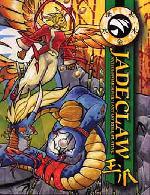 Goto [ Index ] |
And we'll take a quick break now while everyone makes the usual gags about naked furries and furverts yada yada yada. Anyone who thinks that anthropomorphism is automatically sad and only for people who get off on squirrels with massive tits will be directed to the stack of Cerebus and Usagi comics in the corner, next to the copies of Redwall and Mrs Frisby and The Rats of NIMH.
Finished?
Ok then, let's proceed.
JadeClaw is the companion game to IronClaw; eastern wuxia fantasy to its western medieval fantasy. If IronClaw can be described as throwing WFRP and TMNT into a pot and boiling them up with just a dash of the same stuff the guy who invented the dice system in Earthdawn was smoking, then JadeClaw can be thought of as taking the same stuff out of the fridge two weeks later, bunging it in a sizzling hot wok with some noodles and hoi sin sauce, and serving it up on the menu as #44: Kung Fu Chicken with Spicy System Sauce.
And believe me, the system is definitely an acquired taste. It's both complex and weird and none of you are going to like it when you first try it. It does however have its own charms once you get used to it, and if you don't mind your systems on the heavier side of D20, you may even enjoy it. But we better get it out of the way early as well.
Stats and skills in JadeClaw are rated in dice types: d4 up to d12. Skills range above this, with new dice being added. So the next step above d12 is d12, d4 up to 2d12, then 2d12, d4, and so on. Since you roll and take the highest number showing, the step from d12, d10 to 2d12 is far better than the step from 2d12 to 2d12, d4 but in the case of ties, the next highest number shown is used, so more dice is always good. A typical task resolution check will involve rolling skill dice, possibly race dice, usually career dice and sometimes (but not always) attribute dice. So if your skill with a sword is d12, your Speed (that's an attribute) is d10 and your d8-rated Career of Soldier also covers sword usage, you'd roll d12, d10, d8 for your attack. The highest number rolled on those dice is your score for that attack.
Should you have a bonus to your roll - because your opponent is unsuspecting, say, you add one step to EVERY dice you are rolling (so again, more dice is better). So d12, d10, d8 becomes d14, d12, d10. Every time you get a dice above d12, you add the excess on to the next dice…but in this case that gives us another d14, so it goes on the last dice, giving 3d12. Two bonuses would give 3d12, d8. Should you have a penalty, though, there's no need to do this in reverse. Instead, just roll your dice an extra time for each penalty you suffer and take the lowest of all those highest numbers.
So for each die roll, the proper order is (as explained in a nice, clear table): include any new dice, remove any dice due to special maneuvers, limit any dice due to encumbrance or spells, THEN add any bonuses, then roll. If you're using your skill in a Favoured situation (think a speciality) then re-roll any ones. Note the score. Then, if you have any penalties, repeat the last three steps. See? Clear. Simple. Easy.
Hey! No, wait! Come back! Please!
Sigh.
Yeah, most people hit the bonus thing and go no further. Like watching cricket, nuclear physics and making characters in Hero, it's just one of things you either get or you don't. Once you've done it a few times it does, seriously, become second nature, but from the outside, it looks totally whack. Indeed, one of the most common subjects of first posts on the *Claw mailing list is "ideas for fixing bonus/penalty rules?".
There's no excuse I can give for it. It's weird, it's complex, it's a tad screwy, but it's a testament to the elegance within it, and in its implementation, and of the coolness of the game overall, that so many have learnt to love it anyway.
One neat thing about it, for example, is that because there are no 1s or -1s, the full spectrum of results is always 1 to 12. Course, this doesn't really make the game suddenly more marvellous, but if you're a dice nut like me, you might see some neatness in that. It is also important because it means that no matter how many penalties you take, you can still roll a 12, and no matter how many bonuses you have you can still never roll above a 12 and you can still roll a 1. Since critical hits occur when you overwhelm - beat your opponent by 5 points or more - and since a 1 result is always a botch, these are important considerations in the system.
Which brings us to the second problem with the game. For every roll, against an opponent or the GM's difficulty dice, there are six possible outcomes: overwhelmingly succeed, succeed, tie, fail, overwhelmingly fail and botch. Now, for different task rolls in the game, there are often different results associated with each of these outcomes. Sometimes a tied roll goes to the defender. And sometimes it doesn't. So every check needs its own table.
Also, each task roll has its own unique combination of dice. Mostly, its straightforward but it's almost impossible to know when to include attributes or not. (in combat and magic, yes, otherwise, mostly no), and sometimes there are special dice which just get added in for those tests only, or only if you have a certain ability or a certain martial art feat. And of course, your opponent may get special dice too. For example, if you are doing the Kiss of the Ghost maneuver, your opponent may add his Criminology Dice, Observation Dice and Sixth Sense Dice to his Soak roll. Hands up all the GMs who want to look up those numbers for their NPCs in mid-combat.
Oh crap…they can't put their hands up, they've all run away again.
I feel like a cigarette salesman - try this, it's so cool! It makes you cough up phlegm, smell bad and die!
Actually, JadeClaw's a lot like an addictive drug - some part of my brain says the system is too annoying, but I just can't stop getting high on how damn cool it is. It's reminiscent of classic eighties games, like Palladium's stuff, which has countless raving fanboys despite all the problems with the system. Which isn't to say that JadeClaw is as bad as Palladium - just that the fans are somewhat similar. You have to be hardcore to look past the complexities, but the sheer abundance of kewlness awaiting you more than makes up for it.
Okay, so let's talk about this kewlness.
Well, the race and career system is pretty damn cool. Characters have 8 dice - d4, d6, d8, d8, d10 and d12 to split between four attributes - Body, Speed, Mind and Will - along with Race and Career. These last two measure how good you are at skills which are intrinsic to your Race or part of your Career. And the choices for both are lots of fun.
If you have any love at all for anthro gaming (see my review of TMNT for discussion of the appeal) then you'll love the options provided here. Cats and dogs, rats and yaks, chickens and elephants, plus mythological beasties like phoenix and dragons are all available, and more. Best of all, each race is accompanied by an outstanding piece of artwork which makes them all beg to be played. Careers, meanwhile, are much like the ones in WFRP - indeed, a few of the same names appear (fence, outrider, road warden, coachman etc), which makes me suspect a strong influence from that game. Other fun options include Spirit Hunter (a mage killer), Dilettante, Vagabond, Tomb Defender and three types of mages. They're not all perfectly balanced but they all look fun to play.
Careers aren't very binding though - indeed, one great thing about JadeClaw chargen is that everything is important: Race, Career, Skills, Gifts, Kung-Fu moves…it all adds up to make a rich tapestry. And one cool thing about the dice system is you can see where all your bonuses come from. When you roll the d12, d10, d8 I mentioned above, you can see what allowed you to succeed - your skill, your career experience, or your natural talent. And it's not enough just to be highly skilled, because you want width to your dice as well as height. So players will want to improve their careers - or find new ones - as well as just bunging points into skills. All of this detail means more description, and that can make for good drama.
As for the skills themselves, there are (again, much like Warhammer) a crapload of them, and almost all of them are useful. The level of detail is such that each weapon skill needs to be bought separately - and twice if you want to throw it, too. You'll need Resolve, too, and Stealth and Sixth Sense is damn handy…and don't forget the skills you require to qualify for the kung-fu you want…frankly, players are going to run out of points pretty quickly. Especially if they're also buying Gifts and Kung-fu moves, because they all come out of the same pool at chargen.
You have 20 points to spend. 1 point will get you a d4 in a skill, 5 will get you a d12. 1 point will also get you a basic kung-fu move, if you have the requisite skills and abilities. Gifts include the standard physical things like ambidexterity and heightened senses, or social benefits like nobility or wealth. Racial gifts like claws and flight also come out of this pool of 20, so that the animals with lots of natural powers will tend to have fewer Gifts or fewer skills to make up for it. It balances out very nicely, actually, and the Gift list is kept short, covering just what it needs to and with very little room for abuse.
One particularly cool Gift is an extra stat to your pool of six. With seven to spend, you can now take an extra attribute. Empty-Hand kung-fu methods are done like this, emphasising that it's part of your "body". Or you can take Second Sight, perhaps, or Magic Resistance, or something more mundane like Toughness or Quickness. Or choose from one of eight Bagua personality types such as Rebellion, or Sensuality, which add to appropriate skills. Again, by making this an attribute, it drives home the idea that it is a core part of who you are.
Kung-fu moves also count as Gifts, and thus you can't have lots and lots of kung-fu tricks AND be a sure-footed nobleman with keen ears and magical armour. This means that, like in D&D, the people with lots of combat options will have less feats for dealing with other aspects, and it also reflects the in-game role of kung-fu. If you're going to take up a path to get some of the higher powered maneuvers, or follow through one of the ten Secret Martial Arts, you're unlikely to have a lot of time to learn skills, or suffer from distractions like wealth, nobility or faith.
But that isn't to say you won't have any kung-fu. Unlike D&D, combat feats are available to everyone, whenever they have points to spend, and there are plenty which aren't secret paths. Some have cool anime-style names (like Butterfly-Landing-on-Iron-Pillar, which allows you to kick people backwards a large distance), others are more prosaic (like Second Parry, which, astonishingly, gives you a Second Parry). They come in four types - Maneuvers, which are special types of attacks, Exploits, which are special "come-backs" after a critical parry, Specials which are special effects after a critical hit, and Advantages which are everything else; typically not having other rules apply to you (like not being penalised for drawing and attacking in the same round).
All of them are useful, most of them lend themselves to development into some killer combos and also, most of them are damn cool on their own. Even a beginning character will have no troubled getting things like Death From Above (leap over your opponent and attack from behind) or Shadowless Strike (onlookers don't see your attack). Indeed, looking at the powers of the pregenerated starting-level characters, my first thought was that they were too powerful, and there was nowhere to go. Then I read through all the kung-fu moves…ohhh BABY are there places to go!
The same is also true of the magic system, which is a thing of such beauty and complexity it may take a lifetime to really understand it. Depending on your magic career, you'll have a wide variety of spells that you can cast. They work like skills, and you buy skill levels in them. However, once you put in as many skill points as the cost in magic points to cast the spell, you become Adept at it, and may cast it without a chance of failure. Beginning players willing to spend the points can be adept at an impressive arsenal of quite powerful spells. What comes with experience, however, is the ability to use these spells more effectively.
Every spell in JadeClaw has a Nature: Earth, Fire, Water, Metal, Wood, Wind, Lake, Thunder, Heaven, Healing, Unreal, Mountain, Unholy and Weather, and all of them interrelate. Should you have an Aura that helps your spell's nature, the spell will have an increased effect, while an opposing one on you or your opponent will do the opposite. Auras come in five different strengths, not including the dice rolls involved with them. Also useful are Bounty spells which build up excess magic points which can be used for casting spells of a specific Nature. There are also countering and dismissing spells which provide varying strengths against the elements in question, or spells of that Nature. The most powerful of these are Privilege spells, which stop any spell of that Nature being cast, if you're wizardly skills are good enough. Lastly, you can cast Delaying or Synecdoche spells to make your spells work when you want them, and over greater distances (synecdoche being a link through sympathetic magic).
So, in an all-out major battle between wizards, you would expect to see an intricate dance of checks and balances, as each wizard uses bounties to store up more magic points in their particular favoured Natures, set up the right Auras, and make ready their delayed defence spells for their opponent's Natures. But of course, when your opponent's Earth attack is deflected, he may switch to a new type of spell, which is aided by your Aura, or put on a new type of Aura, one which opposes your attacks (or even has Privilege over them), and thus you will have to switch as well. And so on. Only a true master of all the subtleties of magic (and those of the system) will win the day.
At least, I think that's how it works. Without seeing it in action - as in, over a whole campaign, not just in one session - I actually have no idea how it works. I barely understand the basic principles. This is not a magic system for those who like things quick and easy. It makes Ars Magica look like FUDGE.
Combat isn't quite so bad, but it also makes D&D look simple. But like D&D, you can't really cut it down without losing all the cool options that make all those cool kung-fu feats worthwhile. There is a simplified version provided but it is perhaps too simplistic for many (for example, instead of initiative, all PCs go, then all NPCs).
Normal combat has five stages in each combat round: start of the round, first rank, second rank, third rank, and end of round. The start is when you roll initiative, which can be modified by the Leadership skill, particularly important for NPCs. In true wuxia tradition, killing the leader of a pack of goons weakens them severely. PCs then act in order of initiative throughout the first rank, assuming they are doing a first rank maneuver, such as striking. If you lost initiative, you might want to wait until your turn comes up in the second rank, and this time Strike Sure or Strike Hard. In return for being second rank, these give you a bonus to hit or to damage, respectively.
Casting spells - unless you are fast casting - is always second rank. So is striking with an awkward weapon, which is a medium weapon used one-handed, or any heavy weapon (light weapons can be used one handed with no penalty, unless you're striking with two of them at once, which is second rank). You can decide on the weight of your weapon when you purchase it - every weapon comes in every type of size. Naturally you can also do any first rank maneuvers too, and first and second rank maneuvers are kosher in the third rank as well.
If you haven't acted by the third rank, and haven't been hit yet, you can claim focus. Next round, you can use that to interrupt someone else's attack, or gain a bonus to your roll (effectively allowing a Strike Sure in the first round). Defending costs no actions, but you can only parry once per round; dodging you can do all day but that means spending points on weapon skill and the dodge skill. Finally, at the end of the round, effects like spells and altered states of mind wear off, and injured players have to roll an Unconcious Test if they've taken more than three wounds, and a Death Test if they've taken more than six.
Which, combined with the Resolve test, makes three rolls per combat round just to see if you pass out. The Resolve test happens after every wound you take - fail and you'll be sent Reeling, losing your next action and your defence. Botch and you take another wound! This makes striking first very important, as well as providing a lot for a GM to keep track of.
The attack roll itself is pretty simple - just the same old skill roll (with your Speed attribute, and Career dice if appropriate) opposed by your opponents dodge or parry. Damage is then rolled on multiple dice and these are compared to your opponents Armour and Soak dice. Here, every dice counts: line them up highest to lowest and every dice you beat is a point of damage. Overwhelm a dice (that's beating it by five or more, remember) for double damage. Damage dice also get bonuses (eg Strike Hard), but thankfully, not penalties. Take 12 hits and you're automatically Mortally Wounded, and quite likely to die.
Overwhelm on your attack roll and you get a Special hit. All weapons have an inherent Special, depending on their nature - such as Impale (ignore an armour dice in the damage roll) for spears, or Cleave (add an extra d8 to the damage) for swords or Entangle (for ropes). Martial arts lets you buy more specials. Overwhelm on a parry and your opponent will be sent Reeling - but with certain martial arts, you might have another option, like making another attack, or Entangling, and so on.
Like Magic, this allows for some gloriously intricate combat maneuvers, which really reflect the genre. Every character you create will have his own unique style of combat and his own preferred maneuvers. She might prefer to parry always, then use her exploits, or use a disarming weapon to knock away her opponents' weapons, then switch to empty hand attacks, or wait at the back, taking focus, and then charge and strike in one deadly maneuver…it's all there, it's all modelled and it's all damn cool.
But Christ it is hard to hold in your head. I made a note of a few of the questions I had one day at work, when the book wasn't with me, to give you some idea of the problems here:
"Can I move a Stride while lying down? Do Cover Dice add to Dodges? How many Parrys and Blocks do I get total? Does someone Grappling use their Contortionist dice when attacking, or is it just in defending such an attack? Do you add Empty Hand dice to your Brawling skill, or do you just use Empty Hand? If I'm using a weapon while kneeling, is it one Penalty, or does it become an Awkward Weapon? Can I use Focus to interrupt a first rank action, even if the action I want to interrupt with is a second rank one?"
Now, you might have a better tolerance for such things than I do. After all, it took me a few months before I was happy with (ack!) Attacks of Opportunity. If you love this kind of stuff, if for you part of the thrill of roleplaying is getting all rules-messy and finding out the best and kewlest new way to toast your opponents once you get your next XP, because you've noticed that the GM's forgetting to have his NPCs take Focus when they're not attacking and there's a great maneuver to take advantage of that that you saw on the net - and frankly, I love that kind of stuff myself, in moderation - then you'll eat up JadeClaw. It's D&D3E, with twice as many feats and 20% more complexity for them to work with. But it's also pretty deadly, and fights will tend to be more ferocious and dangerous than D&D. They also should prove more acrobatic and stunt-filled for everyone, not just the rogue. Like everything in JadeClaw, if you can stomach the price of complexity you pay for it, there is an absolute crapload of kewlness to reward you.
These days, it tends to be settings that takes this approach - difficult to get into, but very rewarding to do so. JadeClaw's rules do this, as described, but its setting does not. Once again taking a leaf from Warhammer, JadeClaw's world of Zhonggou is a very familiar one, an ancient China with the serial numbers filed off and some more magic included. This does not mean to imply that the world is in anyway less interesting or enchanting. Like Warhammer's Old World, it is full of the kind of sharp detail, clever history and realistic depictions of everyday life that make its familiarity into a strength, not a weakness. It uses its similarity to the real and fictional world to enhance its depth and richness. It's wonderfully evocative, yet still instantly recognisable.
What's more, the detail provided on the history, geography and socio-political life is full of story hooks, without ramming them down your throat. It seems nearly every province and town has a dark secret or hidden mystical pool, just waiting for adventures to stumble across them - but should you not use them, your game will not suffer for it. Overall, the setting doesn't instantly call forth any one particular story, but this is definitely the kind of realistic, wheels-always-in-motion kind of world where something of the scope of The Enemy Within campaign would not be out of place. Between the political machinations and the ancient legends, a GM will find plenty of meat for his grinder here.
Speaking of helping the GM, the GMing tips chapter is also first class. Although the generic advice is, as usual, pretty repetitive of other games, the break down of player types and their needs is as useful as Robin Laws' system, and the material on crafting stories and running games is equally sharp. Best of all, it doesn't stop there: tips for bending and breaking the rules are given, and for making up new ones, followed by optional rules to show how this might be done. Then there's a host of sample opponents for your PCs to battle, with estimations of their challenge ratings. Sample maps are next, a gift from the gods to GMs like me with no mapping skills, and something far, far too many RPGs neglect.
Another sight for a sore GM's eyes is the included adventure. Alas, it is nothing but two fights strung together by a bit of ridiculously easy investigation and far too much boxed text in lieu of plot. Still, the effort was there. Continuing with the effort is a bestiary of the various lizards your PCs will deal with, for food, for riding, and for fighting. Then there's ghosts and the undead and a few other special surprises for your PCs, including an entirely separate and unique magic system, proscribed in the Empire. Since it's in the GM section, how you spring this on your PCs is entirely up to you - another handy tool for the hardworking GM.
All of this reflects the outstanding effort the writer has gone to to provide all the help to the GM that they possibly could, far beyond where most RPGs give out. Indeed, every bit of free space has been devoted to this purpose: the margins of the GMing chapter feature some two-dozen off-the-peg NPCs. Not stats, just a name and an instantly evocative description; enough so you could play them at the drop of a hat, with the sample opponents stats sufficing for any dice rolls until you had time to stat them up properly. And once again, these NPCs are accompanied by some eye-wateringly fantastic art.
Indeed, the art in general is first class. It has been a long, long time since I've seen a book which looked this good. Only one piece of art isn't nice to look at - and unfortunately, it's the comic strip which opens the book. Still, it's made up for by the countless pictures and comic strips which are both gorgeous and damn fun to read. Watch out for Steel Monkey's revenge, and the story of how Lazy Dragon left the heavens. Lazy Dragon is adorable.
You can play these guys too, as well as solve any confusions you encounter with the rules, by simply flipping to the front pages. Here, the book provides a host of pregenerated characters, and they are some of the coolest, funnest, most vivid pregens I've ever seen. Magnificent Weasel, Number 21 Mouth, Slow Zi, Lazy Dragon, and more - they only have a few paragraphs to describe them but they have such great character and such great art that I couldn't help but fall in love with them. And now there will always be a place in my heart for them. I defy even a furry hater with a vicious dislike for cuteness not to smile at Magnificent Weasel.
Every time the system overwhelms me, I turn back to those pages, or to their stories told in the comics throughout, and not just because I like well-drawn characters. I turn to these because they remind me of what the game is supposed to be, and of how much love and effort has gone into making that feeling come through, and yes, indeed, how much that has succeeded.
Because JadeClaw is a very good game. I know, I'm biased in my pro-furry tastes, but it's more than just that. JadeClaw is a massive labour of love by designers with a sharp eye for detail, and with the determination to go above and beyond at every step, and this shines through on every page. The artwork is first class, bringing everything to life. The writing is first class, doing its best to explain some very, very complex system elements, and providing detailed glossaries and summaries to help this along as much as it can. The organisation is first class, and although you need to read much of the book before you can make a character, I never once felt that I could not find what I needed. The system may be byzantine and the combat convoluted, but you get the sense that it isn't at all flawed within this, that it is air-tight and scrupulously tested. The setting isn't going to surprise anyone, but it is completely sensible, historically grounded and richly detailed, all only enhancing its instant familiarity. And the GM advice is outstanding, and the support material with it is expansive. Everything is in here, you will never need another sourcebook - but if you want more, join the mailing list for free regular magazines full of extra goodies.
JadeClaw is much like D&D3E - it's an old school RPG done with 21st century quality, only this time the old-school RPG is closer to Warhammer or Palladium than AD&D. No big flashy settings, but not just generic fantasy either, plus all the rules crunchiness you can eat, allowing a wonderfully complex combat system and equally funky magic system; and yet its modern sensibilities means that it is free of the rules holes and inconsistencies that plagued those older games.
Sadly, in the current state of the industry, I fear JadeClaw is going to get labelled. As I've stressed in this review, it has some very particular idiosyncrasies - an esoteric dice rolling system, a combat system very much on the complex side of D&D, and well, furries. Those who fall into the niche of loving all these things will be greatly rewarded by buying this game. It might even make you feel like you're thirteen all over again, and you'll get both an instant buzz from the moment you open the pages, as well as years of enjoyment from running characters from humble beginnings to epic triumphs. However, in the main, anyone balking at any one of these eccentricities - and that's almost everyone - is going to skip past JadeClaw for something else.
And that's sad because JadeClaw deserves more attention. Yes, it features elements that drive gamers away in droves, often screaming in panic and horror, elements that drive even ardent fans of the game to distraction and annoyance. Some of these are valid design choices, some of them are less valid; both must be accounted for in any consideration of the game. Yet the game does an amazing job under these circumstances, and to my eyes, succeeds in spite of them to be worthy of attention and acclaim.
In a crowded market place, labelling is only natural. But if some of us roleplayers would just put aside our neophobia, learn to appreciate the ins and outs of the system, get the hell over the furry thing and really take the time to get to know this oft-rejected wallflower of an RPG, then they'd find that underneath all that, she's got a great big heart and stacks of personality, too. And, when she takes off her glasses, why, she's just as pretty as that D20 slut all the boys like so much. Dammit, she's a star.
But then, I would say that, because, well, I think I've fallen in love with her. She had me the moment I saw her magnificent weasel.
Style 5, Substance 4.

