

 Search
Review of The Slayer's Guide to Hobgoblins
 Goto [ Index ] |
|

The Slayer's Guide to Hobgoblins (SGH) is a good idea that is unfortunately marred by poor layout, editing, and complete lack of substance. At a suggested retail price of $8.00 and 32 pages of content, the SGH doesn't have a lot of room to prove itself. You would think that it would be crammed to the gills with information.
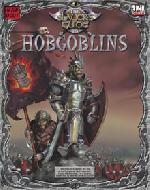
It isn't. Instead, SGH has no less than four full pages of flavor fiction. The interior black and white artwork is quite good, although the cover art is less inspiring.
Introduction
This section introduces the SGH and hobgoblins in general. It also makes some large assumptions. Throughout the text, it refers to "goblinoids" along with Bugbears and Goblins. We are never told the exact classifications or relationships these races have, other than that bugbears, goblins, and hobgoblins are goblinoids and orcs are not.
The section feels like the beginning of a chapter about goblinoids. In fact, the entire SGH gives the impression that it was a rough draft for a larger, more expansive work on goblinoids in general. Mongoose may want to consider reprinting a fleshed out hardcover compilation with each Slayer's Guide included as a full chapter.
The flavor fiction on the third page sets up the enmity between hobgoblins and elves. It comes a bit early -- we don't know why hobgoblins hate elves yet. Of all the flavor fiction, this is probably the best and most legible. Unfortunately, there are a few inches of white space at the bottom.
Physiology
The origin of hobgoblins is explored here but, despite five paragraphs of discussion, no actual origin is explained. We know only that they are "derived from goblins directly." (p. 5).
Hobgoblins have a keen sense of hearing, with the "ability to pick out and filter individual sounds from a multitude of sources, even during a pitched battle" (p. 4). Logically, the Listen skill is considered a class skill for hobgoblins regardless of class (p. 23).
It is here we are told that hobgoblins enjoy eating horseflesh. This is a bizarre assertion in a feudal society where the power of the mounted knight rules the battlefield. When the question is posed, "why are the civilised races not constantly engaged in full scale warfare against large and self-sustaining hobgoblin empires?" (p. 5) the answer should be that hobgoblins literally sabotage their own power structure by making the primary labor animal their food source. Instead, the answer is that they are a "newer race" and have not reproduced long enough to take over the world.
A preference for horseflesh in a fantasy campaign is still feasible if another animal takes its place, but no alternate creature is provided. This has serious military implications, yet hobgoblins do not seem to have changed their tactics to reflect a horseless society.
Physically, hobgoblins have a lot in common with baboons, which opens the race up to some interesting possibilities. Their skin color is dark red or orange, their hair dark red, brown, or gray, while their noses develop a blue or red shade. Unfortunately, the parallels are not further explored. The disparity of power amongst ages is also listed but no rules for aging hobgoblins is provided.
And then we come to the hobgoblin psychology. They hate elves. As in, they really really really HATE elves. Somehow, "this hatred permeates the entire race and hobgoblins have been witnessed in battle dispensing with their renowned discipline and actually bypassing several enemy units in order to strike at a sighted elf" (p. 7).
Racial bigotry and prejudice is tough to pull off in any game, but single-minded hatred of an entire race stretches it a little too far. There doesn't seem to be any reasonable explanation for this hatred that would keep the hatred alive, such as contesting sacred land, population pressures, competition for food, etc. Hobgoblins just hate elves, and that's that.
At this point, hobgoblins start to seem a bit ridiculous. They hate elves to the point of abandoning sane tactics -- surely the elves catch on and lure hobgoblins into traps due to this race-wide hatred. They eat horses, depriving them of cavalry superiority. The artwork contradicts this view on page seven; it's a picture of a hobgoblin on a horse.
Habitat
In other respects, hobgoblins are a lot like humans. They seek out temperate areas, preferably defensible forts, cavern complexes, or tunnel systems. They cautiously explore future locations with scouts. In fact, there's nothing that hobgoblins do that humans wouldn't logically do (beyond, you know, eating horses and hating elves). This chapter rounds out with flavor fiction that isn't particularly enlightening and is written in a font that is difficult to read.
Society
It is here we finally get a unique aspect of hobgoblin society, the Surka. The Surka is a tribal challenge that can only be initiated between full warriors. Surkas are used to settle disputes of all types, which makes hobgoblin society a very rough and tumble lifestyle. Barring who may enter into a Surka, we aren't given any rules about how it's settled beyond that "the amount of damage a hobgoblin sustains in such a challenge is purely at his own discretion..." (p. 10). So Dungeon Master's have to guess when a hobgoblin has had enough, as opposed to making a Will check or something.
When it comes to wealth, hobgoblins prefer to barter. The barter rate for some hobgoblinesque items is not provided. Likewise, plunder is divided in a certain specific way, with chieftain's claiming, "around a quarter to a half of the total haul, depending on how successful the raid was considered to be" (p. 11). But there are no rules on how to determine the success of the raid.
All warriors "are capable of adjusting and repairing their own weapons and armour," (p. 12) but hobgoblins do not receive any bonuses to the Craft skill or indeed, any rules relating to the text. This is a shame. Young hobgoblins are employed as runners, "ferrying orders to each unit directly from the chieftain" (p. 12) which might have made for an interesting prestige class.
Speaking of lost opportunities for prestige classes, the hobgoblin that holds the tribe's banner acts as both bodyguard to the chieftain and defender of the banner. Rules around the loss of a banner and its effects on hobgoblin morale are also missing.
Hobgoblin mercenaries seem to catch on to the fundamental weakness of their horse-eating diet and might "even go to the expense of mounting their entire warband on horses rather than just having them eaten" (p. 14). This begs the question: why does it take a hobgoblin mercenary to figure out that eating their mounts is a bad thing?
In the religion section, the SGH discusses the hobgoblin deity, "The Mighty One." Perhaps dues to his highly unimaginative name, The Mighty One is generally ignored by most hobgoblins. "They rarely pay the god anything more than lip service until a real disaster strikes the tribe. Even then it may only take the form of blaming The Mighty One for their misfortune" (p. 14). Conversely, The Mighty One doesn't seem to care about the hobgoblins either. Hobgoblin adepts make such poor worshipers that they "may even secretly suspect the powers they wield come from within themselves rather than being channelled from any god" (p. 14).
In short, the hobgoblin pantheon is exceptionally bland. It contains only one deity, who doesn't care about his people and whose people don't care about him. Fine. But on page 16, the racial hatred between hobgoblins and elves is finally explained. The Mighty One battles the Elven god for dominance, until "the fine sliver of the elf diety's [sc] thin sword lunged forward under the Mighty One's guard, striking him cleanly through the heart and banishing him from the mortal realms forever" (p. 16).
In other words, the reason hobgoblins hate elves is most specifically a religious conflict. And yet, hobgoblins don't care about their god or their religion. So why should they care about elves? And more importantly, why would the hatred permeate an entire race?
Warfare
Here we discover that hobgoblins, against all internal logic, "have been known to use cavalry to supplement their attacks" (p. 17). Also, despite the fact that hobgoblins "as a race are noticeably inferior when performing" stealth tactics in comparison to goblins and bugbears (p. 4), scouts' stealth abilities can "even rival those of other goblinoids" (p. 17).
The Facing the Tribe section suddenly switches to second person to describe a hobgoblin attack in "you are there!" terms. This is one of the few blocks of text that should have been third person flavor fiction. Instead, it disrupts the narrative. The second person narrative is referred to as "neither typical or unusual of a massed hobgoblin attack" (p. 20). Huh?
Role-Playing
This chapter starts with the words, "in this chapter..." but it's really only one page. This lends further evidence that perhaps the SGH was meant to be much larger work. The "chapter" is most noteworthy for the phrase in bold, black typeface that emphatically states:
And yet, the amount of contradictory tactics and lack of internal logic proves they are very much an illogical, if not insane race. In other words, SGH may will convince readers that yes, hobgoblins really are stupid.
The section on hobgoblin names is useful, but not useful enough. Only nine sample names are provided, which doesn't give enough flavor of what the hobgoblin tongue is like.
Scenario Hooks and Ideas
This chapter is somewhat limited in that most of the hooks (all six of them) revolve around open warfare with the hobgoblins. If the PCs aren't engaged in a war with them, the ideas have to be tinkered with to work.
Player Characters
In fairness, this book isn't about playing hobgoblins. In theory, Third Edition Dungeons & Dragons can make every race playable, given enough background and cultural structure. Instead, several racial traits are listed, many of them contradictory. For example, hobgoblins get a 4 bonus to Move Silently checks and get Hide and Move Silently skills as class skills because they "retain some of the stealth of their goblinoid cousins" (p. 23) and yet hobgoblins are considered the least stealthy of the goblinoids (see above).
Graven Hill Fort
The fort is one of the meatier parts of the book. The map on the inside cover isn't quite detailed enough to explain anything about what's inside. Instead, we get four paragraphs of exposition about how the fort was taken over, which is completely useless to PCs and of limited value to Dungeon Masters. The Black Drakes tribe is also detailed, along with its tactics and future plans.
Strangely, the SGH states that "hobgoblins are individually fairly weak" which goes against everything the book has stated up to this point.
Hobgoblin Reference List
The most valuable part of the book lies in these two pages. Here are statistics for hobgoblin archetypes and two new spells. Finally.
Conclusion
The book wraps up with another page-long piece of flavor fiction. It's not well written and flips back and forth between perspectives. It also summarizes the ending battle rather than making any interesting statements about hobgoblins in combat. In other words, it's fluff.
If the Slayer's Guide to Hobgoblins had achieved its goal, it had a very real possibility of becoming a foundation work for future OGL books involving hobgoblins. That would have been a glorious accomplishment indeed: to make this book a "must have" for any future D20 adventure involving hobgoblins, such that players and Dungeon Masters alike would feel like they were missing out without it.
Reading this book is likely to leave a lot of gamers frustrated. It's like one of those ecology articles in Dragon magazine, with less rules (if that's possible) and a lot of contradictions. The book feels like it was a draft for something much larger and grander. Hobgoblins deserve much better.

