

 Search
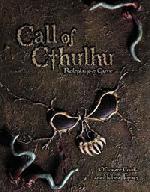
Review of Call of Cthulhu Roleplaying Game
 Goto [ Index ] |
CoC D20 has been an interesting wait. On the one hand, I was concerned with what sort of production and changes would be made to get the well-established Chaosium version’s conceptual spirit in to a D20 approach. The Chaosium D100 system is grounded in a level playing field where characters are relatively static in terms of physical prowess while flowering in intellectual development. The D20 approach requires a progressive element that generates increasingly powerful characters over time. Likewise, with D&D being centered on a class-based approach, would the D20 version do the same? My fears were somewhat snubbed at the idea of Monte Cook and John Tynes managing the design, but there’s only so much they could do…..
Well, now I have it, and I have to say I am most impressed. The D20 system still necessitates some changes in approach, and that’s what I’ll emphasize here, but overall, CoC D20 is going to make a lot of people happy.
Character design dispenses with the class options while retaining level development. Your character will now be a generic design, which you customize according to need. You develop your core attributes as in standard D20, after which you then modify your character’s development options according to taste. Instead of using a class to dictate saving throws, attack modifiers, and skills, you now choose from a profession and a combat option. Your combat option is either defensive or offensive, and reflects the focus of development on your attack bonuses and saving throws, which you then assign as you see fit. Thus, if you’re developing Miss Kitty Deville, the nurse at Miskatonic Hospital, you could opt for Defensive as a reflection of her lack of combat prowess, and if you want to design Richard Mathias Thompson, the former captain and retired soldier from the Great War, you can snag the offensive option.
Professions are the other side of the character development track, and serve the same basic function they do in CoC D100. You pick your profession to give you the twelve skills that reflect your core skills; the rest are secondary, and cost two points instead of one to advance. Each profession is more of a guideline than an actual list, so you can build your own list if you want. This models the class/cross-class system of traditional D20. Professions offer no other benefit than a guideline on what your character does, and what skills reflect this.
Feats are determined from the base level advancement; two at first level, then every third level thereafter. The feats in CoC D20 are a mixed bag of new and old, including most of the recognizable feats that would make sense in a gritty, realistic horror setting, while introducing some new ones that can add some interesting potential to the Lovecraftian campaign. Psychic feats, all minor psychic abilities which can serve as much to enhance the storyline for the GM as provide the player’s with some unusual investigative options are now made available. All in all, however, D20 CoC investigators will have no more feats than the NPC classes in the D&D DMG; a classless system eliminates the need to fancy specialized abilities acquired through character advancement, which is fine, since CoC D20 is earthier and more grounded than a lofty fantasy campaign would be.
Sanity remains intact from the D100 edition to the D20 edition. You use Wisdom now in place of Power to determine your San score, which is sensible. In addition, there’s a nice section on the use of Sanity and the process of madness in Lovecraft’s country. I enjoy Tyne’s subtle humor here with his Dr. Shiny examples.
Characters do still advance with Hit Points, and now wound system or alternative static hit point system was developed. Thus, characters at level one get 6 HPs plus a CON modifier, and roll 1d6 plus the CON modifier at each level thereafter. Yes, kimosabe, that does mean that you could have a tenth level investigator with a high constitution score waltzing around with the ability to absorb multiple shotgun blasts. Oh well…….>sigh<
The magic of the mythos is expounded upon at length, and the many malevolent spells of CoC are given heavy treatment in the D20 edition. It appears all core rule spells of the D100 edition made it in, and almost every spell requires at least reasonable Sanity loss and ability damage or drain. Old school CoC players will, of course, be well-versed in this process of sacrifice to generate madness-inducing magic, but D20 players unfamiliar with such turf will be astonished and dismayed (certainly my Lovecraft ignorant D&D group seemed to be). Interestingly, some key spells from D&D 3E have been modified and offered here as well, such as Augury and Divination; this allows for a smattering of useful and almost benign magic amongst the good stuff, and didn’t sit too well with me; the descriptions are even the same (weal and woe on Augury, anyone?) but, well, still a good treatment aside from that.
This is a complete book, of course, and so it includes rules on combat, skill use, and a range of conditionals and modifiers according to need. If you are among the ranks of those who found the D&D Player’s Handbook to be tiresome or confusing, or if you have ever wondered what a D20 system without Attacks of Opportunity would look like (they are listed here as an option, and explained much better than in the PH), then this book is worth it’s weight in gold to you. The D20 rules get a much better treatment in CoC D20. Not only that, but the rules include comprehensive firearms rules, and extensive tables on firearms from the last century.
The Mythos itself gets a special section in which great effort, and many quotes from Lovecraft, are used to explain the nefarious and sometimes contradictory cosmology. The cosmology remains closest to Lovecraft’s own more cruel and callous definition, and shies from the odd inclusions later brought forth by August Derleth (which is the same approach used in the CoC D100 edition).
The creatures of the Mythos are divided in to two sections, one for the stuff you investigators might survive an encounter with, and a second section on the deities of the Mythos. The conventional creatures include everything found in the D100 edition, and some beautiful artwork to accompany many of the illustrations. Even if you plan never to run a D20 campaign with this, it’s nearly impossible to want to borrow from this book for a D&D game with a terrible twist. By far, most of the creatures appear proportionately balanced to their D100 counterparts, and effort is made to explain that the Challenge Ratings in CoC D20 are rough guidelines, and that a CoC scenario of any level can utilize creatures of any CR whatsoever. It is explained that you should not use CR as a scaling approach like in D&D. Good. In fact, creatures do not provide experience with the CR, and experience awards are based entirely on GM method, story line resolution, and problem solving. Combat awards do not exist, though survival awards might be an option. Still, if you’ve got a D&D game going with Mythos elements, the CRs are here to determine the D&D equivalents.
The Deities of the Mythos are, once again, powerful in ungodly ways and the descriptions are really for the amusement of the GM, a way for him to visualize what staggering damage and deaths are wrought on investigators at the hands of these beasts. John Tynes mentions a play test at the Wizards site in which he ran a large party of 20th level D&D characters against Cthulhu unleashed, and Cthulhu dispatched 13 20th level characters before being banished (they couldn’t take him down). My fine batch of D&D players who are unfamiliar with Lovecraft were awed and horrified at the stats of the Mythos deities.
A welcome section of the CoC D20 book (which is different from the D100 edition) focuses on developing your campaign by time and approach. Tynes elaborates on a wide range of historical periods for CoC from the ancient past to the distant future, and includes some useful and interesting plot suggestions. He looks at each time period in a series of sections, including information on questions like, say, “If I wanted a campaign in 1961, and I wanted to set it in Lovecraft Country, what could it be like?” Likewise, overviews of each historical period provide data on suggestions for story lines of world-shaking events, globe trotting, adventures in your backyard, in Lovecraft country, and even gives ideas on groups that investigators could belong to, to provide a sense of unity. This is a much needed option for those who tire of losing second and third cousins, aunt and uncles, and all the rest to Mythos related maladies which you must respond to when their desperate plea for help arrives).
Interestingly, many of the story seeds mentioned in the campaign section include references to B movies and other horror flicks from across the last century, some of which do, indeed, make for good plot ideas when described by Tynes (but which made for horrible movies in reality). If you couple this with the timeline listings in the CoC D100 edition, then you have a lot of fascinating little bits to work with.
A gratuitous few pages are provided to explain how you could use this book to enhance your D&D campaigns. It has the basics on what spells in this book would belong to which classes, suggests the mood and theme of an epic fantasy with the Mythos as a presence, and basically just elaborates on ideas already suggested elsewhere in the book, or in the minds of those reading it for the purpose of such dire unions anyway. Even at $39.95, Call of Cthulhu D20 is worth investing in if you are a hardened D20 fanatic and want some real meat to add to your D20 games. If you have never been fond of the D100 system from Chaosium, you might find this book to be preferable to their system. I personally still believe that the mood and feel of the Mythos are best modeled by Chaosium’s system, but I am envious at what a beautiful treatment they have received in this book. If you are a fan of Lovecraft and like to collect works on or related to him, then this is worth picking up. If you are a hardcore Chaosium advocate, and you choke and gasp like the Color Out of Space has just descended upon you when D20 is mentioned, then you should probably thumb through this book, first. After you notice the gorgeous presentation and slick additions in the campaign material, you just might cave in and shell out the bucks. Lastly, if you are like me, and have a swarm of D20 advocates who are reluctant to try a new system, then this is your e-ticket to Lovecraft Country. --Tori Bergquist

