

 Search
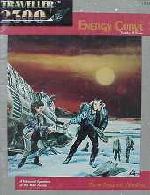
Review of Energy Curve
 Goto [ Index ] |
In it the PC's become explorers trapped on a hostile world when their ship is destroyed. While waiting for rescue, they have to deal not only with the wintery environment, but with a first contact situation, when they discover the natives, a race of sentient plants.
This book is let down by the fact that it appears that the author could not decide whether it was to be a source book or an adventure.
As an adventure, it suffers from the fact that once they have survived one year on the planet, PC's are likely to get bored unless they have a creative GM, also there is the risk that at certain times of year, namely winter, the adventure could degenerate to 'roll-playing'.
As a source book, it has problems owing to a lack of details covering the rest of the system, something that would be of great use preparing further adventures, the planet the adventure occurs on is well detailed, but other than the fact that the system has at least four planets, no other information is provided for the rest of the system.
Five maps are provided, one detailed map of the area the PC's crash in, an undetailed map of the same area for the PC's use, an map of the entire planet, a map of a larger surface area (triangle 18 on the planet map) and a map of the alien city the PC's will discover. The map of the entire planets surface is undetailed apart from some mountain ranges, though the text indicates that there are at least three main terrain types on the world, permanent ice packs from the poles almost to the equator, plains near the equatorial seas and mountains.
Another pity is that two entire pages have been taken up with illustration, which leads to the impression that the author ran out of ideas.
However despite all of the above, I find myself liking "Energy Curve", mostly because the author has attempted to write an adventure, that involves meeting aliens, not fighting them, the scenario also opens the way for putting the PC's into an interesting moral dilemma, after they are rescued, will the PC's help the aliens to survive contact with the rest of human society, or will they help humanity exploit the planet and its population.
It is this last feature that makes me give this book a 3 out of five for content.

