

 Search
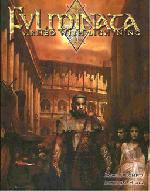
Review of FVLMINATA: Armed With Lightning
 Goto [ Index ] |
I've always been a big fan of genre emulation in systems, and the idea that what the mechanics emphasise, the play - and the players - will emphasise. Cthulhu's system demands intelligent play because the system doesn't reward the tough guy at all. BESM encourages a huge range of character types because fully three quarters of the book is devoted to listing character creation options. And so on.
But there are many other schools of design out there which don't follow this strategy. Some take the "just provide a detailed model for everything and let the players choose what to emphasise" strategy, and some take the approach of just providing a simple core task resolution mechanic, and leaving the whole aspect of drama and genre entirely in the hands of the players. The Window takes this approach, and so too, does FVLMINATA.
So if you're a fan of genre-emulation mechanics like Cthulhu, or anything more complex, then this probably isn't your kind of game. But if you like your setting up to 11 and your mechanics down to background noise, if you think dice get in the way of a good story, if you're a fan of games like The Window, or Theatrix, then you'll feel right at home. This may indeed be the game for you.
Sadly, I mostly belong in the first category, which is going to make this review a little difficult. But I'll try and keep myself in line.
This isn't to imply that FVLMINATA is systemless or even diceless. It has a core success mechanic, which does work (although with some hiccups, as we'll examine below) and some tips on how to apply it. It just has very few mechanics for most anything else.
So much for a summary of the system. Now we'll do a summary of the setting, and then we'll do the rest of this review by chapters, because a) I'm not being paid enough to turn my thoughts into one coherent document and b) while I'm writing this introduction I haven't finished all the chapters yet.
But don't worry. By the time I came back and inserted this sentence, I had read them. Feel better now? OK then.
The full title of this game is FVLMINATA - Armed with Lightning. What does this mean? Well, that can be best summed up by my reaction upon finding the website, which went like this:
Oh, boy ROMANS! How cool!
And then, two seconds later:
Romans with Guns? Are you CRAZY?
And let me just digress here, even though we've barely gotten started. Just what in the name of Graveyard Greg is wrong with us gamers, huh? Why why why (and for those of you reading in black and white, I put a lot of emphasis on that last why) do we always feel the need to take perfectly wonderful history - or indeed the world of modern day - and give it that all-important funky twist? I got news for you - real history is a hundred times more interesting than anything any setting designer can spin. Truth is not only stranger than fiction, it's cooler, sexier, bloodier, scarier and far more twisted and complex.
OK, I'm done. And the truth is, this isn't really an alternative history game at heart. Sure, in AD 79, some Roman dude doesn't die and goes on to invent gunpowder, and thus by the time we get beyond Hadrian, the empire isn't declining and falling at all. In fact, it's still getting bigger and better every day, thanks in no small way to the big brass boomsticks. But beyond a slightly more stable, more powerful and older Rome, everything is very much the same as it always was. And specified in all its gorgeously deep, rich and well researched detail. Which of course, begs the question of why include the guns at all?
Well, firstly because it makes a nice big macguffin to spring plots off, which, yes is darn handy and cool, I do admit. The other important reason, so the designers tell me, is that it allows the Empire to have a different history, so you don't have all the problems with having to bend your PCs and stories to what "really happened", and the marble is free for your PCs to carve their own epic stories on, without being undercut by the assured knowledge that, according to history, it never happened. A cynical bastard might say that the flip side to this is missing out on half the fun of historic gaming - mingling with the stars. I always wanted to call Caligula a psycho hose-beast to his face, and I think it's an opportunity lost.
But of course, this approach does give you the best of both worlds. Want the blank parchment? Then they've got the new history written for you. Want the old stuff? Grab your Edward Gibbon and you're already there. And there's notes on the old history provided anyway, in only slightly less detail. Huzzah!
But like I said first up, mixed feelings were the order of the day in my reading of FVLMINATA. Coming back to the guns issue, they do manage to do it halfway decently. They make it rare, dangerous and very mysterious, and it is kinda cool to think about what might have happened if the Romans had got gunpowder. But then they show you a picture of some roman legions with guns and man oh man, do they look stupid. But I suppose, because it's rare and mysterious, and not a major part of the game, it's very easy to take it out, twist it, or minimise it. For example, I think my Romans will have big clumsy cannons, but the rifle is still beyond them. In fact, the setting is so loose, and because it has no system enforcing it, it's perhaps too easy to tweak this setting. It's so tweakable it's too easy to forget you're in Rome.
But that's probably my love of rules infrastructure coming through. Let's move on. You've got the basic concept: intensely historical Rome, plus guns, and you've got some idea of the design philosophy. Now let's see how they implement those.
When in Rome -
The first chapter is called Salve, and contains the usual "What is roleplaying" and summary of the game stuff. It also contains two little testaments from the authors, which is kinda nice, but I'm beginning to get tired of this trend of game designers taking the forewords or afterwords to make their plaintive little Oscar speeches. Say it with the game, people, or don't say it at all.
There's also disclaimers about accuracy, and religious offence, the a decent language, numbers and dates guide, and finally, a few pages on how to think Roman. The text explains that the virtues of Rome were Duty, Respect, Dignity, Nobility, Harmony, Culture, Courage, Piety, Tenacity and Hard Work. That's followed by a fun quiz to see if you know how to think like a Roman. It is kind of enlightening, but the strange thing is that it is really very short and this is all there is on the subject - in the entire book. Yes, of course the Roman way of thinking is what all the other information is steeped in, but since understanding and projecting a mindset is really the key to roleplaying, I would have liked a bit more. A list and a quiz do not a roleplaying guide make.
Romans Aren't Build In A Day...
... but with this second chapter, twenty minutes or so will be fine. First off, you must determine to which of the six social strata your character belongs - Senator, Equestrian, Plebeian, Freedman, Foreigner or Slave. Then you choose a suitable occupation, and later also your authentic-sounding name, family background and home province, all of which will do a lot to strongly orientate your character in the Roman world, and throw up some concept ideas before you even hit the stats, which is nice. But note that none of these steps have any rules attached to them, and you still have to go through and buy the skills someone of that job and rank would be expected to have. They do provide a table of which careers match which social strata though, which will also help provide ideas for those new to Rome - but it's rather incomplete.
Characters then determine their four attributes - Intelligentia, Agilitas, Pietas (Piety - sort of like will, wisdom and social presence combined, it's a bit confusing) and Vis (raw physical power). Nicely Roman there. Characters have 42 points to spend on these, and they range from 5 to 15. They also have 42 points to spend on skills, which also are nicely Roman in nomenclature. Skills here are of the specific type, such that if you haven't got the skill, you really have no idea what you're doing. Thus though they range from 1-10, most players will have a lot of skills in the 1-3 range, to ensure they don't fall off horses or drown etc, with only a few up in the 5-7 range.
The cool thing about skills, however, is that they aren't grouped by skill type, or ability, but by the God that watches over that particular art. The character sheet even divides the skill portion up by diety (this is, of course, the only good thing about the character sheet. Attention game designers! Go and look at White Wolf! They're doing it right, and almost all of the rest of you SUCK! Oy!). Pick a patron God and you get 1 to all those skills, plus the possibility of favours granted. More importantly, in the middle of a game, you look down at your sheet and see that Neptune governs your horse riding roll. Now, you the player has the immediate connection between this test of fate, and the God who's determining your success. In other words, it makes you think like a Roman.
And the crowd goes wild.
There's a bit more of this mechanical mindset stuff when we get to humours. Every player starts out with three points spent in unbalanced humours: melancholy (unenergetic) vs sanguine (lusty), and phlegmatic (unmotivated) vs choleric (angry) (my versions are my best guesses, no explanation beyond a few words is given of each one, so it's not greatly clear). Only one in each pair may be unbalanced, from a level of 1 to 3. Then, you can put this number in a table and produce a word which describes how it expresses itself in your personality. Cleverly, the word depends on your weakest trait as well, so strong characters have emotional hangups, and smart ones get worn down physically. Obviously some players will not like their choice, but it's a nice guideline or inspiration to get you started.
But there's two problems with humours when it comes to the system. Firstly, they have no mechanical effect on the game at all (and thus your players), except for one tiny thing. The second problem is that thing. At the start of each session, players with unbalanced humours get three humour points, which are like fate points, allowing dice re-rolls and so on. Characters, however, who spent their chargen skill points on balancing their humours - on a measly one for one basis - get SIX humour points. Three skill points for a permanent advantage in play? I know what I'd be taking. Of course, you can balance your humours later with XP, but why wait?
We close this chapter with 12 character templates, which are damn well done - interesting, dramatic, varied, good reference points and really driving home the kind of game this is. IE one where you play totally normal people, NOT ADVENTURERS - politicians and prostitutes, farmers and felons, actors and auguries, sentries and slaves. What's more, this is a good juncture to point out that the art in this book is - barring the few Romans-with-guns moments - quite damn excellent. Very evocative and inspiring, and so damn Roman that one look at them and you'll be wanting to assassinate Julius Caesar right then and there. Big time applause to Mr Jeremy Leach for giving us pregen characters that leap off the page and grab you by the scrotum and DEMAND to be played. It's so rare in RPGs - somehow the worst art of all too often ends up in the pregens, the worst possible place for it.
The Die is Cast
The next chapter gives us the rules. Like I said, this is a rules light game, and I mean very light. The rules consist of three steps:
1. Figure out if the character needs to roll. If he has a high enough skill, or enough time and resources that such a task would be trivial, he doesn't have to. Alternatively, if they have no chance (no skill and chance is right out) then failure is automatic. Combat always require a roll, but strangely other competitions do not.
2. If a roll is required, players roll four TALI dice, add them up and try and get under their skill stat total.
3. If they succeed on that, and the task calls for a measure of their level of success, they then make a second roll for effect by rolling the Tali. Here, the results are interpreted differently, but to explain that, I need to explain Tali.
Tali are real-life Roman dice. They had the six-sided alea we still use today, and the four-sided knucklebones called Tali. The oh so very clever thing the Romans did, however, was to make the possible numbers a Tali can roll to be 1, 3, 4 and 6. This is achieved by you by taking the stickers that come with the game, cutting them out (no perforations, dammit) and afixing them to a D8 (a d4 would do, but d8s roll better). I tried it out and the fit was good. You'll have to buy some new D8s, of course, and if you don't like funky dice you'll be annoyed, but being a mad dice collector, the idea of having mock-Roman dice appealed to me. Also, the FVLMINATA people have plans to produce some proper Tali, if the market is there.
Anyway, do the maths on this strange collection of numbers and you'll realise that the average roll on a Tali is 3.5 - ie the same average as for a D6. I also like the fact that this increases the standard deviation and the kurtosis of the four dice distribution, but I'm boring all the non-statisticians in the audience into a coma already.
And those non-statisticians are also asking: for us regular Joes and Joannes, who care nothing for deviation, and think kurtosis sounds like a bad eighties metal band, what good do these tali do us? And since the distributions aren't very different at all, why the hell not just roll 4d6?
Damn fine question - and if Tali annoy you, you easily can. The two arguments the designers want to give you in favour of Tali are as follows: Firstly, because this way is so damn much more Roman, eh what? Not like those boring D6s. Of course, since none of us have ever seen Tali before, this lacks any real significance, although the Roman numerals help a bit. The second reason is because of the effect rolls.
For those, you roll again and this time you're playing Poker dice, or possibly Yahtzee - again, just like the ancient Romans did. The possible hands are:
- Senio: a single six (probability: 33%)
- One Pair: one pair of numbers, without a single six (28%)
- Two Pair: pretty obvious (14%)
- Three of a Kind: again, without a single six (14%)
- Venus: one of each number (9.5%)
- Vultures - four of a kind (1.5%)
Now, being a dice freak as I mentioned, I again like the idea of playing a real historical Roman dice game. But even with that, this doesn't make a good mechanic. For starters, if your players can remember all these hands off the top of their heads, they're probably too damn geeky for their own good. Hands out will be needed. You'll also noted that the proportions don't exactly make a perfect ladder either, despite all the juggling of numbers.
There's also the matter of two rolls for everything. Then, there's the hiccup that many people really do like their level of success linked to their ability. This is somewhat included in that if your governing attribute is below 7 or above 12, you get a bonus to your effect rolls, shifting up or down the possible success categories. This doesn't link to the actual success roll itself, though, and I suspect greatly overpowers attributes (which may be Roman but is a gateway to power gaming). However, for rolls where the outcome is a quantity - such as damage - things are different again. Now, the effect roll gives a multiplier to a base quantity, and the attribute bonus adds to the final number.
Yes, I said damage. You will be trying to figure out of if you have a Vultures or a Senio every time you roll damage. However, this is not a game where you will be rolling damage a lot. Like I said, this is a light system, and for once, it doesn't make the agonisingly common RPG design mistake of claiming that the game isn't about combat and then having special, more complex, and more time consuming rules devoted to it.
No, in FVLMINATA, combat is for once consistent with the rest of the game - as equally vague and fudgy as the rules for making a good speech, or painting an effective picture. Well, almost.
After the rules section, they provide a summary of the five different types of ways skills are most commonly used - to make something, learn something, influence someone, heal someone or perform a physical action. For the first four, they detail just how you might read the effect hands in those cases, with examples. For the last, they provide details for stat checks, then leap straight into combat... with rules about rounds, multiple actions, plus painfully complex adjustment processes for hurrying, helping others, and finally a complex damage and healing system, based on the type of damage received (blunt, pointy or shooty) that just made my head reel.
Unfortunately, they leave out the rules for how combat actually WORKS.
That is, they don't explain whether it is a contested roll against your opponent, or alternating independent actions. In the gladiators chapter, a hundred pages later, they finally tell you what skill you might be rolling to hit someone, which is nice, but late. A clear example would have also been useful.
It might have also been useful, in a game where combat is extremely abstract and dramatised, and even minimised, in a game where your rank in Roman society determines your initiative order, it would perhaps have made sense to not want to dick around with blunt, piercing or ballistic damage ratings, and how each different armour, and healing roll effects each. Consistency flies right out the window. Of course, having rules for things can be good. It is nice to know, I suppose, that ballistic weapons have their own damage effects table, so if you roll Vultures on a bullet you can do twice as much damage as Vultures with a sword. A nice mechanic that mirrors the dramatic way a bullet can really ruin your day. But then in the weapons description, they emphasise just how inaccurate the firearms are. An important idea. A DRAMATIC idea, even. And yet, there are no rules for it. In fact, except for the two sentences that emphasises this fact, we never see any mention of accuracy, of any weapon, ever again.
Me, I would have liked mechanics for it. Others wouldn't. That's taste. Having each weapon do a different type and number of damage but not adjust for accuracy is, to me, changing horses just a bit too much. Ditto having a abstract combat roll buried under complex permutations of how to apply it.
101 Dalmatians
And there we say good bye to the rules for a long time and enter into setting material. Given that I typically find rules-less, geographical setting material about as much fun to read as G/N/S flamewars, I was pleasantly surprised with these chapters. They give you all the important facts quickly and succinctly and provide good story hooks. Best of all, they're well written, managing to keep you reading with a light, easy tone without losing any scholarly depth. Blue Planet writers, take note.
Indeed, the whole book is well written, which is always nice to see. But yes, anyway, the first of the settings chapters deals with geography in ever increasing circles. First we see the layout of houses and temples, then the layout of Rome itself, then the layout of the entire Empire (including Dalmatia, you see... oh fine then, write your own funny review, smartboy), and each little bit of each one described and delineated along the way. It definitely provides a good look at each area, despite only providing a paragraph. Those who snort setting stuff like it's cocaine, however, may be vastly disappointed. Still, that's what sourcebooks are for, eh what?
There's No Place Like Rome
Next up is a chapter on the history, government, and law and order in Rome. All well done, all mostly interesting. I know so damn much about Rome now, I could be on Jeopardy. (Alex, I'll have "Romans with Big Honking Guns" for $1000, please!) I very much enjoyed the "Guardians of Smoke", Rome's secret police force, who are waging a clandestine program of extermination against the growing underground cult around Jesus of Nazareth. Good fun to be had.
As for the history, it's only a few pages, and the alternative part is given only the tiniest more attention. For my money, this part is also a good chance to see the difference between real history and fake history, because the second the writer starts depending on his own imagination, it just gets so much more dull it's not funny. But hey, I'm biased - read my Blue Planet review, and see just how very very little non-real settings interest me.
This chapter is followed by a damn huge chapter on sociology, culture and daily life in Rome. This baby covers EVERYTHING: dress, fashions, customs, births, deaths, marriages, families, jobs, food, wine, religion, festivals, money, industry, trade, science and medicine. Oy. It's probably the equivalent of watching twenty episodes of Derek Jacobi in I, Cladius, back to back. It's heavy going, but you'll never feel like you're lacking any detail whatsoever of Roman life. And anything you are missing is probably coming up in the next two chapters.
Veni, Vidi and Whole Truckloads of Vici
Next up is the chapter on Ludi - or "games of life and death". Thank Pluto. I've just suffered through twenty odd pages about vestal virgins, house pets and exchange rates - can we PLEASE kill something now? Come on, this is Ancient Rome! We want blood, dammit! Lions, tigers, bears! Charlton Heston in a chariot! Kirk Douglas stabbing Tony Curtis in the gut! Victor Mature having his eyes gouged out! All the stuff that made Rome great!
And dammit, we finally get it too. Gladiators, chariots and ravenous wild animals, and best of all - rules to go with them! Finally! Is Dan Davenport in the audience tonight? Dan, you'll be pleased to know that a tiger is indeed stronger than a lion. The stats for fighting are pretty vague, consisting of a very short table - one column for the action (eg stab a lion with a gladius so it dies and the blood spurts out pssshhhh... damn, I'm such a gaming geek, I'm quoting Python in my reviews now) and another for the appropriate stat skill check. Hey look, here's the rest of the combat rules - or rather, that was them, that one line on the table.
They also have a much bigger table providing mechanics for running a full-blown chariot race. I'm not sure how tested it is, but it looks kind of fun. If only more of the game was like this.
Following along in much the same vein is the chapter on war. You get information on basic tactics, army formation, structure and management, the life of a legionary, cavalryman and naval officer. Plus details on a whole bunch of other groups, from nightwatchmen to the elite guards (including, for the ladies, the Amazonian Cohorts). Names of forces and where they are stationed are also included.
And at two points, they also give you some more of those cute little tables of common skill stat rolls. Sure, they're rules, of a sort, they're just at that same level of detail as everything else. EG: to sink another vessel with a tormentum (cannon), roll Vis Tormentum. Not exactly dramatic, but I suppose it does get the job done.
Ars Magica
Unfortunately, the same lack of specification of the rules also carries over into the next chapter - covering gunpowder and various magic powers - with much less success. If there was any part of the rules that needed some cool mechanics, it was magic. And once again, as soon as the writers stop talking about real Roman history, the setting also immediately becomes decidedly flat and uninteresting. And given how much they love historic Rome, and how well they communicate that to the reader, this is a long step down. Not that the magic here is necessarily historically "inaccurate". It's just dull.
First off, we have a history of gunpowder, or "terra fulminata" - earth, armed with lightning. Cool name, and making it a mysterious, hidden formula, guarded fiercely by two rival magical colleges is also a cool idea. Unfortunately, they're very dull magical colleges, about as cool and scary as the freemasons. Each has their own different approach to rituals and spells and different levels with different names, but mechanically, the only difference is one group gets 2 magic points a level and has six levels, and the other gets 1 magic point per level and has twelve.
There's also witches, who can, according to the setting, use the evil eye, summon the dead, cast erotic bindings, and make strange potions. According to the system, however, they get magic points like everyone else, and cast spells from the same generic list as everyone else. Oh sure, they might have the skill of Philter, which is mentioned in the skill section. How does it work? Buggered if I know, it's not in the book anywhere.
Just so the Etruscan magi might have the ability to divine using The Etruscan Art, or by reading lightning, or the appetite of sacred geese. They do provide a few hints on what these guys look for, but they never link it back to the actual skill, or the roll at all. They don't even mention the skill itself!
In fact, there's a whole bunch of other skills, now I think of it, which are mentioned in the skill list but fail to appear anywhere else in the rules. Most of them you can use your common sense for, but not all. Hand to hand combat, for example. Amulet (the skill of making charms) is another. Sloppy stuff.
They do give you a magic system though, in which you buy skill levels in Magic, plus in each individual spells, with your skill points. Each spell has a Power, which is both the skill points required to get a level in that spell, and the magic points required to cast it. They also have complexity, which is how many rounds it takes to cast them. Mechanically, that's it. The power and complexity numbers seem mostly balanced, but there's a few hiccups in there, such as a spell that takes two rounds to cast and causes someone to lose their action for one turn.
Each of the 60 spells, however, is accompanied by the nicely setting-appropriate material components needed, which are very nasty and very evocative, and would add nicely to a magic character. They're also joined by the bizarre vowel sounds and hand gestures you make while casting, which would not add to the game much at all, unless the GM wants his players to grunt like baboons all the time and make lame gang signs (no, I mean more than usual). The actual spell effects is very varied, from the familiar to the genuinely interesting. They range from increasing a humour by a point or seeing the immediate future (both power 1), up to summoning shadow demons from the sun to do your bidding or making someone fall in love with you (both power 4). Hmm... maybe they're not that balanced after all.
Most of these effects do have mechanical analogues as well as dramatic flavour and as such provide what should be a workable and genre-appropriate set of magic rules I just wish that there was the same loving variety and attention to detail lavished on the system as well as the setting - especially for the non-spell abilities, like philters and prophesy.
Sic Transit Gloria Mundi
The last chapter of the book is the requisite GM resources chapter. And it includes an adventure - hurrah! And the adventure is complete pants - hurroo. Well, not complete pants, perhaps. It has a decent hook and you get to have fun with Roman dining customs for a bit, but after that the whole thing just collapses into miasma and hand-waving (much like the system really), with no logical reason for one scene to follow the next.
Then we move onto some of the crappiest GM advice I've ever read, but then it's tricky stuff to write, really. The biggest problem here is it's far too general, only rarely actually looking at running specifically FVLMINATA, and thus it just repeats what every other book says. I mean, Gygax, Mary and Joseph, how many times do we have to be told "make sure you use all five senses in your descriptions", or "give your NPCs motivations". Gag gag vomit vomit. There's an especially interesting paragraph showing a sample of apparently good game description. Or, to my mind, a really good way for a GM to get smacked in the face for being a pretentious dickweed. Your mileage may vary. Please aim away from face.
This chapter was so bad I had to go back and read the stuff about the chariots again afterwards, to get the taste out of my mouth. Mmm. Chariots. I like chariots.
The appendix closes the book with a very long (and much, much appreciated) list of Latin names, an equally impressive glossary, a very extensive bibliography and a massive and really first-class index. Alas, this run of brilliance is let down when finally, in a monumentally foolish oversight, there is also a complete absence of a character sheet. There is one provided online (which is how I know it's pants) but that's hardly an adequate alternative.
Oh, and whoops, I missed it: right at the end of the GM chapter, are tucked in the rules for XP - one or two skill points an adventure. Then they tell us that if we don't like any rules or setting elements, chuck them out.
I had a few on my list. The gunpowder is interesting, but soldiers with rifles just doesn't work for me, especially since it adds almost nothing to the setting. The magic colleges have to go. Scroll it back to real history. Despite being a dice freak, for my players' sakes I'd probably also have to dump the Tali, and use 4d6. Or maybe rescale a bit and use 3d6. And since I've done that, I could make combat work in proper rounds, and put in a few modifiers...
... or I could just go out and buy GURPS Imperial Rome.
And if you want a game which models each cut and thrust of the gladiator's sword, you should probably do that. They make it clear in the rules that their game absolutely does not do this. Sure, GURPS lacks the cool chargen rules, but the system is much the same except you don't need to roll effect dice separately. Or alternatively, you could buy FVLMINATA and chop it over to your favourite system - BESM would work well, just divide all the numbers by two - and use FVLMINATA as your Roman sourcebook.
And in many ways, that's all this book is - a glorified sourcebook. There are mechanics but too often they're either so light as to be obvious, or too vague to be very useful, or just simply flawed or clumsy. And sometimes they just aren't there at all. It may be a great sourcebook, but because it lacks strong, dramatic mechanics to hammer that home, I can't really bring myself to call it a great RPG.
But=85it is most certainly a great sourcebook. When they make sure to stay on real Roman history and stay away from mechanics, this book shines with verve, steel and great story hooks. The authors are in love with the glory of Rome, and glorious is what they make it. Any history fan won't be able to help being dragged in by the real thrill of history, of stepping into an alien, yet hauntingly familiar culture, lost so long in the past, yet so much a part of our present.
And, well, if you don't mind rules-light and the double roll, the Tali do actually work decently. The hands are learnable and they can be fun for dice goons. There are some mechanics there, as long as you like them very broad, and if your players make sure to wrap everything they do in the setting, you could certainly get some Roman fun out of this one. It doesn't do anything we haven't seen before, but it holds together, and the Roman setting is presented with enough charm to make most yearn to play it. It's also well researched, very detailed and manages to not be dull with it.
But in the final analysis, it's not to Rome what Cthulhu is to Lovecraft. Even if you're a rules light fan, love the Tali, adore the gunpowder, don't care about the magic system=85even then, there's too many hiccups to make this a classic. It is in no way a Roman ruin, but the world is still waiting for the definitive Roman RPG. FVLMINATA has a good crack at it, but more effort required.
Maybe in the second edition, perhaps. Et tu, Thrysus?
Substance: 3 (lacks the system meat to punch home the setting)
Style: 4 (well written, vivid history, nice art)

