

 Search
Review Editing
Review of Magic of Faerûn
 Goto [ Index ] |
Magic of Faerûn
The Forgotten Realms Campaign Setting (FRCS) for 3e Dungeons & Dragons made quite a splash when it came out. Not only was it riding a wave of enthusiasm as Forgotten Realms fans were chomping at the bit to see their favored setting done in the 3e game, but the quality of the product received enough accolades to draw in a significant number of non-FR fans looking for a setting in which to play 3e or merely looking to borrow a few items and ideas from the setting.
Magic of Faerûn marks the first supplement to the Forgotten Realms campaign setting. As the name implies, the book covers the topic of magic in the Forgotten Realms setting.
A First Look
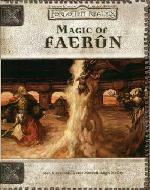
Magic of Faerûn is a 192-page softbound book, priced at $29.95 US. The cover of the book bears the Forgotten Realms logo and has a background with a white cloth appearance similar to the FRCS book. The cover has artwork in a wrap-around format depicting some spellcasters combating or controlling some sort of demon in some sort of stone structure.
The interior has both color and black-and-white art. The pages have an off-yellow background that makes them appear like parchment or vellum. The artwork is of average quality; nothing caught my eye as particularly good or bad. The pictures are appropriate in context, depicting some spells or items on that page of the book.
The use of space is good. The text is densely spaced and comfortable to read. The margins are average sized, and the column and line spacing is small, as it should be. There is only a one-page ad, but the inside cover is not used. Overall, although this is an example of the high price-per-page product that you probably have come to expect from Wizards of the Coast, there is little of the kind of "padding" you will see from other game companies.
A Deeper Look
Magic of Faerûn is sorted into seven chapters. The chapters are Understanding Magic, Magic Variants, Practitioners of Magic, Places of Power, Spells, Magic Items, and Creatures. The table of contents also conveniently lists the sidebars scattered throughout the book. The book also has an index.
Chapter 1: Understanding Magic
The first chapter discusses the underlying history and "handwaving" explanations behind why magic is the way it is in FR. This includes the how and why of the creation of magic, the role of the deities of magic, and the terminology and principles of the operation of magic. This material is mostly exposition about the FR setting, and as such you will probably find it more useful if you actually plan on running games in the Forgotten Realms than if you are here to pillage. Yet it could be interesting reading even if you are not a Realms fan, and may provide inspiration about how to handle things in your own game.
Chapter 2: Magic Variants
The second chapter discusses various techniques of using magic and some unique magical phenomena. Some of the sections, namely the sections on elemental magic and elven high magic, are largely fluff with little practical use. The remainder of the chapter speaks of different magic techniques in the Realms and includes gem magic, mageduels, moonfire, rune magic, spellfire, and spellpools.
Perhaps the most interesting of these techniques is the mageduels. At the very least it seems to me to be the most attractive "crunchy bit" in the chapter for those looking to import material into their own campaign to use. The mageduel rules allow mages to set up a non-lethal combat via magic, similar in concept to the certamin in the Ars Magica game. There were also rules like this in the AD&D 2e DM's Option: High Level Campaigns book, but I think they do a better job with the version in Magic of Faerûn.
Chapter 3: Practitioners of Magic
The third chapter is the first extensively "crunchy" chapter that those looking to pillage rules material will flip to immediately. It contains information on skills, feats, and prestige classes regarding or using magic in the FR setting.
The skills section is pleasantly devoid of new skills. It was apparently the 3e designers' intention from the start that feats be the primary means of expansion of the game. Magic of Faerûn has not deviated from that policy, unlike many third-party d20 publishers. What the skills section does do is enumerate the DCs and appropriate skills to create or otherwise deal with items addressed elsewhere in the book.
The feats section has a rather nice selection of new feats, primarily targeted at spell-casting characters. Unfortunately for those looking to plunder, some of the feats reference feats in the FRCS (e.g., Reactive Counterspell has Improved Counterspell in FRCS as a requirement). Also, those who already have Tome & Blood will find many of the feats repeated from that book, such as Eschew Materials and Energy Substitution.
The most controversial feat will probably be the Spellfire Wielder feat. Have fun with this one, guys and girls! At least they do indicate that the feat requires the DM's approval, but doubtlessly some FR purists will insist that spellfire is a limited phenomenon.
The prestige class section reintroduces some realms classics such the Incantatrix and the Mystic Wanderer, some classical figures such as Alchemists and Artificers, some Realms-specific concepts such as Harper Priests and Mages, and some Realms-specific tweaks of stuff you have already seen such as the Guild Mage of Waterdeep (which closely resembles the Mage of the Order Arcane in Tome & Blood).
In the past I have not been bothered by the extent of duplication of material in WotC products - the habit of reproducing feats and other game mechanical pieces where needed keeps you from having to own a library of material just to use a given published adventure or supplement. There is a limit, however, to what you can reprint before you begin seriously to impugn the value of the book for those customers who have faithfully purchased many other items. Magic of Faerûn pushes the limit on that score.
Chapter 4: Places of Power
This chapter is much more likely to appeal to DMs more than players. It details unique and magical locations and provides some guidelines for using some of these locales in the game. The types of locations described include mystic maelstroms, fey mounds, fey crossroads, monasteries, shrines, and circles. Some of these - such as mythals - only seem to be travelogues with very little practical information for running them in a game. Others, such as fey crossroads, have fully fleshed-out rules for use and would make interesting imports into other campaigns. Some locations provided are completely detailed settings for adventures, such as the mage fairs and a fully mapped bard's college.
In addition to specific locales, the book discusses organizations concerned with magic and the magic item trade.
Chapter 5: Spells
The spells chapter consumes a major part of the book and is quite possibly its strongest inclusion. The rather anemic spells chapter in Tome & Blood left something to be desired. Even so, there are some repeats from Defenders of the Faith.
The spells chapter contains spells for and expands the spell lists of the core classes as well as Assassins, Blackguards, and FR specific classes. Though a great many spells have a combat specific focus, many of them are 3e updates of old spells from the FR setting. Overall, the spells here have a greater breadth and depth than those presented thus far in the WotC classbooks. The spells chapter is fertile ground for utilization in other campaign settings, and very few of the spells are FR specific.
Chapter 6: Magic Items
As with the spells chapter, many of the items presented herein are updates of items for second edition, especially items from the FR setting such as Netherese blast scepters, bracers of the blinding strike*, everbright swords, spellblades, naga crowns, and the crown of horns. Many others, however, seem to be new FR items building on the 3e vision of the setting, or extrapolations on the 3e basis (such as Acidic and Screaming weapon enchantments to complement the existing Shocking, Flaming, and Frost weapons).
As with the spells chapter, those looking to import material into their own campaign world will find the magic item chapter to be fertile territory. The only major drawback is that in addition to unique items and the new enchantments, it does waste a little space devoted to some formula weapons and armors that you could have made with the new and existing enchantments.
* - The astute and well informed will note that while these are well known for being in the FR Drow of the Underdark accessory, they really appeared in the AD&D game before Drizzt was a twinkling in Salvatore's eye.
Chapter 7: Creatures
Like the previous chapters, this chapter contains 3e updates for many creatures from previous editions of the game (and like the earlier chapters, some of these creatures were not originally tied to FR, such as the spectator). This includes some templates, such as the spectral mage and the highly FR-specific magister.
I was actually sort of surprised to see the spectral mage appear here. The prevailing reason for the approach to monsters in 3e was that you would not need to create minor variants to existing creatures. I figured that spectral mage would safely fall under the ghost template. Alas, the authors of Magic of Faerûn apparently feel differently.
Generally speaking, though, the creatures chapter has far less to offer for non-FR fans than did prior chapters.
Conclusions
This may be a good purchase if you want to add some new elements of magic to your game. I like the prestige classes in Tome and Blood better, but some of the ones here are worthwhile. Where the book truly shines is the meaty spell and magic item selections.
The biggest problems with the book are the price tag and the reprinted material. A more reasonably priced book with more original material would have easily been on par with the value of books such as Relics & Rituals. Still, I think that FR players will find the book indispensable, and non-FR players will find a lot more "exportable" material here than in the costlier FRCS book.
- Alan D. Kohler

