

 Search
Review of Continuum: Roleplaying in the Yet
 Goto [ Index ] |
A Record of Futury
So just what is it that makes Continuum so wonderful? The fact that the authors took something that has been a staple of "speculative fiction" and actually thought about it. They didn't just decide on something that you make a plot convenient, or that would make for nice special effects, they thought about the logics of "What if time was not absolute?"
In the universe of Continuum, everything that ever will happen, has happened, is happening, and will happen. Tense and what is "history" is entirely dependent on when you are. Mankind has yet to jump down from the trees, the dinosaurs rule their empires, the Apollo spacecraft is just entering orbit now, and man has already evolved into something more - and less - human. At least, depending on when you are. Spanners are those humans who have been taught how to time travel, it seems to be a simple enough trick, just concentrate on where you want to go, and poof! you're there (minus the "poof"), although the game master might know a few dirty secrets about the mechanism… Spanners often (but not always) group themselves into Fraternities, relatively loose groupings of like-minded and interested people.
Spanners are no different from levelers (those who cannot span) beyond their ability to travel through time. They are still mortal and they are still just as bound by the finality of time. Even though they can travel through time, they still have things that must be accomplished in their personal futures, their Yet. The central concept of the game is the fact that everyone lives their lives and everyone has lived their lives. What's done will be done and what will be done has been done. Spanner may seem to mess with that simple order, but they just interact with it differently. While a leveler has a very simple and linear life through time, spanners hop in, hop out and bop all around. A spanner who fails to perform the actions he's "fated" to do in his Yet can generate paradoxes.
It's a hard thing to explain, and since I'm certain I've botched it so far, let's use an example. I'm a spanner, a time traveler. I meet a fellow spanner who then tells me about how I beat him in a marathon. I don't remember ever entering a marathon, so I guess that a "future version" of myself must have done it, an elder. Not wanting to generate a paradox (and get frag or fragmentation as I diverge from the timeline), I record "Beat Bill in marathon" to make sure I don't forget I'm "fated" to do that. Now I have to train and get ready to beat him. When I do run the race and beat Bill, I'm not beating the "same" Bill who told me I had beaten him. I'm beating a junior Bill, one that is younger than the one I first talked too, otherwise how could he have remembered being beaten if he had never run the race?
See what kind of fun time-travel brings into a simple race? See how difficult it can be to bend your mind around the ideas of the game when you first look at them?
The book itself (224 pages for $19.99 - that's got the be one of the best values I've ever seen in gaming) is organized in rather strange way. Instead of laying the world bare, it proceeds along through what a new spanner would know as they progress through the world. After the introductory fiction, the game jumps right into character creation and the basics of the system, which, while it works well enough (in abstract), seems to be more than a little broken. At the "rules light" end of the spectrum, the game has only 3 attributes and a handful of general skills, so the relatively coarse nature of the system might put off some. With a little polishing it could work okay, however.
From there the book dives into the meat, explaining just what a spanner of each "level" would know (Span, the ability to time travel, is rated 1-5 generally). Starting out with "What the hell is going on here?" at Span 1, it moves on to more information about the "real history" of the entirety of time and the culture of spanners (i.e. the Fraternities) in Spans 2 and above. This chapter has both the best and worst information in the book, because while it puts a great deal of thought into many things, it also has the Fraternities, which I just can't welcome fully.
The introduction to time travel, aside from explaining things like Frag and Yet also puts forth something that almost all time travel propositions completely miss, the necessity of free teleportation. If you had to travel through time but couldn't actually travel through space, time travel would mean instant death when you pop into the vacuum of space as the Earth hurtles away through space. Some other neat aspects of the game are things like the Inheritors, mysterious alien-like creatures that are what mankind eventually evolves into. Their inclusion as the "Yet of mankind as a whole" was very nice, and adds another layer of intelligent design to the game.
The only major flaw of the chapter (and indeed, the only major flaw of the game as a whole), at least to me, is the Fraternities. While they are clearly not rigid groups, many of them seem rather bland or odd, like they wouldn't be such grand organizations. With the notable exception of the Quicker (those charged with dealing with frag), none of the Fraternities stir me up. I think that they should have been relegated to broad communication networks (not unlike an email list or something) and the emphasis placed even more strongly on "corners," or the little slices of space-time that spanners carve out for themselves. Granted, there is nothing inherently wrong with them, but they don't seem to have the same depth of thought as the rest of the game and so they appear as glaring blemishes on it.
Chapter three holds all of the nitty-gritty of the rules, as well as a detailed explanation of things like psychic skills and "time combat," which is just an abstraction to lend a sense of drama and excitement to the conflicts with other spanners. Unfortunately, this is also where the problems in presentation really come to the fore, with some poor organization and explanation. While the book as a whole and the idea itself is brilliant, sometimes the game itself stumbles a bit, like in the explanation for time combat, which would have been phenomenally easier to understand with a little re-ordering of information. The chapter also has the first concrete information and history about narcisissts, those spanners who try to change what has happened or will happen, making themselves into gods. Their ancient historical kingdom of Antedesertium is mentioned, although the real detailed information is not until later, in the GM's section.
The fourth chapter is "Mastering," giving information that the game master needs to know, including the secrets of the Fraternities and the real story about how you travel through time. Beyond such revelations, however, there are nice sections on how to run games and come up with ideas, how to manage the power of time travel, and how one manages a group of time travelers living together without someone carrying a load of frag. It was both surprising and refreshing to see a base book that revealed the truth about those secrets that it hints at earlier, instead of leaving bait for later supplements. While none of the advice on running a game is staggeringly brilliant, it is useful, especially the advice on dealing with the repercussions of time travel.
The book ends with a history revealing what has really happened in the past, and even before that. The history is quite interesting, and many of the details can spawn adventures themselves. I'm particularly fond of the "Seven" myself, spanners so powerful they have effectively transcended their human limits and become incarnate gods. Closing the game out entirely are a series of appendices that explain some elements of the game, dispel time travel fallacies and provide a very nice bibliography.
A Prediction of History
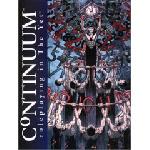
The book itself is put together well enough. Softcover, it has a solid binding and sturdy paper. The art, while good, ranges from right on the money to having absolutely no bearing on the game. As much as I truly love Tony DiTerlizzi's art, I would like to know what floating egg-men have to do with time travel. The shots they took from the comic Blue Shift, however, makes me wonder if the comic is in the same universe, and makes me want to get my hands on a copy.
The layout and writing are, unfortunately, spotty at times. The organization of the book is really rather bad (although I've seen worse, like the job done in Land of Eight Million Dreams by White Wolf) and it really detracts from the feeling of quality that the brilliance of the game provides. Also, the pages have relatively large margins on the outside of the book, but not against the spine, which made reading the book in bed a pain because it has to be propped open just so. The writing, likewise, is intermittently good and not-so-good. Never really bad, it just seems undirected and unpolished. As the book goes on, errors become more and more common, reaching a point where they actually bother me. They don't impede the game, they just get annoying. My biggest problem with the writing, however, is that it sometimes seems to slide right into the role of "this is an in-game document, a game released by the Continuum to prepare people for time travel" and sometimes it seems to just ignore that. Beyond my general distaste for most in-game documents that have to provide game mechanics as well (although there are exceptions, Dharma Book: Bone Flowers by White Wolf was done mostly in-game and worked beautifully), the shifting back and forth was really grating at times.
A Memory of Now
Buying a copy of this game should be in everyone's Yet already, but I can understand that sometimes things get in the way, so just put it in now. The only problems the game has are really relatively minor, and taste issues at that. The Fraternities don't excite me and they seem somewhat artificial, but I know a fair number of people who are quite enamored of them. Whatever I think about details like that, however, the simple sheer brilliance of thought put into the time travel information is powerful enough to make me place this game up in my top games. The complication of the ideas and their execution (as well as my mixed feelings) makes it hard to write a good review for the game (I know I'm missing important material, and that I've probably confused the hell out of most people), but I tried to make it clear how well thought out most of the game is. It's not my favorite, and it's not the best ever, but it's a damn fine game, and deserves a look from all serious gamers. Don't let this game pass you by.
Style: 2 (Needs Work)
Substance: 5 (Excellent!)

