

 Search
Review Editing
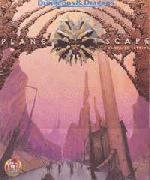
Review of Planescape Campaign Setting
 Goto [ Index ] |
No Elves.
Ok, so that's a bit inaccurate. You can still play Elves, Dwarves, Halflings, Gnomes, and all your other favorite races. They're just a bit less likely to appear.
Planescape is AD&D's first all-levels setting for the Outer Planes. For those not familiar with the game, the Outer Planes were whole dimensions where a single alignment - Neutral Good, Lawful Evil, etc - prevailed. The Upper Planes are home to good creatures, while the Lower Planes are home to evil. AD&D used to relegate the Outer Planes to high-level characters (level 9 or above). Not only was it difficult to travel there, but there were lots of big, nasty, zillion-hit-dice-and-immune-to-everything critters living out there. Pit Fiends. Type IV Demons. Glabrezu. Heck, Yog-sothoth was out there somewhere and wanted to kick your butt.
The Planescape setting introduces the city of Sigil, which is located strangely external to all other planes. Every archway, doorway, and hole in the wall could be a portal to some other plane... if you only have the right key.
The Key
The key to the whole Planescape setting is how different it is from the others. Worlds like Dark Sun and Spelljammer made a good start on this, but Planescape almost breaks from traditional fantasy completely. You can still play the races described in the Player's Handbook, but they are a minority. The new races are Planar Humans and Half-Elves (same as normal humans and half-elves), Bauriar (goat-centaurs), and Tieflings (humans who've been living on the lower planes too long). The same old AD&D classes exist, though people like Druids and Rangers often find their mission changed...
In addition to class and race, each character can choose to belong to a certain Faction. There are some minor game benefits to belonging to that faction (bonus to initiative, ability to use swords regardless of class, etc), but mostly it's there to further define how your character thinks. The Bleak Cabal believes that there is no meaning in anything. The Mercykillers want every criminal to get the strongest punishment the law allows. The Dustmen believe that there is no line between life and death. The Sensates want to experience everything. There are 15 Factions who currently control Sigil, including one which claims that they're not a faction. Faction choice is an optional part of character creation, but an important part of the setting. Factions literally control everything within Sigil, especially training and trading.
Evil Fiends
...can be your friends. Your characters in Planescape will deal with Aasimon (angel-like beings), Baatezu (demons), Tanar'ri (devils), and all sorts of ultra-powerful creatures on a daily basis. It is vitally important that the players remember that in some cases, fighting is not an option. In many ways, this is a great thing. Not only is there always something more powerful than your characters, but he lives next door and sells runes.
All the fiends don't fight each other in Sigil, since the Lady of Pain (a godlike being who protects the city) doesn't allow it. Brawls are ok, but any sort of war is a no-no. Even creatures from oppositely-aligned planes won't attack each other without provocation within Sigil. Once they leave, though, the kid gloves are off.
So how does it work?
Planescape is ideal for Game Masters who don't want to settle on a single setting or world. With the ability to throw your players across reality each and every game session, you can jump from the Spelljammer itself to northern Toril to Ysgard in a single game. I ran a Planescape game for two years after it was introduced, and it was a real blast for me. It's hard to imagine any other setting that could combine a Half-Giant, Battlerager, Kender, and Tiefling in one party. I started the game at 3rd level and had no problems at all finding creatures that everyone could beat on.
If, on the other hand, you had a real attachment to the old days when a sufficiently-powerful group of characters could take on a god, Planescape is not for you. The gods here are GODS, and none of them are easily approached. There has also been a significant reorganization of who lives where, what it's all named, and such. I consider this a great improvement from the Manual of the Planes (which I also enjoyed).
Knowledge really is important in Planescape games, especially knowledge of which creatures your Fireball spell will affect and which ones will laugh it off - or regenerate from it! Many adventures will revolve around trying to find a single portal key or a map of a portal system.
One big problem, especially for novice GM's, is that every plane - Inner, Outer, and Prime - has it's very own effects on magic. The physical laws of each plane are easy enough to remember, but the magical effects can be very taxing to memorize. GM's will either need to ditch some of this or sit with the book in front of them. This is another occasion when knowledge becomes the character's most important commodity - knowing that your fireball will explode in your face on certain outer planes can be quite handy. I consider this enough of a problem to be big enough that the Substance rating drops from 5 to 4. I realize that it's an important part of the setting, and that campaigns based around one or two planes won't have a problem, but for free-ranging games it can be a real pain.
Layout, Design, and final comments
The set contains a few booklets (player's guide, GM's guide, setting guide, and more critters), a GM's screen, and a couple of really spiffy maps. All of it is nearly full-color. The layout is pretty good, with the information laid out in easily remembered areas. The table of contents is pretty comprehensive, which almost makes up for the lack of index. The visual layout appealed to me more than the Version 2.5 PhB and DmG, just on color choice alone.
The slang used in Sigil (mostly old bum-from-England slang) didn't bother me at all, though I've heard from some people that it was a bit overboard. I found that in most places it was a nice touch.
On the subject of supplements, Planescape is still quite well-supported. I highly suggest the Planeswalker's Handbook to GM's and players alike. I did buy the Planes of Chaos boxed set before my money started running low, and found it to contain enough background and spiffy ideas to be worthwhile. Even the critter supplements were handy and gave me a lot more upper-planar beings to work with than just the frankly boring Aasimar.
In the final analysis, Planescape can create a great mood for political, city-oriented games or can allow characters to cross reality in an epic search for the artifacts that can save reality. This is true of many settings. What makes Planescape different is the sheer variety that one can find in any place. In other settings, you can run into about a dozen races from a half-dozen climates. In Planescape, you can bring all of those in plus mortals and immortals from an infinite number of other planes. If you want to go in-depth on Tieflings, you'll have to write it yourself, but if you want a great cross-section of everything, Planescape will probably do you some good.
Style: 5 (Excellent!)
Substance: 4 (Meaty)

