

 Search
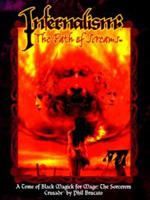
Review of Infernalism: The Path of Screams
 Goto [ Index ] |
Also, it is worth noting before the real review begins that this isn't really just a Mage resource. It covers all sorts of dark worship and its practitioners include fomori, spectre, hedge magicians, vampires, mages and mortals alike, without skimping on any one group's perspective. The material is useable in any of the games in order to add depth to antagonists and rationale to the choices they make. In addition, while the book is geared towards the period of Sorcerer's Crusade, most of it is applicable just as easily to a Dark Ages or Modern game.
Prelude to Damnation certainly sets the mood for the rest of the book. Rather than attempting to shock with grotesque displays and sexual assault, as the introductory story to Cainite Heresy did, this tale shocks merely by the narrator's sheer unrepentance and contempt for those who hold him, even faced with his imminent death. Conveying in tone rather than details the depth of corruption, it is much more effective and unsettled me somewhat, preparing me for the journey within.
The Introduction is short and has the obligatory 'How to Use This Book' and terminology sections, as well as the first of many disclaimers by the author, urging people not to emulate the behavior described within, and giving his rationalization for writing it in the first place. To give him credit, he achieved everything he says he set out to. This book is much more mature and interesting than any Black Dog treatment would have been.
Chapter One deals with infernal cosmology. First, from a very abstract perspective, offering a metaphorical and generic creation story which borrows from many cultural and game sources. While a good example, I prefer ones more closely tailored to the beliefs of the specific character in question. Still, it is a very good example of the type of beliefs which would encourage one to accept damnation in the eyes of the rest of humanity (and inhumanity, for that matter).
Second, cultural perspectives are explored with somewhat less detail, but certainly enough to start one off and give an idea of how universal beliefs in the primordial darkness and the void within are. Also included are a few references to historical periods and events which have been wiped from the slates of recorded history or, at the very least, trivialized. Interesting reading, offering some Lovecraftian plot hooks for demonic campaigns.
Chapter Two shifts the focus from the world to the individual infernalist. The first section gives a surprisingly complete accounting of the sorts of reasons one would have to deal with the infernal or persue the dark path to enlightenment. From simple laziness to revenge to desperation, it offers a full palette of motivations with which to add depth to infernalists. Also, it stresses just how human such a choice is. It is hard not to sympathize with many of the justifications, even if we can't condone the choice.
The second part details the Path of Screams itself, going over the four stages leading to damnation, and the process by which a person who simply burns with the desire for revenge can be twisted into a virtual demon on earth. The last stage gives ideas on the final fates of infernalists, from damnation (unsurprisingly) to redemption (compelling) to assumption (horrifying union with the Void or ascension, or descension, to demonhood).
The last section offers a diverse collection of templates. Full stats have been abandoned to give more room to the actually useful information: personality and motivation. The plethora of infernalists detailed take full advantage of the wide range of motivations offered in the first section, unlike many White Wolf supplements, which provide interesting ideas and then offer up a handful of mundane and uninteresting character concepts.
At the very end are a handful of infernal personages. Most of them are mages and specific to the period of Sorcerer's Crusade, so those who buy the book for other uses will find them of limited use. However, they are very interesting, particularly because at least a few are left uncertain. One as to whether or not it even was infernal, and others as to the nature of their power and pacts or even their existence. It helps perpetuate the ominous air of mystery that makes them so disturbing; they could literally be anyone or anywhere.
Chapter Three gives all sorts of rules for making infernal characters, which the author tells you very firmly not to do in a full page sidebar on the subject (even going so far as to make an amusing threat of physical violence towards anyone who'd roleplay such things). Still, rants aside, this is basically an infernalist players guide.
A magnificent look at infernal seekings (called Supplicii) begins the chapter, followed by details on infernal pacts, investments, infernal faith (the diabolical equivalent to True Faith), and merits and flaws. A sidebar gives a multicultural look at ways to battle infernal forces which are recommended to be of use to those with sufficient hedge magic or occult ratings. Almost all of this material is extremely well done, though some of the merits and flaws are inexplicable (why is being surrounded by a cloud of insects a merit?). Some are a lot of fun though (like the Laham merit for those born out of congress with demons).
Next, infernal magic (called Maleficia) is detailed, including a much more satisfying rewrite of qlippothic spheres which throws out any seperation between them and 'regular' spheres, turning the difference into one of paradigm and intent. The same is true for the rules on 'dark tass' (called Aesfotedia), which merely make its infernal origin a matter of resonance. It is also true of the aforementioned Seeking rules, which make no system distinction between Arete and Infernal Arete. This trend, also found in Spirit Ways is long overdo, keeping the mechanics simple and consistant without sacrificing the paradigm-specific details that Mage relies on.
The section on continues with a look at infernal foci, some nasty nephandic rotes (who says only Artificers can forge souls?), and a handful of demonic talismans, including several texts which act as the Library background when learning Maleficia. The chapter then wraps up with a look at several sects and cults, from the Lilith-worshipping Bahari, to the ancient Gatekeepers of Ganzir, to the rich and jaded Decadanti. A sidebar on the Cauls is given, explaining the horrific transformation it inflicts upon the Nephandi who enter them, and another page long sidebar on types and ranks of nephandi. These last two are a bit 'tacked on', in my opinion, seeming more academic than useful or applicable.
Chapter Four changes focus again, this time to the infernal hosts themselves. A rather impressive accomplishment, this section manages to offer enough information to work with without reprinting lots of material from other books. Demonic traits are explored, specific types of demons detailed, and grand demonic manifestations given a few paragraphs (basically explaining how unlikely it is that anyone really important is going to answer a summons and how mind shattering such an experience is, when accomplished). There is a sidebar referring the reader to the copious other material on the subject already published (The Thousand Hells, The Books of the Wyrm, The Book of Worlds).
The Appendix finishes off with an impressive list of demons, dark gods, and primal entities, organized by type and culture. One of the more interesting things about this section as that many of the entities listed aren't bad, per se. But, as detailed in the second and third chapter, and again in the introduction to the appendix, infernalists have a habit of appealing to the darker sides of ambiguous deities, and often persecution by the church has led the worshippers of the Old Gods to extremes. One of the templates, the Blood-Pagan, is particularly good at describing how a Verbena or other pagan worshipper might twist their beliefs out of hatred for the Church, leading to a nephandic Fall.
At the very end is a list of inspirational source, which has a lot of good material, though I am a bit disappointed that they overlooked television. Millennium and American Gothic both have reoccuring plotlines dealing with demonic temptation. The latter, in particular, is pretty much required watching for anyone looking to portray a tempter. Also, it is absolutely criminal to leave Angel Heart off the list of inspirational movies. But, that's just me. Maybe Phil's never seen them.
All in all, this is a fantastic supplement. It opens up myriad possibilities for including the infernal in a campaign. In the past, I've avoiding using infernalism as a plot device because of its rather haphazard treatment in most of the books, but that is no longer a problem. It also makes me happy to see published the sort of thing my Satan-worshipping Lasombra priest would have come up with. ;)
Style: 5 (Excellent!)
Substance: 5 (Excellent!)

