

 Search
Review Editing
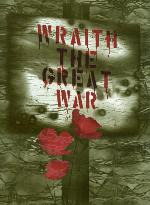
Review of Wraith: The Great War
 Goto [ Index ] |
"Wraith: the Great War is easily the best book White Wolf has yet published. Superbly written and down-right riddled with brilliant plot ideas and a wonderful, breezy writing style. I loved reading this book. The only drawback to the book was the layout choices, which were often quite annoying, but easily overcome by content."
There, that's what I needed to say. Wraith: the Great War is brilliant. Give the team a raise, White Wolf.
Now for more detail...
There Be Spoilers Below, just to warn people, but then the book is peppered with them itself anyway.
Flipping through my nice, autographed copy of the book (which took damn near forever to arrive), the first thing I come across is the inside cover. I might as well mention this now, but as much as I think the color scheme is great, a map of Europe would have been immensely more useful. The front cover for mortal, quick Europe and the back cover for Shadowlands Europe, something along the lines of Mage: the Sorcerer's Crusade. The tiny map inside tucked after the Guilds is sad and pathetic. I agree with Jason Corley on that one, it seems to exist solely to annoy me as well. I love maps. Maps are good, they are useful, often incredibly so. Wraith: the Great War has only a half-hearted sketch in lieu of a real map. Kind of sad, really.
Moving on to the fiction, this is one of the best pieces of opening fiction I have seen in a World of Darkness book. From memory, the only thing even comparable was the story opposite the Ravnos plate in Vampire: the Masquerade, Revised Edition. Quite nice, and it certain is very important and useful in understanding what's happening and how the Shadowlands after the War to End All Wars are from a street-eye view.
The story before chapter one on page 19 was quite nice as well.
Chapter One delves into a history of the mortal World War I with a brief history lesson that was surprisingly informative. My only problem with it stems from it's sometimes exclusively Allied point-of-view. The impression I got was one of colossal stupidity on the part of the Allies and to a lesser extent on the German side. I really couldn't tell how the Germans could have managed to lose the War with opponents like the Allies. The degree of bungling on both sides didn't seem quite equal. After the mortal information is the detail on the Insurrection led by the Smiling Lord. Swelled by the casualties of the War and fueled by a passion for revenge, the Grim Legion attempts to overthrow Stygia and does a damned good job of it. On the "Night of Short Chains," the Legion seizes nearly every major Necropolis in Europe, as well as Stygia itself. At that point the Empire shatters, some Legions and Guilds backing the Grim Legion and others coalescing into the Loyalists, who want the status quo back, for whatever reason. The only problem with this section is that players can not be allowed anywhere near it. It reveals the Smiling Lord's plans and ultimate failure, as well as the Emerald Lord's duplicity and the Skeletal Lord's gambit. Plots and spoilers fall left and right. I understand that there may not have been another way of doing it, but dropping bits like how the Skeletal Lord hold Siklos without any warning at all (like my mention of spoilers above) was somewhat annoying at times.
The chapter continues with two pages spreads given to the Legions and some mention of the Guilds after that. The writing was as good or better than in the Book of Legions and I felt the same thrill when read this as well. The are great mentions of both Legion temperament as well as the architecture and layout of each Legion's fortress within Stygia itself. Each section also mentions at least two secret or special orders within the Legions, a nice touch. The Guild information is short, sweet, and holds the only mention of the Mnemoi in the book; the Masquers are sheltering the outlaw Guild, and the Mnemoi are apparently the secret source of the Masquers' Loyalist leanings, oddly enough. Food for thought indeed. The major flaw of this part of the book was that when I read it, I realized that I could not feel comfortable running a Great War game without extensive familiarity with the Book of Legions at the very least. The Shadow Player's Guide and nearly all of the Guidlbooks would also be essentials, but less so. Surprisingly, Doomslayers: into the Labyrinth would also be very helpful, but more likely for knowledge of how the events of the Insurrection continue to impact Stygia. Wraith: the Great War is a great game, and it have more detail than nearly any other base rulebook, but somehow that just makes me fell that I need the supplements that much more. Maybe I'm just spoiled. Sometimes, Wraith astounds me with it's intricacy.
Another note about this chapter is about wraith populations. I have, before this book as well as discussions on the wraith-l list, kept my ghosts few and far between. Necropoli were, quite literally, ghost towns. After reading this, I think I would have to radically change my estimates, and I think that it will make for a radically different kind of game.
The next chapter is largely rules; for mass combat, for Maelstroms, for fetters in a Maelstrom, for using planes and ships in the underworld. It also discusses how the Maelstrom affects Stygian society. The habit the storms have of leaving "refuse" behind creates economic opportunities that are quickly filled. The sidebar on the limb markets was great, as were the Scavenger Folk and the material on winnnowing (harvesting what the Maelstrom leaves behind). The rules and discussions of communal fetters or moving haunts and relic tanks and ships are nice. Overall, the rules are nice and reasonably simple.
The story of the reaper on page 95 is also a great example of good fiction. I loved that piece.
The character creation chapter was a blot upon the book. The chapter was a re-hash of already old material. As Wraith: the Great War is not a stand-alone game (more like Kindred of the East than Vampire: the Dark Ages in that respect), it was completely unnecessary. Despite authors' protest to the contrary, I cannot shake the idea that the book was intended to be stand-alone and was cut down. Why give descriptions of skills, attributes, and backgrounds already present in the base Wraith: the Oblivion book? I don't see the logic. Arcanos were also printed in their entirety, but they changed substantially from their modern-day counterparts.
Most of the changes in the arts make a great deal of sense, but some do not. Looking at Argos, for example, Storm Robes makes for a nice lvel 2 Arcanos power, but the level 5 Maelstrom Bridge power makes no sense what so ever. Why would a Harbinger care about letting a Maelstrom cross the Shroud and kill people? Embody is still exceedingly difficult. Castigate, Fatalism, and other Arcanoi are still largely the same, but many have alternate arts that allow for survival in a Maelstrom. A lot of them do, I would almost say too many. Off the top of my head, Argos, Catigate, Moliate and Keening all have powers relating to surviving the Maelstrom. Inhabit is renamed Kinesis for no reason I can tell. Level 5 Outrage is more like some levitational trick from Poltergeist now, and I don't think I like the change. I like level 5 Phantasm (Dream Cloak), but it is much too short-lived, and seemed to come at the cost of Phantasm's illusionary powers. Both Intimation and Flux are also described. After the Arcanoi is a mention of Arcanos marks, but there are no mention of what those marks are. Finally, the chapter rounds out with a presentation of "tempered Arcanoi," which is to say combination powers. Unlike multidiscipline powers from Vampire: the Dark Ages, there are actually concrete rules for tempering Arcanoi, although some of the examples seem... odd to me. I also don't really see any sort of need for the tempered Arcanoi with the inherent flexibility that they already have.
The Shadow chapter was good. The new Archetypes were quite well-done and interesting. The whole chapter again emphasizes the self-destructive nature of the Shadow instead of simply labeling it as "evil." The new Thorns are equally interesting. Rules for the use of the Eidolon are mentioned in a short section. I also enjoyed the section on Harrowings. Sometimes it's nice to refresh such essential ideas.
Chapter five was at the same time a wonderful read and a great disappointment. It holds all the information about foreign wraiths and also presents mortwrights as possible player characters (which I think is a good thing). Foreign Arcanoi are presented and there are so many teases about the other Dark Kingdoms that I was nearly drooling for more information. Hints and plot hooks were great, and ideas were tossed about left and right. The only problem I had was that other wraiths are actually different than Stygian wraiths. Someone from the Dark Kingdom of Iron cannot learn Behest, an African Arcanos, for example. There is simply no way. Why is that?
On top of that, a abambo that stays in Europe too long loses that ability as well. What is about Africans that allow them to use Behest? It's not the spiritual nature of the Dark Kingdom of Ivory, because those who died outside of it can use Behest, and those whites who died in it cannot. If it is belief that separates a Stygian wraith from and abambo, why do they lose their four-part soul in the Dark Kingdom of Iron? I always held the view that the African four-part soul compared to the Stygian two-part one was simply a matter of perception, not one of fact. I don't need more rules for what I always took as "dead is dead, no matter from where." The distinctly exotic and different nature of the other foreign wraiths did not sit well with me. None the less, I really enjoyed the information presented. The Swar Arcanos was interesting and all of the Jade Arcanoi (with the exception of Chains of the Emperor) were presented as well, along with the local Asian wraith resistance to their continued enslavement by Stygia. Dark Arcanoi are printed in the mortwright section, but, for some reason, unlike all of the other Arcanoi in the book, they are often abbreviated, referring the reader to Doomslayers: Into the Labyrinth and Dark Reflections: Spectres, a book which I believe is out of print at the present time.
The storytelling chapter is perhaps among the most useful White Wolf has yet printed. By discussing both possible plots as well as the ramifications they would have both on the world and how they might be run, the chapter was quite useful. The march from Africa is described, and ideas on how to use Charon are also looked at. It seriously looks at the kinds of issues that would arise when playing with Charon as an NPC. Just what can he do? Why would he do it? What is Charon doing now, why isn't he ruling his crumbling Empire? The answer to the last is that he is on "walkabout," seeing if Stygia is worth saving. I'm not sure how much I like that. It works fine, but it just doesn't seem as great as other events in Wraith, it's normal. A discussion on themes is also there, and the book even talks about how to engender a particular theme. It's a nice change from most White Wolf books.
The antagonist chapter is also quite good. There is extensive information on the Benadanti and their three sects. I haven't seen Mediums so I don't know if the information is new, but I really liked it. In addition were several great story seeds within the sections, how the Risorgeitori Benandanti have a program to transplant wraiths into comatose patient's body. In a refreshingly anecdotal manner, entire chronicles are tossed out into the text throughout the book. The information on the Giovanni is excellent as well, of interest to those Vampire players who are interested in the clan's intentions for the Shroud. The young upstart Giovanni Paolo Sardenzo is rising in the clan, gaining power and prestige while Valentina della Passaglia, a dead ghoul, goes through the Labyrinth in a Harrowing and returns with the conviction that the clan must be stopped. Adding in the "Bloody Legion," a group of Grim Legionnaires out for revenge against Clan Giovanni and the small two page section is packed with amazing ideas. The section on spectres was good, but I don't think it really compared with Doomslayers, but it wasn't supposed to. The plasmics presented are also very interesting indeed. Plasmic lice, tin ants, fireflowers, the mired, plasmic gas... it's all quite well done and only serves to enhance the surreal nature of Wraith.
The appendix contains brief write ups of 13 necropoli and 6 battlefields, all of which were superbly done and jumped alive. Each section was full of great ideas and examples. Each was an entire chronicle in a sentence nearly. The battlefields especially had a dark and surreal quality to them. The odd effects of the Maelstrom in some places and the activity of drones makes for amazing sets. The constant charging of the drones at Gallipoli and the unnerving fog of the Marne were great, as were the rains of eyes at Flanders and the groups of mired at Passchendale. The spectral infested Somme has great potential for a setting as well. Each of the necropoli were superbly done, each had it's own "life." so to speak. Berlin being held by Loyalists and their habit of using Chanteurs to settle disputes. Lisbon and the abambo plot to use Behest on Siklos to control Charon. Paris and the resistance aided by the Silent Lady. St. Petersburg and the drive to "build a better man" using Moliate. The necropoli were wonderful.
Following that are rules on relics, which make the rules for them much more standardized and obvious. Relic vehicles and equipment is given. One problem is that it seems that the terms "relic" and "artifact" were switched. From my understanding of Wraith 2nd Edition, relics are merely "mundane" items usable in the underworld. Artifacts are "magical items" for the afterlife. Relics don't provide special powers. Unfortunately, from their descriptions, both the boots and canteen relics had special powers. That's kind of confusing. The last thing in the book is a timeline for the era. The very last sentence, Charon purges all records of the Insurrection from Imperial histories, and even memories of the events begin to fade, makes me wonder just what the revelation about the Mnemoi will be planned in End of Empire. They seem to be the only Guild apparently in such close cooperation with Charon. Perhaps they are not a Guild in the true sense at all...
About the artwork overall, I was disappointed. Some work was amazing and some was just good but there seemed to be very little truly staggering artwork for a Wraith book. The art is one of the best things of the line, and I think that the layout and lack of art is the biggest flaw in the game. Many of the sidebars were oddly placed, often making me wonder just what the layout editor was thinking. Botching rules are in on section, initiative and martial arts in another. The organization was very poor in many places.
This book is wonderful, and the writing surpasses anything White Wolf has done yet, more than making up for the flaws in layout or design. The wasted space in the character creation section really annoyed me, I think that it could have been better used, especially since much of the information on foreign wraiths is totally incomplete without the Shadow Player's Guide.
If I could give Wraith: the Great War a 6 on content, I would, but I can only go as high as 5, sadly. I'm giving it a 5 for Style on merit of the writing alone. I would say that maybe a 4.5 might be better, just to show that it wasn't perfect in that regard, but the writing was just too good to do it such a disservice.
Wraith: the Great War made me realize that all these years, my favorite White Wolf game has been Wraith: the Oblivion and I'm really sad that I've only found out this late, when the line seems to be turning to follow Changeling: the Dreaming into Never Never Land. Although Wraith has gotten all of the talent and brilliance I wish that Changeling could have had a dab of.
I'd keep going, but I think it's long enough and all I could say is how much I loved it. I think you get the picture.
Style: 5 (Excellent!)
Substance: 5 (Excellent!)

